 Thursday, October 08, 2026
 Health Ministry updates on steps taken to contain and cure COVID-19 infections




The government has said that adequate healthcare infrastructure and facilities have been set-up across the country for COVID-19 management. These have been divided into three categories - Dedicated COVID Hospitals, Dedicated COVID Health Centres, and COVID Care Centres with an adequate number of isolation beds, ICU beds, and other facilities.
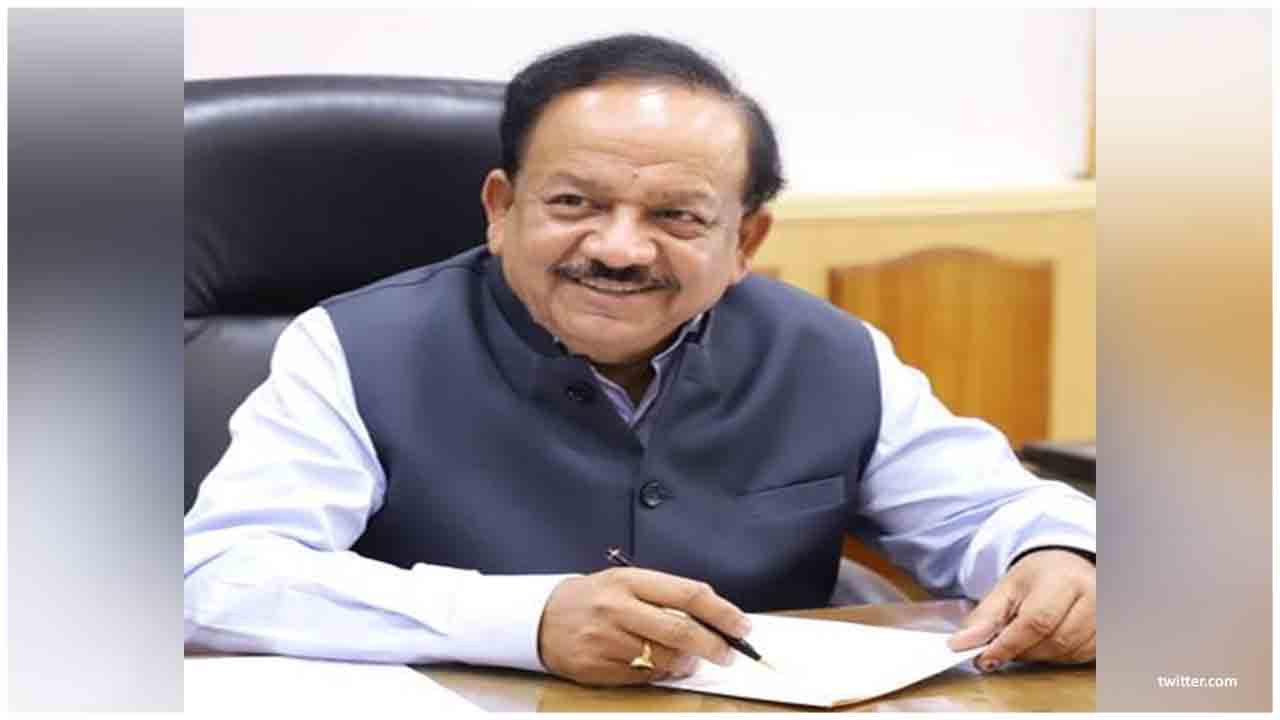
Health Minister Dr. Harsh Vardhan said a total of 968 Dedicated COVID Hospitals have been identified across the country with over 2 lakh 50 thousand beds. He said, over 2,000 dedicated COVID Health Centres with over 1 lakh 76 thousand beds and over 7,000 COVID Care Centres with over 6 lakh 46 thousand beds have been identified.
Speaking about the protective equipment, Dr. Harsh Vardhan said, the country is now making a sufficient number of N95 masks and PPE through the ramped up domestic manufacturing sector. He further informed that States and Union territories as well as Central Institutions have been provided with around over one crore N-95 masks and around 72 lakh Personal Protective Equipment.
Health and Family Welfare Minister also said that a total of 57,721 people affected with coronavirus have been cured and the recovery rate reached 41.57 percent in the country.
During the last twenty-four hours, 3,280 people have recovered and 6,977 fresh cases of Covid-19 have been reported taking the total number of cases to one lakh 38 thousand 845. This is the highest spike in fresh cases. Health Ministry said, 154 deaths have been registered in the last 24 hours taking the nationwide toll to 4,021.
Dr Harsh Vardhan also informed, that a total of 57,721 people affected with coronavirus have been cured and the recovery rate reached 41.57 percent in the country. During the last twenty-four hours, 3,280 people have recovered and 6,977 fresh cases of Covid-19 have been reported taking the total number of cases to one lakh 38 thousand 845. This is the highest spike in fresh cases. Health Ministry said, 154 deaths have been registered in the last 24 hours taking the nationwide toll to 4,021.
As the government expects fresh cases with the arrival of the stranded Indians, Health Ministry today also released new guidelines for international passengers. According to the guidelines, all travelers shall give an undertaking before boarding that they would undergo mandatory quarantine for 14 days. This includes 7 days paid institutional quarantine at their own cost, followed by 7 days isolation at home with self-monitoring of health.
Home quarantine may be permitted for 14 days only for exceptional and compelling reasons such as cases of human distress, pregnancy, death in the family, serious illness, and parents accompanied by children below 10 years. The use of the Aarogya Setu app shall be mandatory in such cases.
A list of Dos and Don'ts shall be provided along with tickets to the travelers by the agencies concerned. All passengers shall be advised to download the Arogya Setu app on their mobile devices. At the time of boarding the flight or ship, only asymptomatic travelers will be allowed to board after the thermal screening. Passengers arriving through the land borders will also have to undergo the same protocol and only those who are asymptomatic will be enabled to cross the border into India.
Self-declaration form shall be filled in duplicate by the person in the flight or ship and a copy given to Health and Immigration officials at the airport, seaport or land port. The form will also be made available on the Aarogya Setu app. Suitable precautionary measures such as environmental sanitation and disinfection shall be ensured at the airports and within the flights. During boarding and at the airports, all possible measures to ensure social distancing must be ensured.
While onboard, required precautions such as wearing masks, environmental hygiene, respiratory hygiene, and hand hygiene are to be observed by airline or ship staff, crew, and all passengers. On arrival, thermal screening would be carried for all passengers. The passengers found to be symptomatic during screening shall be immediately isolated and taken to a medical facility.
The remaining passengers shall be taken to suitable institutional quarantine facilities, to be arranged by the States and UTs. These passengers shall be kept under institutional quarantine for a minimum period of 7 days. They shall be tested as per ICMR protocol and if they test positive, they shall be assessed clinically. If they are assessed as mild cases, they will be allowed home isolation or isolated in the COVID-19 Care Centres as appropriate.
Those having moderate or severe symptoms will be admitted to dedicated COVID Health facilities and managed accordingly. If found negative, they shall be advised to further isolate themselves at home and self-monitor their health for 7 days. In case, any symptoms develop they shall inform the district surveillance officer or the state national call center number - 1075.






.jpeg)










.jpg)
.jpg)
.jpg)
.jpg)
.jpg)
.jpg)


.jpg)