 Thursday, October 08, 2026
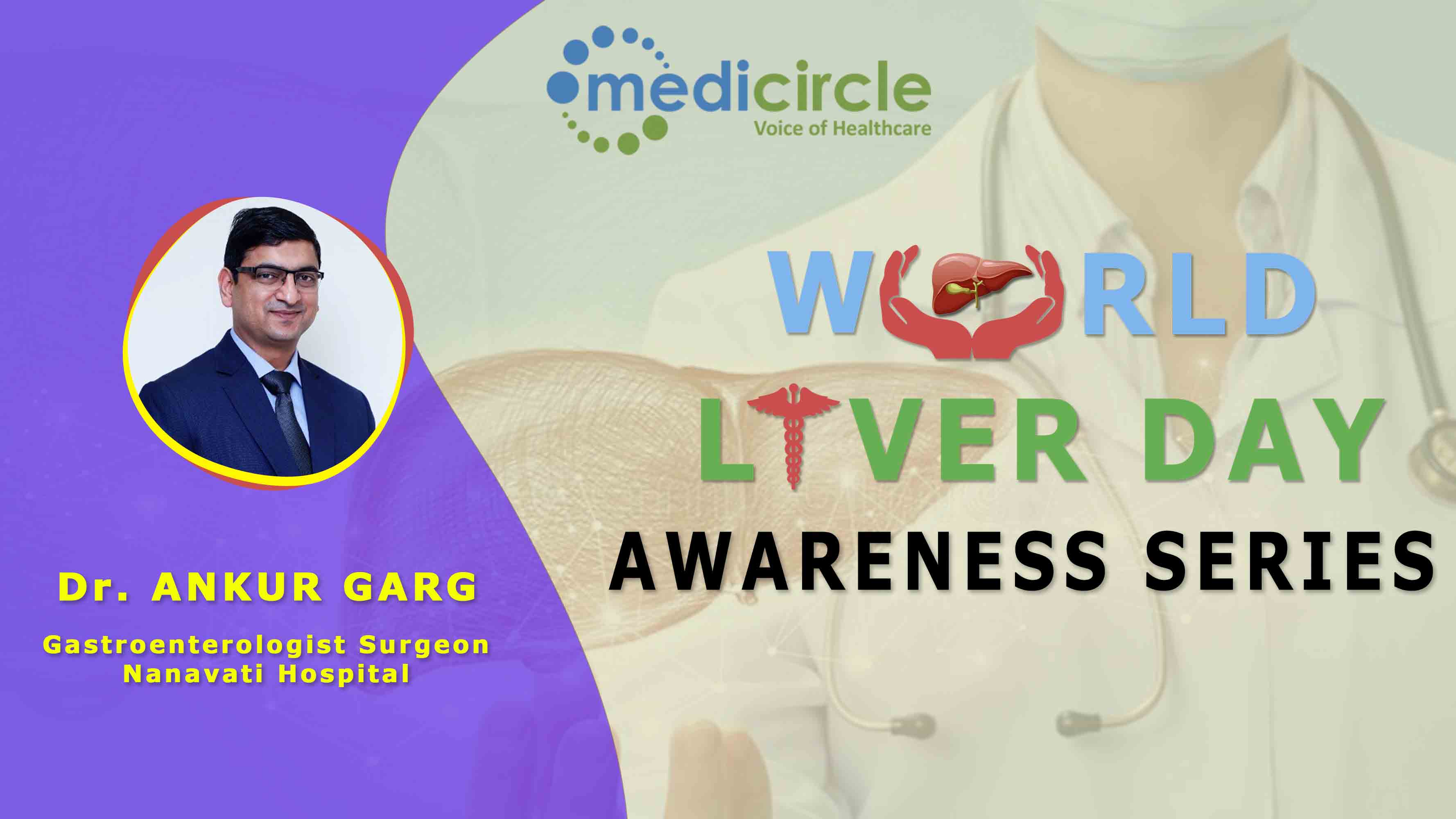
 Dr. Ankur Garg gives an insight into the liver functions for the healthy maintenance of the liver. A healthy balanced meal with a good proportion of carbohydrates, proteins, and fats can work best for the liver.





The liver is the second largest organ in our body and should be given the same importance as the brain and the heart. It is a key player in the body’s digestive system. The liver functions are very important in our body and contribute to the digestive functioning for effective metabolism. Over the past decade, there has been a steady rise in the number of cases of liver disease. World Liver Day is observed on the 19 th of April every year. At Medicircle, on the occasion of world liver day, we are speaking to eminent gastroenterologists and hepatologist to build awareness about the healthy functioning of the liver
Dr.Ankur Garg is one of the most renowned liver surgeons in India. His expertise encompassed a huge amount of experience which spans nearly 14 years of a pristine medical career. He is an expert in liver-related treatments. Dr. Garg specializes in all surgeries related to gastrointestinal infections tracts like surgery of pancreas, oesophageal surgery, liver abscess, liver transplant, and many more. Dr.Ankur Garg has super specialization in Mch. HPB surgery and liver transplant from one of the elite institutes of Liver and Biliary Sciences in New Delhi. For this, he attained the Honors by Former President of India-Late Mr. A.P.J Abdul Kalam Azad. During the course of his career, he worked in different well-known multispeciality hospitals and is currently associated with Nanavati Hospital in Mumbai.
Insights about liver functions by an expert
Dr.Ankur Garg, “The liver is a complex organ and is called the factory house of our body. It performs many digestive functions pertaining to metabolism which is a very complex process.
Digestion: We eat food and all the digestion takes part in the intestine. Yes, digestion does take part in the intestine but once all the food is absorbed, it directly goes to the bloodstream to the liver.
Metabolism and storage of nutrients: The liver takes care of the metabolism of carbohydrates, protein, and fat. It plays a very important role in storing and usage of the important nutrients from the food. All the digestion takes place in the liver.
Recycling of RBCs: Another important function of the liver is the formation of RBCs. RBC is the red blood cells which is a part of hemoglobin in the circulation. The liver plays a very important role in the recirculation of the RBC destruction is concerned.
Storage of nutrients: As far as metabolism is concerned, the liver is the storehouse and takes care of all the glycogen storage whether we are fasting or how much amount of sugar we are consuming. The liver helps to take care of energy levels in the body.
Metabolism of the medicines: Apart from this, 70 - 80 % of the medicines which we consume are all broken down and metabolized by the liver and this is how the body is able to excrete them in bile, urine, and feces.
So, the list is very long as far as the liver functions are concerned. So it is one of the complex organ functions as far as the body is concerned. That is why there is no mechanism for the liver like the dialysis machine for the kidney, that can capture the function of the liver.
A healthy lifestyle is a key to a healthy liver
Dr. Garg informs, “The easiest thing to keep your liver healthy is to keep yourself healthy. The liver automatically remains healthy once you keep yourself healthy. The liver is a very low-demanding organ in the body. The liver is the only organ in the body that has a regenerative capacity. Even if we remove 65- 70 % of the liver, a person can have an absolutely normal life. The remaining liver regenerates. The liver is the only organ in the adult human body that has the capacity to regenerate. Keeping liver healthy is all about keeping a healthy lifestyle. A healthy lifestyle means taking care of your diet and physical activity. If we have a healthy lifestyle and a good diet, there are no special things to be done in order to keep the liver healthy. One who keeps liver healthy will always be healthy."
Obesity can hamper liver function
Dr. Garg informs, “An overweight and obese person will have more fat in his body and definitely, his diet will have more fats and carbohydrates as compared to proteins. Carbohydrates and fats get deposited under our skin and make us look fat. In a similar way, carbohydrates and fat get deposited in the liver which results in fatty liver. So if we see the changing lifestyle trends today, 15 - 20 % of liver failure patients are suffering because of long-standing fatty liver. so, overweight and diabetes is one factor that disturbs liver health. It is primarily because liver cells start getting replaced with fat cells. This results in a lack of functioning of the liver.”
The best diet for liver health
Dr. Garg states, “The best diet to follow for liver health is a balanced diet. A balanced diet is a healthy proportion of carbohydrates, proteins, and fats. Majorities of Indian subcontinents is concerned, there is an imbalance in diet with overconsumption of carbohydrate intake. A lot of protein intake is mismatched by carbohydrates and this also gives rise to liver health problems. There is no specific diet that is healthy for the liver. A well-balanced diet, irrespective of being a vegetarian and non-vegetarian, balanced diet is important. There is no extra diet that you need to keep your liver healthy. A balanced diet as per the age and physical activity of the person keeps the liver very healthy.” says Dr. Garg
(Edited by Dr.Rati Parwani)





.jpeg)










.jpg)
.jpg)
.jpg)
.jpg)
.jpg)
.jpg)


.jpg)