 Friday, October 09, 2026
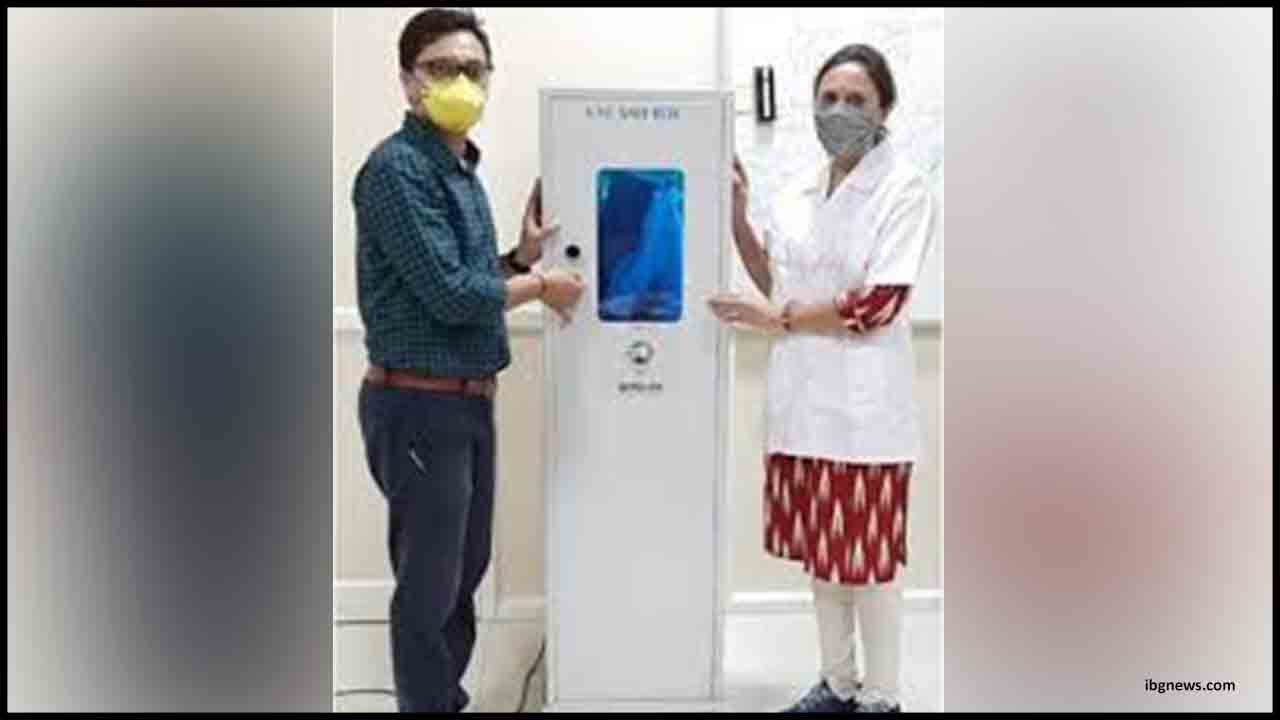
 The UVC disinfection cabinet is co-developed by ARCI and MEKINS, a Hyderabad based company, consists of 4 UVC lamps of 30W and 2 lamps of 15 W




International Advanced Research Centre for Powder Metallurgy and New Materials (ARCI), an autonomous R&D Centre of Department of Science and Technology (DST), Govt. of India and MEKINS Industries have co-developed a UVC-based Cabinet for disinfecting non-critical hospital items, laboratory wear, and PPEs in the research laboratories to prevent surface contamination of COVID-19.
It can also be used to disinfect items exhibited to customers in commercial establishments and several domestic items.
India was successful in controlling the spread of COVID-19 caused by the SARS COV2 virus during the first few phases of lockdown due to strict implementation of COVID-19 guidelines. But, with relaxation of the lockdown, there is a chance of slow spread of disease due to the movement of people across the country, and this is predicted to continue for some time. Transmission through surface contamination is an unpredictable risk in which common utilities play a key role.
The best way to deal with this transmission is by a dry and chemical-free rapid disinfection through exposure to UVC light. UVC irradiation with 254 nm is strongly absorbed by RNA part of COVID-19, leading to molecular structural damage via a photodimerization process and thus inactivating it. UVC exposure is the best known among the methods to disinfect virus-prone objects, including stethoscopes, blood pressure measuring equipment, patient care items, mobile phones, wallets, laptops, reusable laboratory gloves, lab coats, micropipettes, smaller measurement equipment, papers and so on. As the extent of disinfection is proportional to the UVC dose received by a contaminated surface, designing a UVC system with proper engineering is very critical to get the best results.
"Safe and effective strategies, technologies and products for disinfecting spaces, surfaces and various objects become increasingly critical in breaking the chain of virus transmission in the post-lockdown times. Simple, safe and cost-effective solutions based on UV light, thermal treatments, and aerosol mists of acceptable non-chlorine based disinfectants will thus be increasingly pressed in service”, said Prof Ashutosh Sharma, Secretary,DST.
A compact UVC disinfection cabinet co-developed by ARCI and MEKINS, a Hyderabad based company, consists of 4 UVC lamps of 30W (on sides) and 2 lamps of 15 W (top and bottom). It gives a flux sufficient to disinfect articles of various dimensions placed in shelves separated by metal grilled frames to allow sufficient light from all sides. For the safety consideration and to avoid direct exposure of UVC light to the user, the lamps switch on only when the door is locked. The irradiance intensity is measured at various points within the box to assure sufficient radiation to disinfect all the placed articles within 10minutes. The partition frames in the cabinet are removable so that even bigger objects like lab coats, blazers, suits can be disinfected when required. The UVC cabinet is multifunctional and very promising for establishments including research and academic institutes, corporate offices, hospitals, clinics, nursing homes, hotels, restaurants, commercial outlets and domestic usage for fighting COVID 19.






.jpeg)










.jpg)
.jpg)
.jpg)
.jpg)
.jpg)
.jpg)


.jpg)