 Thursday, October 08, 2026
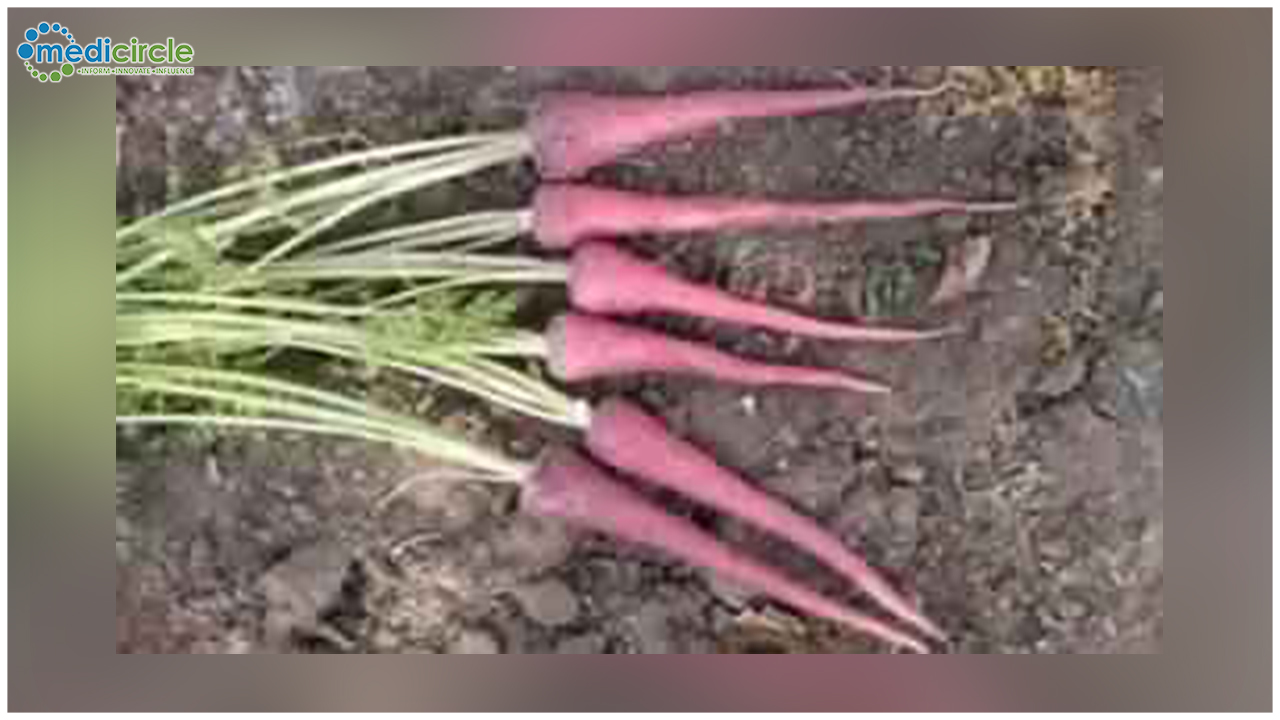
 The Madhuvan Gajar is a highly nutritious carrot variety developed through the selection method with higher β-carotene content and iron content dry basis and is used for various value-added products like carrot chips, juices, and pickles




Madhuban Gajar, a biofortified carrot variety with high β-carotene and iron content developed by Shri Vallabhhai Vasrambhai Marvaniya, a farmer scientist from Junagadh district, Gujarat is benefitting more than 150 local farmers in the area. It is being planted in an area of over 200 hectares in Junagadh, and the average yield, which is 40-50 t/ha, has become the main source of income to the local farmers. The variety is being cultivated in more than 1000 hectares of land in Gujarat, Maharashtra, Rajasthan, West Bengal, Uttar Pradesh during the last three years.
The Madhuvan Gajar is a highly nutritious carrot variety developed through the selection method with higher β-carotene content (277.75 mg/kg) and iron content (276.7 mg/kg) dry basis and is used for various value-added products like carrot chips, juices, and pickles. Among all the varieties tested, beta-carotene and iron content were found to be superior.
National Innovation Foundation (NIF) – India, an autonomous institute under the Department of Science and Technology,Govt. of India conducted validation trials for this variety at Rajasthan Agricultural Research Institute (RARI), Jaipur, between 2016 and 2017. In the trials, it was found that Madhuban Gajar carrot variety possesses a significantly higher root yield (74.2 t/ha) and plant biomass (275 gm per plant) as compared to check variety.
The on-farm trials of the variety were conducted over 25 hectares of land by NIF in different states like Gujarat, Maharashtra, Rajasthan, Assam, Haryana, Punjab and West Bengal which involved more than 100 farmers where the performance of the variety (MadhuvanGajar) was found to be appreciable in term of yield and its other properties.
During 1943, Shri Vallabhhai Vasrambhai Marvaniya found that a local carrot variety which was profoundly used for fodder to improve the quality of milk. He selectively cultivated this variety and sold this carrot in the market at a good price. Since then, he, along with family, is working for the conservation and development of this cultivar. The production and marketing of seeds of the variety are taken care of by his son Shri Arvindbhai and the average sale is about 100 quintals per annum. Around30 local seeds suppliers are involved for the seed marketing of the variety throughout the country, andthe production of seeds is being under taken out byShri Vallabhhai himself with a group of some local farmers.
During the early years of the development of this variety,Shri Vallabhhai selected the best plants for seed production and grew them in a small area for domestic consumption as well as for marketing. Later on, demand for this carrot grew, and he started cultivation on a large scale during the 1950’s. He also started distributing the seeds to other farmers in his village and adjoining areas in the 1970s. During 1985, he started selling the seeds on a large scale. The average yield of Maduvan Gajar is 40 – 50 t/ha and had been cultivated in Gujarat, Maharashtra, and Rajasthan successfully.






.jpeg)










.jpg)
.jpg)
.jpg)
.jpg)
.jpg)
.jpg)


.jpg)