 Tuesday, October 27, 2026
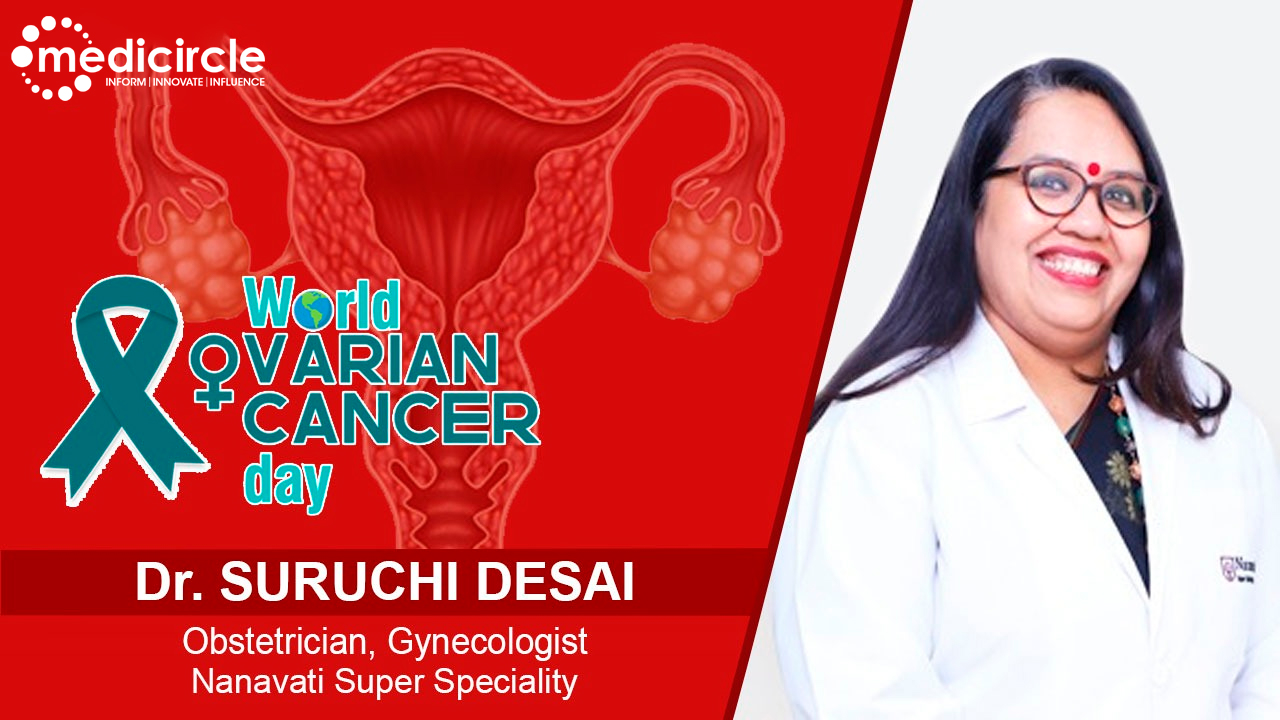
 Suruchi Desai gives her inputs from her expertise that ovarian cancer is genetics and regular screening of breast, ovaries, and uterus is a must for all females. She also breaks the myths associated with ovarian cancer and clarifies all doubts related to it.





Ovarian cancer is the most common cancer especially seen in elderly ladies. It is important to address ovarian cancer at an early stage with screening and detection of all female health problems. Ovarian cancer is a silent killer and its symptoms must not be ignored. Early diagnosis and treatment are very essential for ovarian cancer. World Ovarian Cancer Day is a global movement to ensure awareness among women about ovarian cancer. Medicircle joins hands in this global movement of World Ovarian Cancer Day to reach out to millions of women and educate them about the effects of ovarian cancer at an early stage. In this initiative, we are speaking to eminent gynecologists and oncologists who have expertise in treating ovarian cancer cases.
Dr. Suruchi Desai is a Gynecologist and Obstetrician with more than 17+ years of experience. She is an active member of AMC, MOGS, IMA, and FOGSI. Dr.Desai has expertise in the treatment of ovarian cysts, pediatric and adolescent gynecology, sexually transmitted diseases, Urinary tract infections, uterine, vaginal, and vulvar infections, vaginal yeast infections, and vulvodynia. She has a special interest in all major and minor obstetrical procedures such as hysterectomy, cesarean infections, MTPs. She has publications in both international and national journals.
She has been a frontline COVID health care worker and most importantly, above all of this, she has been the first one to deliver COVID positive mothers in private hospitals in Mumbai
Ovarian cancer is genetic
Dr.Suruchi Desai says,” We all are aware of BRCA-1 and BRCA-2 genes. So, if these genes run in your system or if there is a strong family history of breast cancer on your maternal or paternal side, then there are higher chances of ovarian cancer. Breast cancer is common in men too. We never screen men for breast cancer. It is possible in their mammary glands also. So, if there is a strong family history in your grandmothers or grandmothers, there is a strong suspicion of reproductive cancer with genetic linkage. We must trace the genes BRCA-1 and BRCA-2. If these genes are positive then there is a high incidence of uterine or ovarian cancer."
Breast cancer is equally important and needs attention with ovarian cancer
Dr. Desai says, “We must understand that ovaries produce hormones which also act on your breast and uterus. So talking about ovarian cancer, we must not only limit it to ovaries. We have to take care of our breasts as well. We must ensure to investigate our breasts regularly with mammograms or mammography. So ovarian cancer has a genetic makeup. If you have the gene, you are highly susceptible to cancer.”
Red flags and symptoms which must not be ignored in females
Dr. Desai informs, “Ovaries are small organs of 3-cm in size and they can go up to 30 cms. As they increase in size due to cyst formation, they can cause the following symptoms:
Bloating Abdominal discomfort Menstrual irregularities Nausea Vomiting Abdominal pain Bleeding disorders like intermenstrual bleeding
These are the red flags of ovarian cancer symptoms. We should not ignore these complaints and investigate them further. So, kindly do not ignore any symptom if she is unmarried, a young girl, or not sexually active.”
Ovarian cancer can spread to other parts of the body and monitoring is required
Dr. Desai states, “Ovary is made up of three types of cells: the epithelial, endothelial and epithelial cells. Sometimes, the epithelial superficial layer is just like skin. These are the same as the abdomen cavity on the peritoneum which is the lining of the abdominal cavity. The superficial epithelial cells of ovaries can be cancerous. On removal of this superficial layer, there can be spillage of cells or shedding of cells resulting in spreading and multiplication in some other part of the body. So even after cancer, we tell patients to be under surveillance for the next 3 -5 years. The only way out is USG( Ultrasonography) and MRIs”
Myths about ovarian cancer
Dr. Desai informs, “There is a common misconception and myth that contraceptive pills and infertility leads to ovarian cancer. If you have used oral contraceptive pills for more than 5 years in your reproductive life, you are reducing the ovarian risk by 50 %. There is a reason behind it. Every month you ovulate, there is a break in the continuity of epithelium or the lining of the ovary, and the egg is released. The oral contraceptive blocks the inhibition of ovulation and doesn’t let the follicle grow and does not cause ovulation. Smoking is dangerous to health and flares up cancer. Drug abuse, where you are taking drugs without medical supervision also increases the risk of ovarian cancer. This is especially seen in younger generations who use hormonal pills.
Make sure to visit your doctor who will guide you about the same.”
(Edited by Dr.Rati Parwani)




-23-300x250.png)

.jpeg)







.jpg)
.jpg)
.jpg)
.jpg)
.jpg)
.jpg)
.jpg)
.jpg)
.jpg)

