 Thursday, November 19, 2026
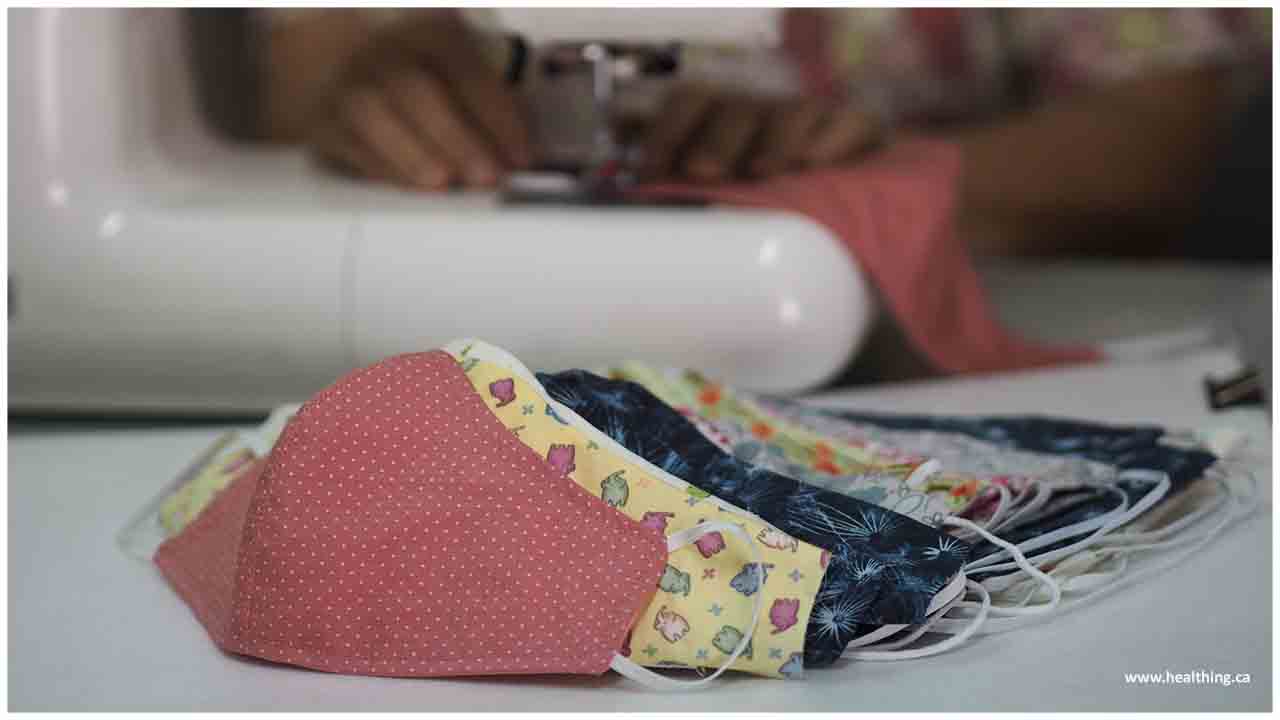
 Scientists in Australia compared the effectiveness of single and double-layer cloth face coverings with a surgical mask.





Handcrafted face mask ought to in a perfect world be produced using different layers of texture to trap the viral-loaded beads from the nose and mouth-related with the spread of Covid-19, an examination found.
Researchers in Australia looked at the adequacy of single and twofold layer material face covers with a careful veil. Utilizing a custom-fitted LED lighting framework and fast camcorder, they indicated a solitary layer diminished the spread of beads from talking, however not exactly a twofold layer.
A twofold layer was additionally "essentially better" at diminishing the bead spread brought about by hacking and wheezing, however a three-utilize careful cover was the best among all the tried situations, specialists drove by Raina MacIntyre at the University of New South Wales in Sydney said in a paper distributed Thursday in the diary Thorax.
Face masks are thought to shield solid individuals from breathing in irresistible beads just as diminishing the spread from the individuals who are now contaminated.
Overall deficiencies of defensive gear have driven the U.S. Places for Disease Control and Prevention and other wellbeing specialists to suggest custom made fabric face covers as an option in contrast to careful face covers.
For what reason did the CDC change its direction on wearing masks?
The first CDC direction halfway depended on what was believed to be low malady predominance before the pandemic, said Chin-Hong.
"In this way, you're lecturing that the juice isn't generally worth the crush to have the entire populace wear covers before all else – however that was an impression of not having enough testing, at any rate," he said. "We were getting a misguided sensation that all is well and good."
Rutherford was increasingly gruff. The authentic worry that the restricted gracefully of careful veils and N95 respirators ought to be put something aside for human services laborers ought not to have forestalled more nuanced informing about the advantages of concealing. "We ought to have advised individuals to wear fabric veils directly off the bat," he said.
Another factor "is that socially, the U.S. wasn't generally arranged to wear covers," not at all like a few nations in Asia where the training is increasingly normal, said Chin-Hong. Indeed, even now, a few Americans are deciding to overlook CDC direction and neighborhood borders on covers, a faltering that Chin-Hong says is "irresponsible."
What may have at last persuaded the CDC to change its direction for veils were rising sickness predominance and a more clear understanding that both pre-indicative and asymptomatic transmission is conceivable – even normal. Studies have discovered that viral burden tops in the prior day's side effects start and that talking is sufficient to remove infection conveying beads.
"I think the greatest thing with COVID now that shapes the entirety of this direction on covers is that we can't tell who's contaminated," said Chin-Hong. "You can't glance in a group and state, gracious, that individual should wear a veil. There's a great deal of asymptomatic disease, so everyone needs to wear a cover."
What proof do we have that wearing a mask is viable in forestalling COVID-19?
There are a few strands of proof supporting the viability of masks
One classification of proof originates from lab investigations of respiratory beads and the capacity of different veils to square them. An analysis utilizing rapid video found that many beads running from 20 to 500 micrometers were produced when saying a basic expression, however that about every one of these beads was blocked when the mouth was secured by a clammy washcloth. Another investigation of individuals who had flu or the basic virus found that wearing a careful veil essentially decreased the measure of these respiratory infections transmitted in beads and mist concentrates.
In any case, the most grounded proof for covers originates from investigations of genuine situations. "The most significant thing is the epidemiologic information," said Rutherford. Since it is untrustworthy to dole out individuals to not wear a cover during a pandemic, the epidemiological proof has originated from supposed "tests of nature."
An ongoing report distributed in Health Affairs, for instance, looked at the COVID-19 development rate when veil commands in 15 states and the District of Columbia. It found that cover commands prompted a lull in every day COVID-19 development rate, which turned out to be progressively obvious after some time. The initial five days after an order, the everyday development rate eased back by 0.9 rate focuses contrasted with the five days before the command; at three weeks, the day by day development rate had eased back by 2 rate focuses.
Another examination took a gander at coronavirus passings across 198 nations and found that those with social standards or government arrangements preferring veil wearing had lower demise rates.
Two convincing case reports additionally propose that covers can forestall transmission in high-hazard situations, said Chin-Hong and Rutherford. In one case, a man flew from China to Toronto and in this way tried positive for COVID-19. He had a dry hack and wore a cover on the flight, and each of the 25 individuals nearest to him on the flight tried negative for COVID-19. For another situation, in late May, two beauticians in Missouri had close contact with 140 customers while wiped out with COVID-19. Everybody wore a veil and none of the customers tried positive.




-23-300x250.png)





















