Tuesday, October 06, 2026
 To ease pressure on testing labs, ICMR relaxes testing requirements




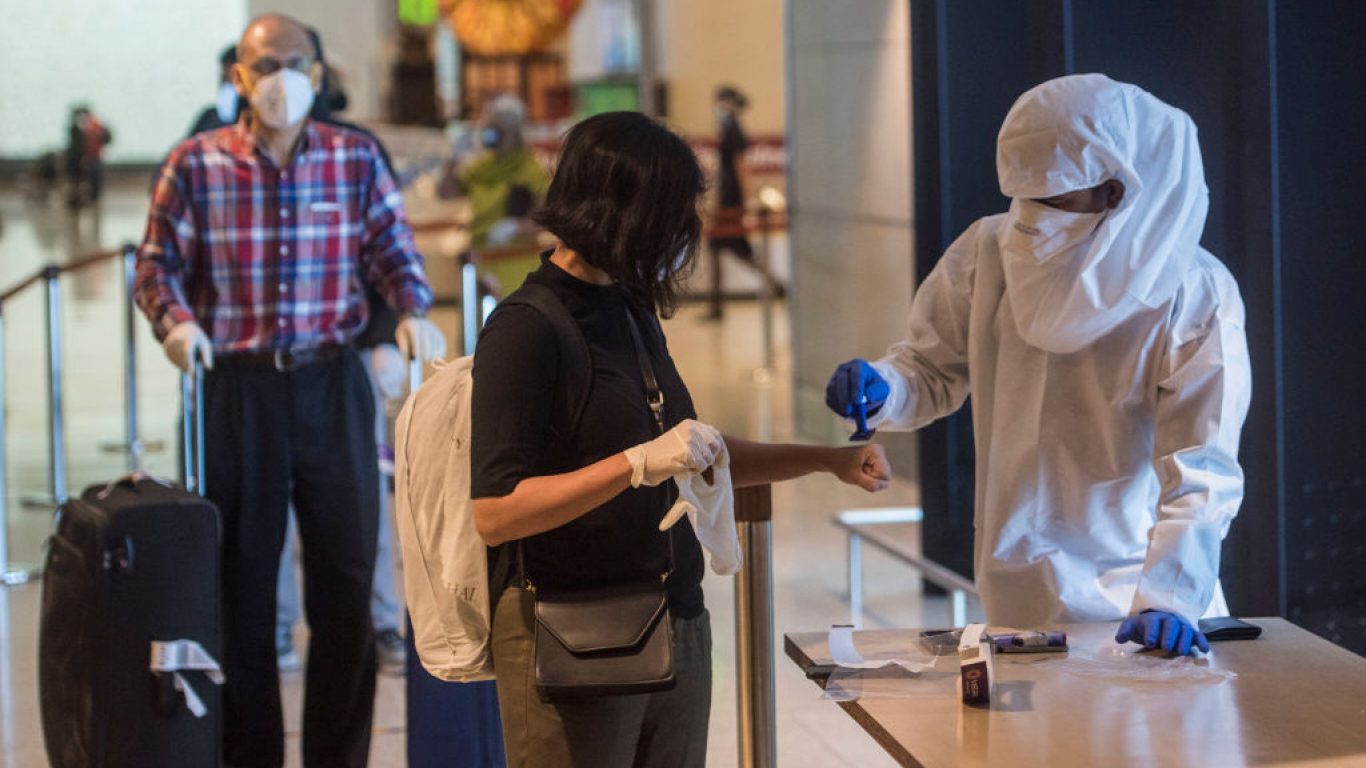
Indian Council of Medical Research (ICMR) has issued an advisory for COVID-19 testing during the second wave of the pandemic. It said, at present, the laboratories are facing challenges to meet the expected testing target due to extraordinary caseload and staff getting infected with COVID-19. In view of this situation, it is imperative to optimize the RTPCR testing and simultaneously increase the access and availability of testing to all citizens of the country. In its advisory, the ICMR has recommended measures to optimize RTPCR testing. It said the RTPCR test must not be repeated in any individual who has tested positive once either by RAT or RTPCR. No testing is required for COVID-19 recovered individuals at the time of hospital discharge in accordance with the discharge policy of the Union Health Ministry.
Besides, the need for RTPCR test in healthy individuals undertaking inter-state domestic travel may be completely removed to reduce the load on laboratories. Non-essential travel and interstate travel of symptomatic individuals should be essentially avoided to reduce the risk of infection. All asymptomatic individuals undertaking essential travel must follow COVID-appropriate behavior. The ICMR said mobile testing laboratories are now available on the GeM portal and States are encouraged to augment RTPCR testing through mobile systems.
With regard to measures to ramp up testing through Rapid antigen test (RAT), the ICMR said, RAT may be allowed at all available Government and private healthcare facilities. Dedicated RAT booths should be set up in cities, towns, and villages to offer to test to people. It said testing booths may be set up at multiple locations including healthcare facilities, RWA, offices, schools, colleges, community centers, and other available vacant spaces. These booths should be operational round the clock to improve access and availability of testing. It has also suggested that stringent measures must be instituted to avoid overcrowding at RAT testing facilities.
The ICMR said all states are advised to ensure full utilization of the available RTPCR testing capacity, both in public and private laboratories.
Symptomatic individuals identified positively by RAT should not be re-tested and advised to go through home-based care as per ICMR guidelines. It said symptomatic individuals, identified negative by RAT should be linked with RTPCR test facility and in the meantime be urged to follow home isolation and treatment. It said all RTPCR and RAT test results should be uploaded on the ICMR portal. It also said that the vaccination status of all individuals tested for COVID-19 must be entered into the Sample Referral Form (SRF) in the RTPCR app both for individuals tested by RTPCR and RAT as this information is of critical importance.






.jpeg)




.jpg)
.jpg)
.jpg)
.jpg)
.jpg)
.jpg)


.jpg)
.jpg)
.jpg)
.jpg)
.jpg)
.jpg)