 Thursday, October 08, 2026
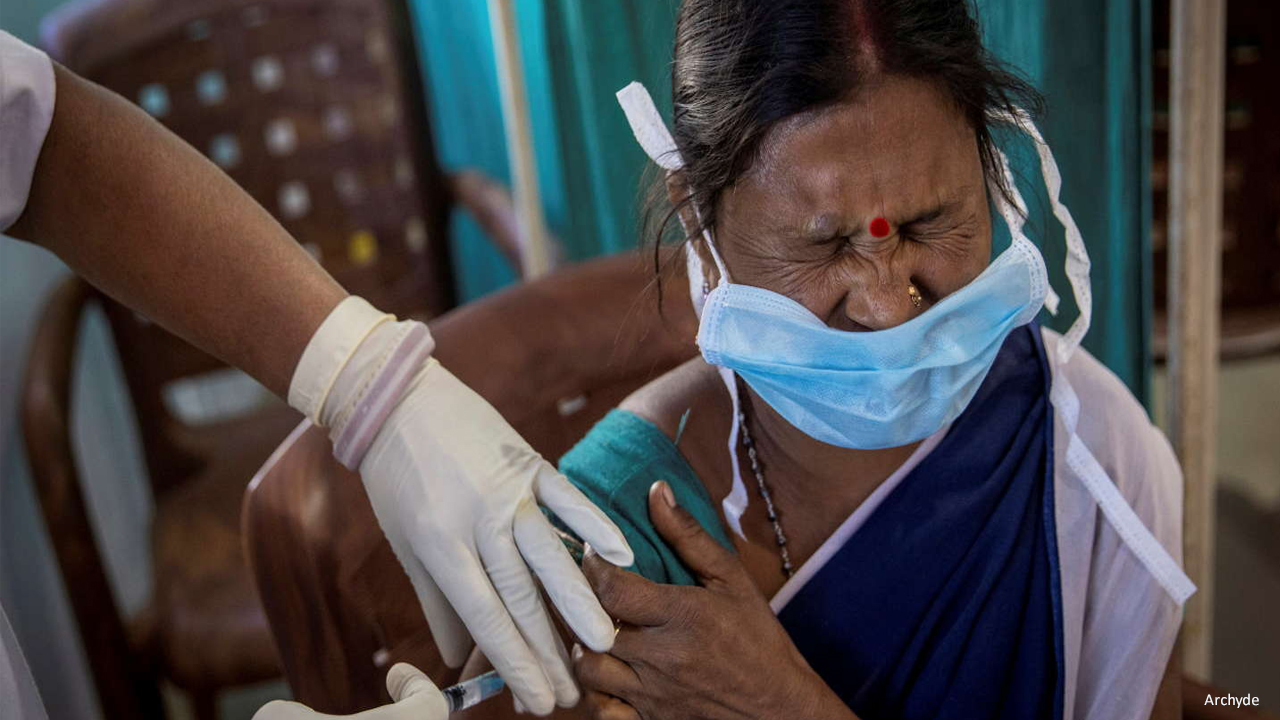
 1 crore 19 lakh COVID-19 vaccine doses have been administered to the beneficiaries so far: Health Ministry




Union Health Ministry today said that more than 1 crore 19 lakh COVID-19 vaccine doses have been administered to the beneficiaries so far. These include 64,71,047 health care workers who have taken the 1st dose and 13,21,635 health care workers who have taken the 2nd dose. A total of 41,14,710 frontline workers have taken the 1st dose of the vaccine. A total of 1,61,840 vaccine doses were given till 6 p.m. yesterday, the 39th day of nationwide COVID-19 vaccination.
Briefing media in New Delhi, Health Secretary Rajesh Bhushan said, there are 12 States and Union Territories, in which the first dose has been administered to more than 75 per cent of the registered health care workers. He said, active cases are now less than 1.5 lakh which is 1.34 per cent of total cases and cumulative positivity rate is 5.19 per cent and it is declining. He said, two States - Maharashtra and Kerala account for 75 per cent of total active cases in the country.
The Health Secretary said that the Central Government will soon start administering the COVID-19 vaccine to the third category of the prioritized group comprising people who are above fifty years of age. He said the government will use the services of private hospitals in large numbers to expedite the pace of vaccination drive. He said, at present, an average of 10 thousand hospitals are being used for administering COVID-19 vaccines to the beneficiaries out of which two thousand hospitals are of the private sector.
Member (Health) in NITI Aayog Dr V. K. Paul said, 187 individuals detected with UK strain, six people with South African strain, and one with Brazilian strain to date. However, he said, there is no reason to believe, on the basis of scientific information, that it is responsible for the upsurge of outbreaks in some districts of Maharashtra and Kerala.
Director-General of Indian Council of Medical Research Dr Balram Bhargava yesterday clarified that there is no direct relation between the recent surge in COVID-19 cases in Maharashtra and some other states with the mutant virus strains N440K and E484Q of COVID-19. He also clarified that these two virus strains have been detected in other countries too and are not specific to India.
He further added, moreover, they have been found earlier in some states. He said the E484Q strain was earlier detected in four sequences in Maharashtra as early as March and July 2020. The N440K mutation has been reported on 13 different occasions between May and September 2020 in Telangana, Andhra Pradesh, and Assam.
He confirmed, the current upsurge in Maharashtra cannot be attributed to the currently discussed point mutations. Dr. Bhargava said that the situation is being constantly monitored.






.jpeg)










.jpg)
.jpg)
.jpg)
.jpg)
.jpg)
.jpg)


.jpg)