 Thursday, October 08, 2026
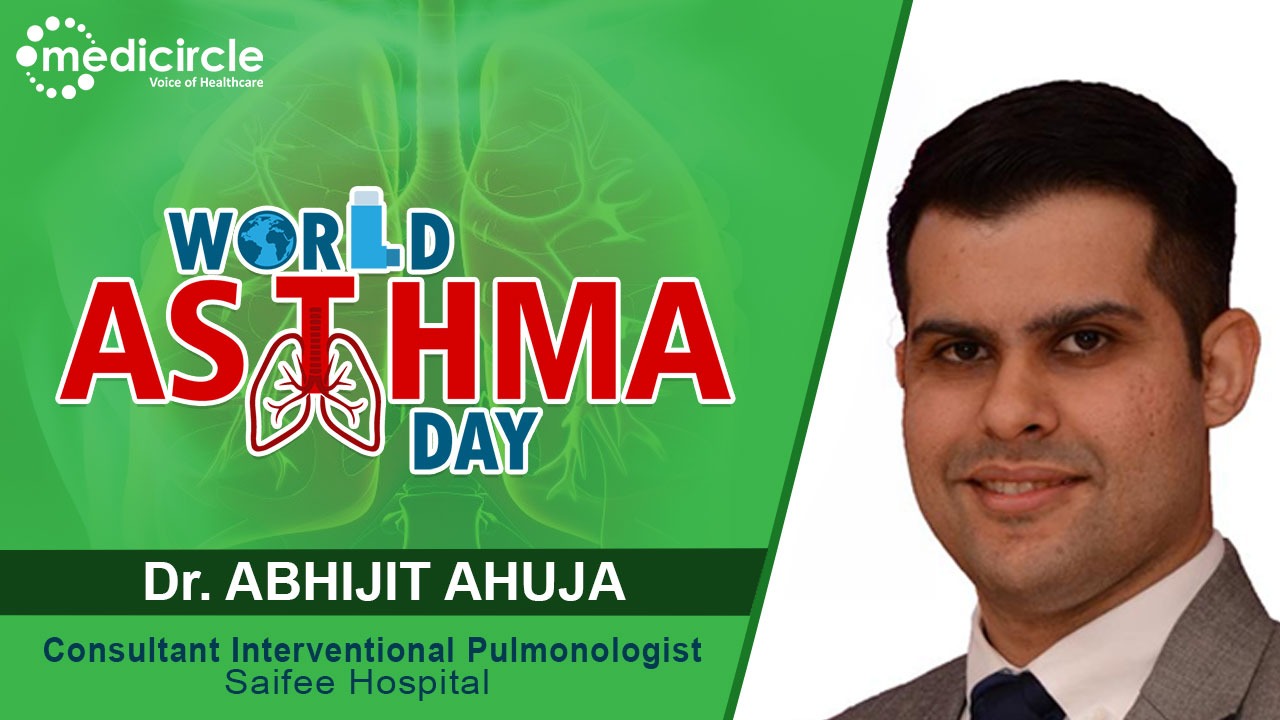
 Being regular with medications and consulting your doctor regularly is very important for asthmatic patients says Dr. Abhijit Ahuja. He has expertise in his clinical experience with many hospitals in Mumbai which includes Saifee Hospital, Bhatia Hospital, and Sushrut Hospital.





Asthma is an inflammation and obstruction of the bronchial tubes, a passage that allows air to enter and leave the lungs. During an asthma attack, muscles surrounding bronchial tubes constrict, narrowing the air passage, making it difficult to breathe. The duration of the attack may vary depending upon the cause. At Medicircle, on the occasion of World Asthma Day, we are speaking to eminent Pulmonologists, Respiratory therapists, Paediatricians to build awareness regarding respiratory-related diseases and their available treatments.
Dr. Abhijit Ahuja is an interventional pulmonologist practicing in various hospitals in Mumbai which includes Saifee Hospital, Bhatia Hospital, and Sushrut Hospital. He holds European Diploma in respiratory medicine and has presented various papers at national and international conferences.
Cause of asthma
Dr. Abhijit Ahuja says, “Asthma is a disease in which your air passages get inflamed because of exposure to the allergen. Most of the people who have asthma also have a lot of allergies. This swelling of air passages leads to difficulty in breathing which results in noisy breathing called wheezing, chronic cough and accompanied by sputum production.”
Symptoms of asthma
Dr. Ahuja informs, “Asthma starts sometimes early in childhood. It usually begins with the following symptoms
- Difficulty in breathing
- Shortness of breath especially when one is walking or doing daily activities
- Cough with sputum production
- Chest tightness
The asthmatic attack makes it difficult to function in your daily activities whether you are just doing work or daily household chores. If asthma is worse, the only way to prevent it is to strictly adhere to your medications or use the rescue inhaler as prescribed by the doctor.
Asthma and COVID
Dr. Ahuja states, “ There is no correlation between the asthmatics getting COVID as opposed to normal patients. Asthmatic patients are as vulnerable to COVID as any other person who is nonasthmatic. The only precaution for asthmatic patients is to be regular with medications and be in touch with their doctors. Sometimes the symptoms may overlap and you might feel that your asthma symptoms are getting worse. This may result in the usage of inhalers when you began to feel breathless. Being regular with medications and consulting your doctor regularly is very important. This will make you feel comfortable which means that your asthma and lung condition is okay. But in spite of medicines, you might feel the need of using more inhalers during this pandemic. This could be either due to COVID or asthma which is getting out of control. All you need to do is be more vigilant about the symptoms. ”
The mainstay asthmatic treatment is inhalers
Dr. Ahuja informs, “ One question that comes in many patient’s minds who are asthmatic is that Inhalers which is the mainstay of treatment contains steroids and whether you should be taking steroids? In this case, steroids are also the mainstay of the treatment for COVID. This treatment is important to keep your asthma under check. The inhaled corticosteroid does not put you at high risk of contracting the disease. It is not an immunosuppressant. So you should continue to use the inhaler regularly as advised.”
(Edited by Dr.Rati Parwani)





.jpeg)








.jpg)
.jpg)
.jpg)
.jpg)
.jpg)
.jpg)


.jpg)
.jpg)
.jpg)