 Thursday, October 08, 2026
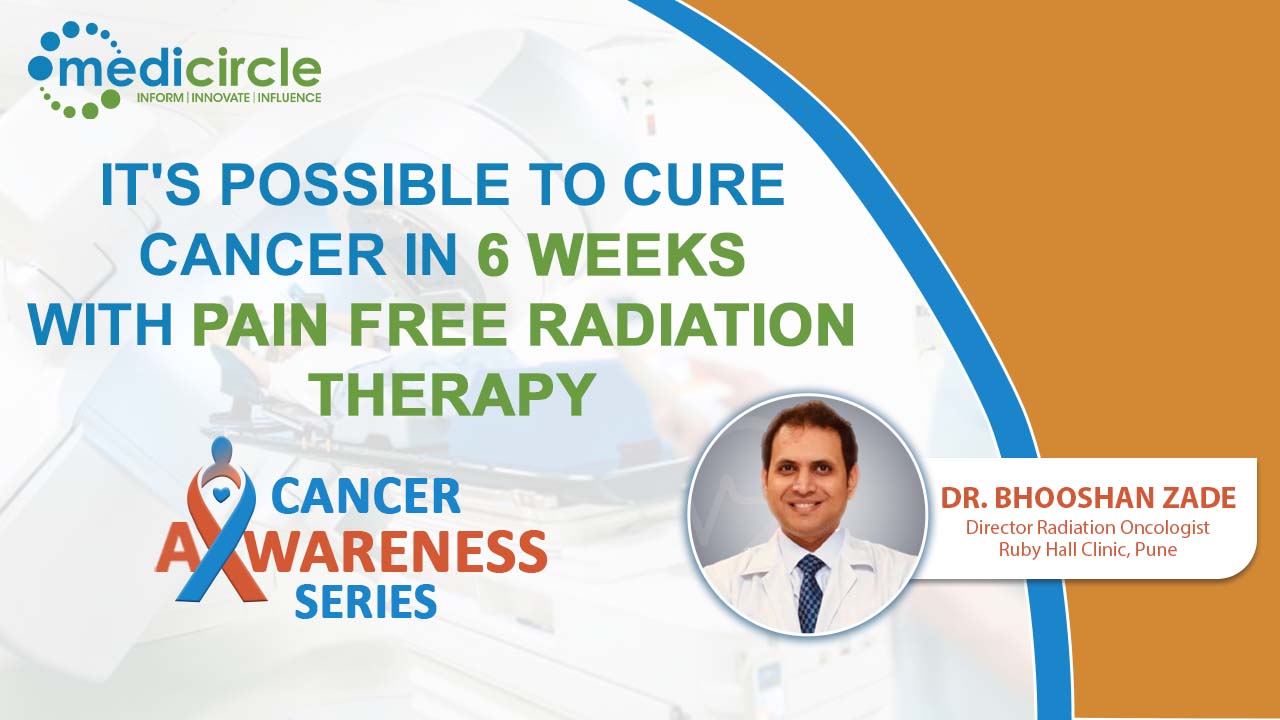
 More than 14 million new cases of cancer are diagnosed globally each year. It is estimated that there will be about 8 lakhs new cancer cases in India every year. Radiation Therapy is now recognized as an essential element of an effective cancer care program as it is absolutely not painful and is widely available throughout the world.




According to the National Center for Biotechnology Information, “More than 14 million new cases of cancer are diagnosed globally each year; radiation therapy (RT) has the potential to improve the rates of cure of 3.5 million people and provide palliative relief for an additional 3.5 million people.”
What is radiation therapy?
Radiation therapy is a more than 100 years old viable way of treating cancer effectively. More and more advances in the radiation therapy sector result in more accessible, less toxic and more acceptable to the larger population.
Dr. Bhooshan Zade states “Any Electromagnetic wave carrying energy is known as radiation. Radiation is of 2 types, the first one is High energy radiation which is also known as ionizing radiation. Low energy radiation is also known as non-ionizing radiation. In radiation, high ionizing or High energy radiation is used along with help of a linear accelerator machine which is then directed towards tumor cells. DNA of tumor cells gets damaged and Damaged DNA cannot multiply. Hence, in an attempt at multiplication, it dies which is called Mitotic cell death. Slowly the tumor cells that had contact with radiation perish away. But at the very same time, normal tissues also get some amount of radiation, but since normal tissue cells have DNA repair mechanism they escape from harmful effects of radiation in a certain time.”
How do radiation oncologists treat cancer?
Head and neck cancer is common in India. For example, Head and neck cancer is divided into 2 categories, the first one being upfront operable in which an oncologist sees the tongue or buccal mucosa in which the patient goes for surgery first and based on the Histopathology report of surgery, the patient is given adjuvant radiation therapy or adjuvant chemoradiotherapy by the oncologist.
The second one is where surgery upfront is not possible due to the Advanced nature of the disease or because of the location of the disease in which the surgery becomes too morbid or too big and surgery seems to be not quite possible, in that very case Direct radiation therapy along with Concurrent chemotherapy comes into action. The intent of radiation therapy is to kill the tumour cells to push high doses of radiation which are required for the death of the tumour cells while preserving the normal tissues. This cumulative process is called Treatment planning which is very well required for eliminating cancer.
Considering the earlier given example of Head and neck cancer, the first step in the process of the treatment is immobilization wherein thermoplastic mold is used on the patient for preventing him from doing any movement for some time to perfectly execute the Treatment planning. Even the slightest movement may hamper while execution of the plan. The second step is Ct simulation wherein the patient is virtually inside the computer, Thereby paying close attention to the minute details and creating a viable treatment plan. This entire process is known to be a Treatment planning workflow which typically takes around 2-3 days for conformal planning.
The patient has to come for 5 days a week for 6 to 7 weeks. Every treatment session would be around 5 minutes on the machine. Radiation therapy can be done in OPD. Generally, 90%- 95% of Patients don't need admission. Sometimes in certain cases due to problems such as diabetes, diabetes, etc, the patient may need admission.
Is radiation therapy the same as chemotherapy?
No, chemotherapy is medicines given out in the form of oral or injectable routes. Radiation therapy is a locoregional treatment. At times chemotherapy and radiation therapy are used together which is known as Concurrent chemoradiation.
For which type of cancer is radiation therapy most effective?
80-90% of solid tumor cases at some point in time Need radiation therapy. Head and neck cancer, breast cancer, cervical cancer, and Esophageal cancer require Earlier treatment. There are certain cancers like chemotherapy first or surgery first, radiation comes as palliation or adjuvant treatment.
Can radiation therapy completely cure cancer?
It entirely depends on the stage of cancer.
Does radiation affect fertility in women?
If radiation is directed to the organ of fertility because of cancer in that location then the answer is Yes. If the organs of fertility are away from radiation areas then, the answer is No.
Does Radiation therapy lead to hair fall?
If the brain tumor is treated with radiation hair fall will be present as radiation will enter through the scalp. If other areas other than the brain area are getting treated then there will be no hair fall.
Is radiation therapy painful?
Radiation therapy is absolutely not painful. It is basically an X-ray. Such X-rays can be compared with Ct scan/Ct chest. But radiation has its own side effects which will come in a timely manner. The impact of radiation is absolutely painless.
(Edited by Elvis Almeida)





.jpeg)








.jpg)
.jpg)
.jpg)
.jpg)
.jpg)
.jpg)


.jpg)
.jpg)
.jpg)