 Thursday, October 08, 2026
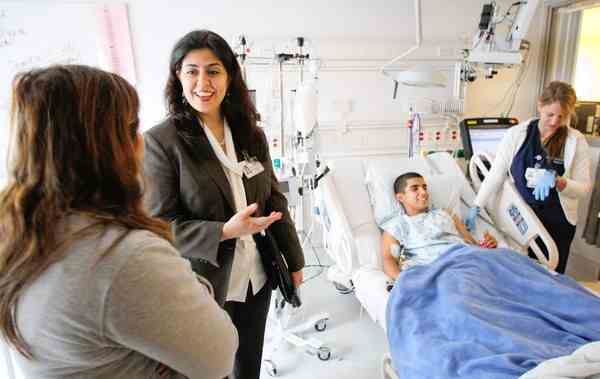
 Medical interpreters are bilinguals who interpret intensive medical information turning terminologies and jargons into easily understandable information. They are important for reducing costs by averting medical errors from misinterpretation of information by patients and clinicians.





The profession of medical interpreters is a significant one. They are a part of the medical interdisciplinary team helping people with not only difficult terminologies but with empathetic understanding of their problems. Many hospitals undermine their presence in their workforce as part of cost saving measures.
Why is medical interpretation important?
There are 22 officially recognized languages in India and many other languages and dialects. It is easier for everyone to understand their medical information in their own language. With so many different languages and dialects, medical interpretation and translation is a challenging profession. With this pandemic where disease became out of control, the role of medical translation became even more bigger. Everyone sought medical care in their own native language. Medical interpreters and translators had a great role to play against the outbreak of Corona virus. The most important work that they did towards basic prevention of infection was to accurately and completely interpret or translate the rules of staying safe so that transmission of the disease can be stopped.
A certified medical translator or interpreter ensures not only accurate diagnosis, but also play valuable role in how the patient is responding to treatment and whether his or her information is being transmitted with accuracy to the doctors. In these times of virtual care, medical interpretation helps in successful medical localization to ensure that there is both way flow of accurate information. Though it is common for a patient in our country to think that a bilingual family member or friend is enough to interpret medical terminologies, certified medical translators and interpreters are the people who can provide maximum accuracy.
Global contribution of medical interpretation and translation
All around the globe, scientists and medical researchers have been working to end the outbreak of different diseases. If we take the example of the World Health Organization (WHO), every document created by it gets immediately translated into 6 different languages. From these 6 major translations there are many other translations all around the world in each region’s local dialects. Though machine translation services are available, they are not as accurate as translations done by humans. Also, humans add their own cultural touch so that people can relate with the advice provided.
Future of medical interpretation
Medical interpretation is slowly gaining more significance. Some states in US have fully embraced medical interpreters as their partner in healthcare delivery. They look upon it as a cost saving measure that reduces medical errors, prevents over-prescribing of diagnostic tests, saves costs that patient or hospitals might have to incur due to medication errors and a measure that also helps in averting the risks of lawsuits that may arise due to errors in diagnosis and treatment.





.jpeg)










.jpg)
.jpg)
.jpg)
.jpg)
.jpg)
.jpg)


.jpg)