 Thursday, October 08, 2026
 Scientists at CMERI have also developed a few other customized technologies, including Disinfection Walkway, Road Sanitizer Unit, Face Mask, Mechanical Ventilator and Hospital Waste Management Facility.





Kalyan Dombivli Municipal Corporation (KDMC) has recently announced that a dash board about COVID-19 situation in KDMC area is now available in public domain. The page has been linked with the website of municipal corporation, and other social media handles of city government (such as Facebook, Twitter, Instagram), and is open for viewing by public.Dashboard can be accessed at https://kdmc-coronavirus-response-skdcl.hub.arcgis.com/
Main feature of the ‘dashboard’, is that, using the drop menu, citizens can get to know the status of COVID situation in any of the electoral ward and related graphs. Citizens can also get the status by clicking on the respective wards on spatial map of the city. The dashboard also provides multiple options to view the maps by changing the background base map from the options such as satellite view, road map etc.
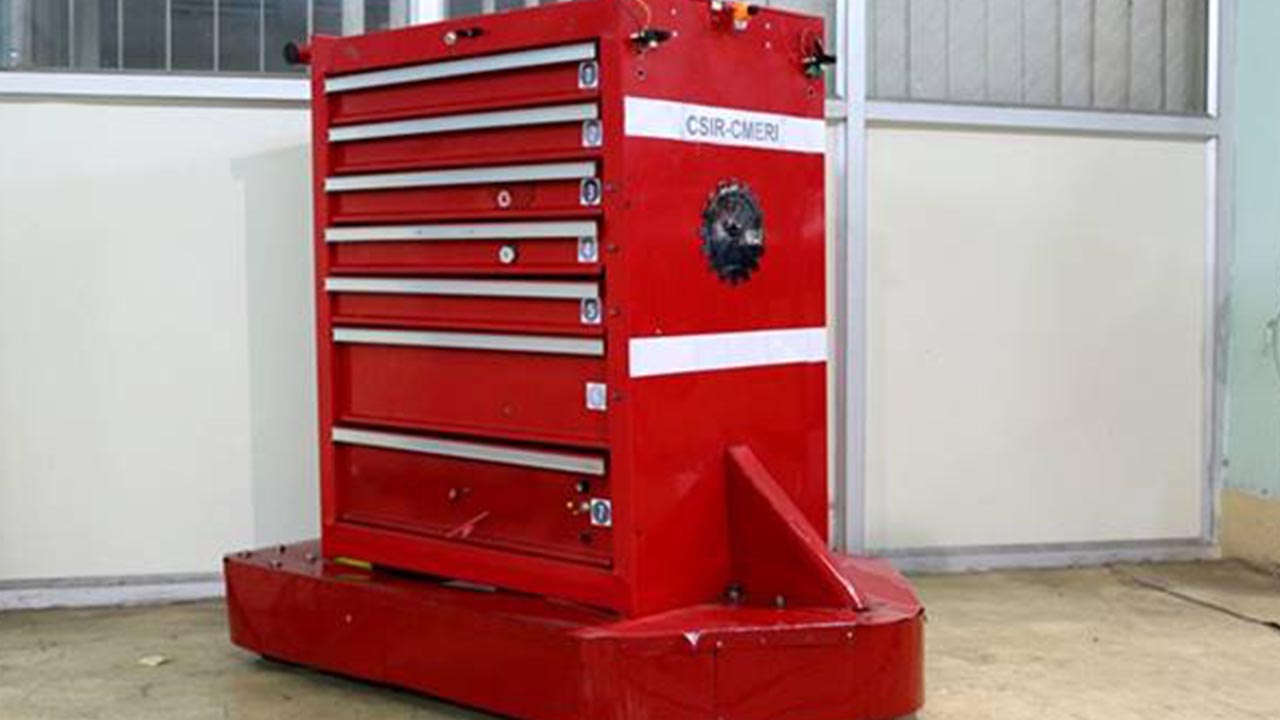
In other Covid 19 related technology updates ,healthcare workers at hospitals are risking COVID-19 infection while taking care of those infected by it 24/7. Perhaps the level of risk may get reduced hereafter with the help of a new friend, HCARD. The robotic device HCARD, in short for Hospital Care Assistive Robotic Device, can help frontline healthcare workers in maintaining physical distance from those infected by coronavirus.
HCARD is developed by Durgapur-based CSIR lab, Central Mechanical Engineering Research Institute. The device is equipped with various state-of-the-art technologies and works both in automatic as well as manual modes of navigation.This robot can be controlled and monitored by a nursing booth with a control station having such features as navigation, drawer activation for providing medicines and food to patients, sample collection and audio-visual communication.
Prof. (Dr.) Harish Hirani, Director, CSIR-CMERI stated that “This Hospital Care Assistive Robotic Device could be effective for frontline healthcare officials dealing with COVID-19 patients in delivering services while maintaining mandatory physical distancing”. The cost of this device is less than Rs 5 lakh and the weight is less than 80 kilograms, added Prof. Hirani.
CSIR-CMERI is working on war footing to minimize the impact of COVID-19 through technological interventions. As spelled out by WHO, personal protective equipment (PPE) is very important in preventing transmission of coronavirus in the society, thus the Institute has channelized its resources optimally to develop PPE and community-level safety equipment for helping the public at large and healthcare institutions.
Scientists at CMERI have also developed a few other customized technologies, including Disinfection Walkway, Road Sanitizer Unit, Face Mask, Mechanical Ventilator and Hospital Waste Management Facility.






.jpeg)










.jpg)
.jpg)
.jpg)
.jpg)
.jpg)
.jpg)


.jpg)