 Monday, October 05, 2026
 Operation Samudra Setu and Shramik Special are bringing back thousands of Indians stranded




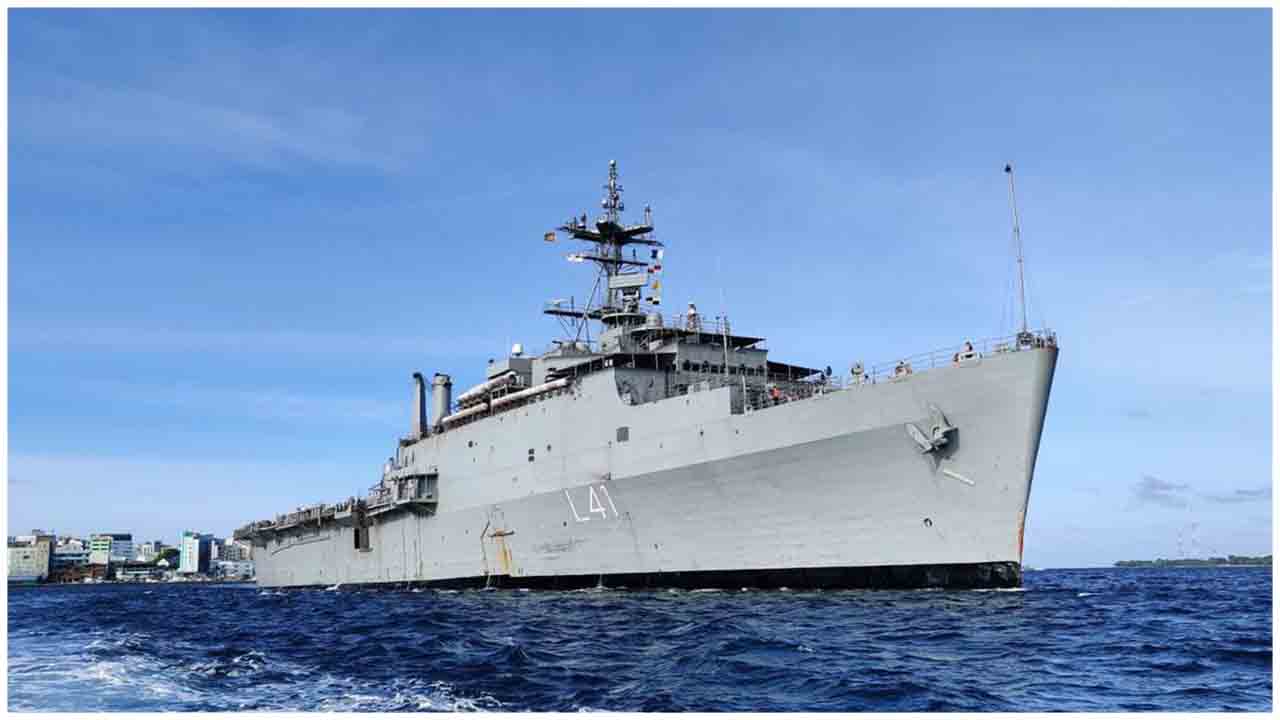
Indian Naval Ship Jalashwa completed embarkation of 588 Indian citizens on 15 May 20, at the port of Male, Maldives as part of Operation Samudra Setu - the Indian Navy's contribution to India's national effort to bring home our citizens from foreign shores by sea. Her manifest of 588 includes six expectant mothers and 21 children.
The ship's staff ensured completion of all formalities for the manifested passengers while observing safety and medical protocols at all times. The inclement weather hampered the planned embarkation process requiring various pre-embarkation activities to be done onboard the ship itself.In Andaman and Nicobar Islands, persons stranded in Port Blair are being sent at their respective homes in N&M and Nicobar District.In Andaman and Nicobar Islands, persons stranded in Port Blair are being sent at their respective homes in N&M and Nicobar District.
Meanwhile, M V Campbell Bay sailed for Nancowry in Nicobar District with 128 passengers. A total of 263 passengers left for Port Blair in the return journey made through these ships. These also includes 80 labourers and seven poachers. The Superintendent of Police, Nicobar briefed members of tribal councils and village captains for surveillance of the persons returned.
I(n other news,Railway Minister, Piyush Goyal said that 1,034 Shramik special trains have been run to bring the workers back home.In a tweet, Mr. Goyal said, 106 trains were operated yesterday. He said, Uttar Pradesh and Bihar have taken rapid steps in this direction and about 80 percent trains are run by these two states. As on midnight of 15th May,2020, a total of 1074 “Shramik Special” trains have been operationalized from various states across the country. More than 14 lakhs stranded people have been transported back to their home State in last 15 days.
It is to be noted that more than 2 lakh person are being transported per day during last 3 days. In days to come it is expected to be scaled upto 3 lakh passengers per day.
These 1074 Shramik Special trains have originated from various States like Andhra Pradesh, Delhi, Gujarat, Haryana, Maharashtra, Punjab, Rajasthan, Tamil Nadu, Telangana, Karnataka, Kerala, Goa, Jharkhand, Uttar Pradesh, Madhya Pradesh, Bihar.
These Shramik Special trains were terminated in various states like Andhra Pradesh,Assam, Bihar, Chhatisgarh, Himachal Pradesh, Jammu & Kashmir, Jharkhand, Karnataka, Madhya Pradesh, Maharashtra, Manipur, Mizoram, Odisha, Rajasthan, Tamil Nadu, Telangana, Tripura, Uttar Pradesh, Uttarakhand, West Bengal.
In these Shramik Special Trains, proper screening of passengers is ensured before boarding the train. During the journey, passengers are given free meals and water.






.jpeg)
.jpg)
.jpg)
.jpg)
.jpg)
.jpg)
.jpg)






.jpeg)

.jpeg)


.png)