 Saturday, October 10, 2026
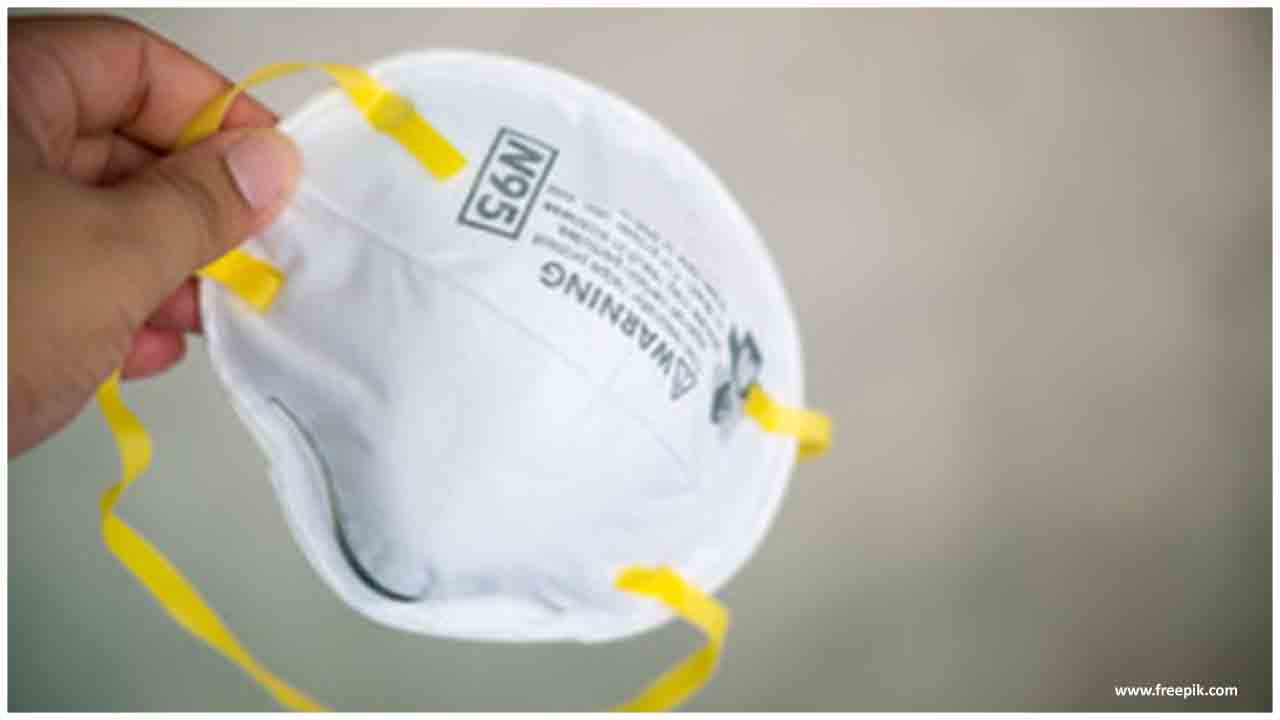
 The comments from Venki Ramakrishnan come as two new peer-reviewed studies showed how wearing face coverings may help significantly reduce the spread of viruses




Individuals who will not wear face covers during the coronavirus pandemic ought to be criticized equivalent to drink drivers, the top of the renowned Royal Society science diary said Tuesday.
The remarks from Venki Ramakrishnan come as two new companions looked into considers demonstrated how wearing face covers may help fundamentally decrease the spread of infections, for example, COVID-19.
"It used to be very ordinary to have many beverages and commute home, and it additionally used to be typical to drive without safety belts," Ramakrishnan wrote in a remark article.
"Today both of those eventual thoughts about introverted, and not wearing a face cover out in the open ought to be respected similarly."
Ramakrishnan focused on how veils are just really viable whenever worn by a great many people.
"In the event that we all wear one, we ensure one another and in this way ourselves, diminishing transmission," he said.
The COVID-19 pandemic has spread at various places all through the world and there are various general wellbeing intercessions that seem to have straightened the bend of limited new diseases, including lockdowns and social separating.
Appraisals differ, yet it is thought around 40-60 percent of transmissions happen when bearers are pre-or asymptomatic - that is, they may not realize they are sick yet are as yet ready to taint others.
On examination by groups from the Universities of Pennsylvania and Cambridge dissected pregnant ladies conceded for conveyance in New York City who were screened for COVID-19.
They found that 13.7 percent of the ladies were conveying the infection, 88 percent of whom demonstrated no side effects.
Material face veils decrease oral molecule scattering between 50-100 percent, contingent upon various components, the specialists composed.
In pre-indicative people, considers have demonstrated that viral beads are radiated by wheezing and hacking, yet additionally by talking and breathing, which means mass face covers would altogether diminish the danger of new contaminations.
Another examination distributed Monday in the Royal Society delineated huge inconsistencies in veil wearing rates among rich countries.
In late April - as COVID-19 seethed all through Europe - veil wearing take-up in Britain was around 25 percent, the examination found.
This contrasted with 83.4 percent in Italy, 65.8 percent in the United States, and 63.8 percent in Spain.
The creators said that while none of the nations contemplated had a culture of veil wearing, those with setting up and clear open direction had a far higher take-up.
"It isn't the open's flaw for not wearing veils in the UK," said Melinda Mills, executive of the Leverhulme Center for Demographic Science at the University of Oxford and lead creator.
"Or maybe, predictable strategies and powerful open informing are indispensable.
"Individuals in nations like Italy, the US, and Spain... have quickly received face covers generally in light of the fact that the specialists gave them clear rules to comprehend why they should wear them.





.jpeg)










.jpg)
.jpg)
.jpg)
.jpg)
.jpg)
.jpg)


.jpg)