 Sunday, October 11, 2026
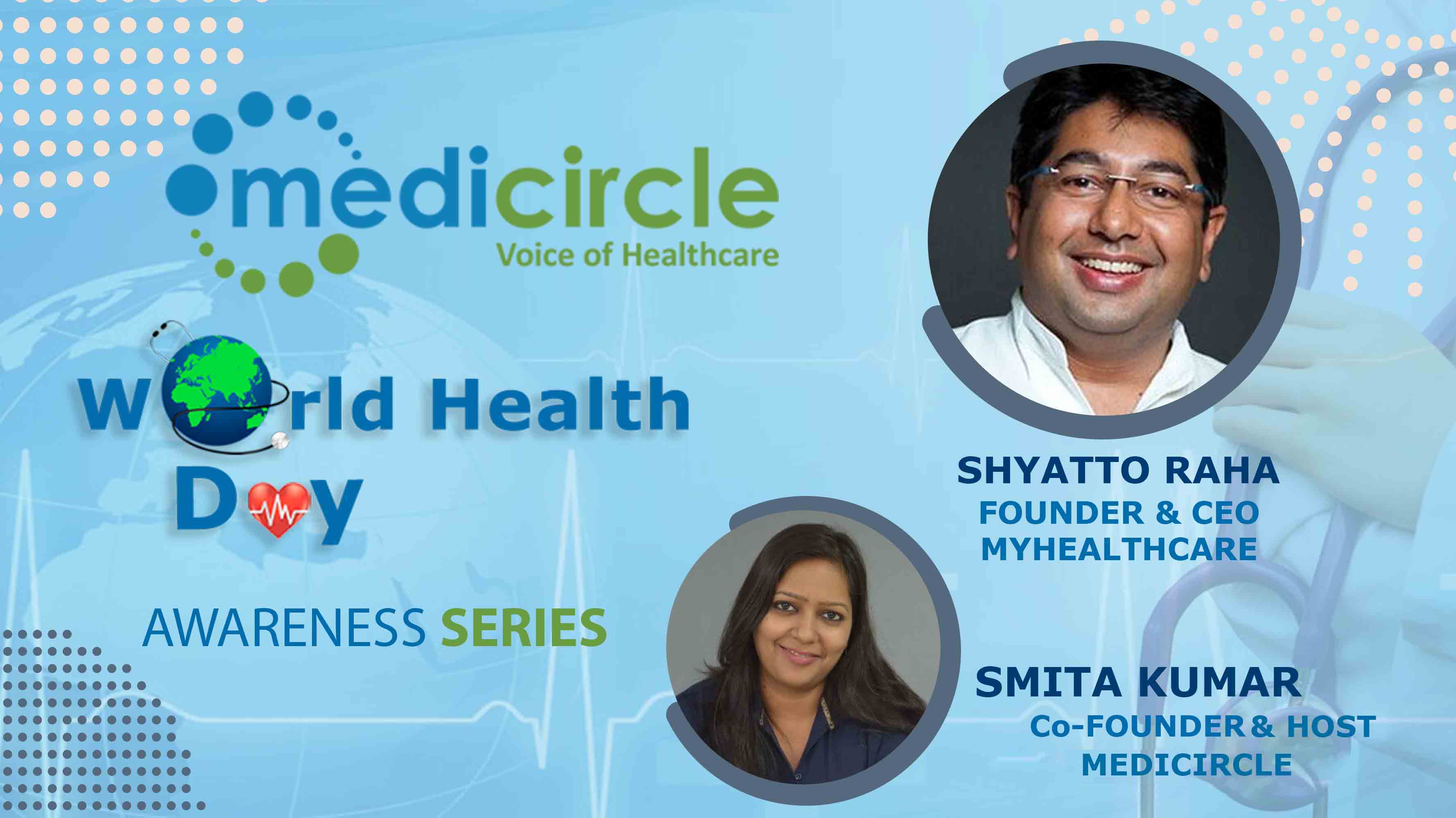
 Shyatto Raha, CEO, and Founder of MyHealthcare gives insight into the contribution of Indian startups to the economic and social growth of India. He gives an overview of healthcare startups and a revolution in innovation brought by them.





Indian Healthcare Technology startups have gained significant momentum over the last five years by the government’s push towards digitalization. There has been an uptake of technological advances and spurt in healthcare apps. On this World Health Day, we at Medicircle present you the World Health Day Awareness Series wherein we are interviewing the healthcare start-ups which have shined through this pandemic.
Shyatto Raha is a CEO and Founder of MyHealthcare, a digital healthcare ecosystem that enhances patient engagement and empowers them with their healthcare needs by operating EHR, health trackers, emergency services, video consultation, and 24/7 health monitoring. He has worked with an organization such as NDTV worldwide and Astro Networks Malaysia and Indonesia both.
Contribution of Indian startups to the economic and social growth of India
Shyatto Raha says, “The healthcare industry is definitely set to boom. The telemedicine sector alone is just expected to grow across by five and half-billion dollars in 2025, just about four years away. We are by far one of the fastest-growing sectors in the country today. The situations like the COVID pandemic are thrown a greater light on this sector. Start-ups are the ones that are fueling this growth. Obviously, there are infrastructures like hospitals that are doing their bit, which is 300 million that you mentioned about.”
Healthcare start-ups bring better business to the market
Shyatto informs, “The real digitalization of the healthcare system is being driven by start-ups. Some of them would be mature start-ups like PharmEasy and there are younger start-ups like us who are trying to do our bit. But, it will be very interesting to see the delivery and specialties. There are certain start-ups that are focusing on the creation of specialties. There are AI companies that are focusing on bringing AI for diagnostic and so forth.
Innovation of healthcare
Shyatto says, “The start-up ecosystem today is what is fueling the innovation that the healthcare industry very much needs. It is fueling the research and development of digitalization for the healthcare industry. This is the best time and I am happy to see that almost every day you hear news about start-ups getting funded especially healthcare start-ups. This gives more confidence to the start-ups to bring better business value propositions to the market.”
Embracing the digital technology
Shyatto explains, “The pandemic is like the demonetization movements for healthcare. Two things have changed:
The patient behavior The doctors and hospitals
Doctors and hospitals have embraced digital technology. They understand the best about digital technology for healthcare. It is not just a tool for better business but in fact, it is a tool for better efficiency and clinical diagnosis. The patients have seen this as a boon for them during this pandemic and lockdown. The only way they could get access to healthcare was through digital technology and digital platform. The virtual consult was very important along with building the ecosystem to deliver the medicines and facilitate diagnosis at home. When the pandemic phase was reducing, the OPD scale started moving up. Our data shows that 30 % of patients still continued virtual consult as to the primary way. It is a defining movement in healthcare.”
The cutting edge of digital technology
Shyatto informs, “India is a country with cutting edge of digital technology. Services like swiggy, UrbanClap, Paytm, and transportation services like Uber are available in India. But, when it comes to healthcare, we just did not have anything there. We have done extremely well to grab this opportunity for start-ups and mover up very quickly in grabbing it for better.”
The disparity in healthcare and the Importance of equity in healthcare
Shyatto emphasizes, “The disparity is too vast. Healthcare and digital care cater today only to 30 % of India. 70 % of India contributes to rural area which does not have access to it. If you look at specialty care, we are talking about the top 4 cities of India which have good quality specialty care. There is a disparity in access as well as the cost of healthcare. We have to improve this “access to healthcare” in tier2 city. The real problem is not just the physical infrastructure, we just don’t have enough doctors and nurses. You can build 16 hospitals overnight but there are not enough doctors and nurses to tale this quality healthcare to tier2 city. The only way we can do this is by taking the knowledge and expertise which tier1 hospitals possess and shifting them to tier2 cities.”
A futuristic vision of a health entrepreneur
Shyatto explains with a perfect example, “For example, if a doctor needs to do a craniotomy in tier2 city, they should be able to use the power of digital health by taking a surgical session with a doctor in tier1 city and get that surgery done. This is the only way to bring about equity in healthcare. We as start-ups will see the scale going high. This is not going to change overnight and will take time. We have already jumped over the first hurdle of doctors and hospitals getting adapted to digital health. Now, as a start-up, we have to focus on grabbing the opportunity and taking it to tier 2 cities.”
(Edited by Dr.Rati Parwani)





.jpeg)










.jpg)
.jpg)
.jpg)
.jpg)
.jpg)
.jpg)


.jpg)