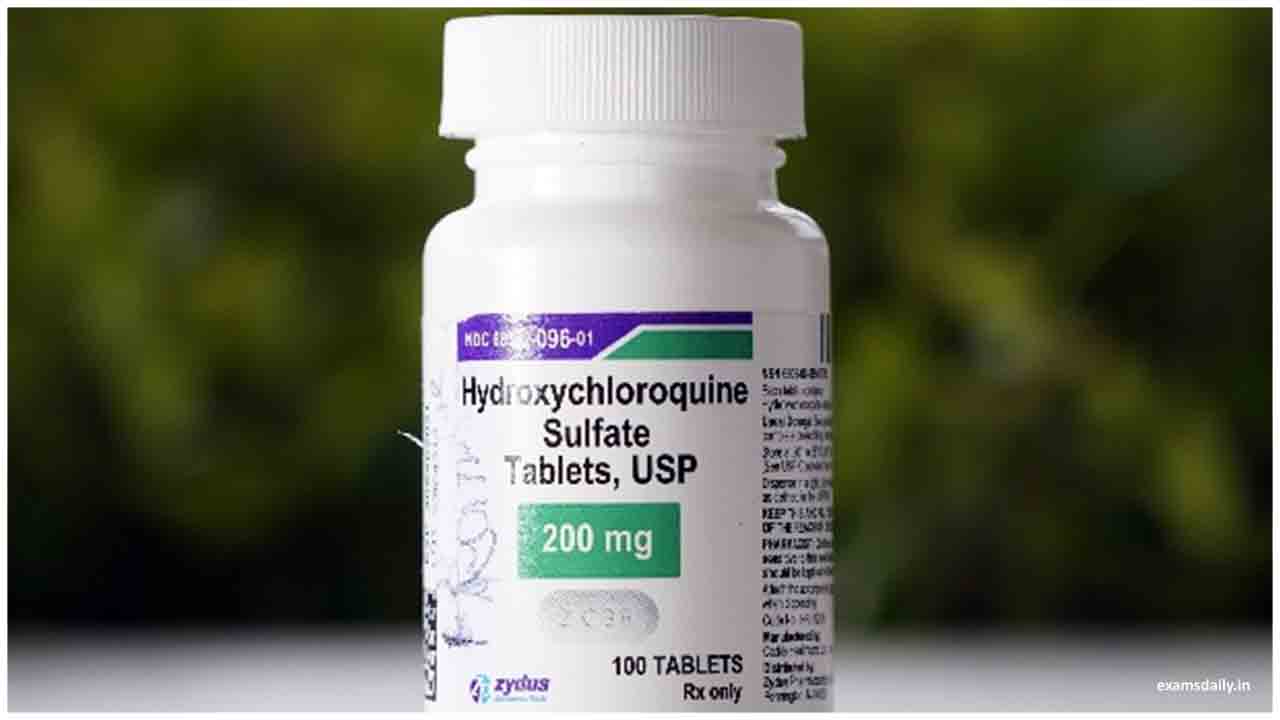
Anti-Malarial drug HCQ does not reduce COVID-19 mortality rate


Deprecated: strlen(): Passing null to parameter #1 ($string) of type string is deprecated in /home/medicircle/public_html/script_newsdetails.php on line 75
▴ antimalarial-drug-hcq-reduce-covid19-mortality-rate
The announcement comes two days after the US revoked emergency use status of both hydroxychloroquine and chloroquine to treat the new coronavirus.


The World Health Organization said it had concluded Wednesday to end preliminaries of hydroxychloroquine as a likely treatment for COVID-19 patients, discovering it didn't diminish the death rate.

Specialist Ana Maria Henao Restrepo, from the WHO's wellbeing crises program, told a virtual question and answer session in Geneva that the antimalarial sedate was being pulled back from its multi-nation Solidarity Trial of possible medicines.

"The inward proof from the Solidarity/Discovery Trial, the outside proof from the Recovery Trial and the joined proof from these enormous randomized preliminaries, united, recommend that hydroxychloroquine - when contrasted and the standard of care in the treatment of hospitalized COVID-19 patients - doesn't bring about the decrease of the mortality of those patients," she said.

"In view of this examination and on the audit of the distributed proof, the Executive Group of the Solidarity/Recovery Trial has met on two events and today we met with all the foremost specialists.

"After consideration, they have inferred that the hydroxychloroquine arm will be halted from the Solidarity Trial."

The declaration came two days after the United States pulled back crisis use authorizations for both hydroxychloroquine and chloroquine, two antimalarial drugs supported by President Donald Trump to treat the new coronavirus.


Tags : #HCQ #Antimalarial #COVID-19

Related Stories

Loading Please wait...

-Advertisements-


Trending Now

The Value of Risk Communication in Public HealthOctober 08, 2026
What Makes a Reliable Health Screening Programme?October 08, 2026
How Language Access Can Improve Patient Communication in Indian HealthcareOctober 07, 2026
Why Health Literacy Matters in Preventive HealthcareOctober 07, 2026
Improving Follow-Up After Diagnostic Testing: Where Systems Commonly Break DownOctober 07, 2026
How Community Health Workers Support Preventive Care DeliveryOctober 07, 2026
AI in India's Emergency Departments: Reducing Diagnostic DelaysOctober 06, 2026
AI and Patient Consent in India: Who Is Responsible?October 06, 2026
Wearable Technology in Pregnancy: Benefits and LimitsOctober 06, 2026
Remote Monitoring for High-Risk Pregnancies in IndiaOctober 06, 2026
Fortis Escorts Faridabad Launches ‘Sehat Express’ Mobile Bus for Accessible Doorstep Cancer Screening in association with Faridabad Industries Association Charitable Society and Rotary Club FaridabadOctober 05, 2026
Advanced Thrombectomy Saves 60-Year-Old Woman After Severe Heart Attack at KIMS SaveeraOctober 05, 2026
Constipation, Bloating and Long Sitting Hours: Doctors at RG Hospitals Delhi Warn Urban Professionals Not to Ignore Gut ProblemsOctober 05, 2026
Fermenta – Centre of Excellence for Food Fortification Inaugurated at NIFTEM-T, ThanjavurOctober 05, 2026
Alzheimer’s Dementia: Recognising the Signs, Diagnosing Earlier and Changing the Future of Brain HealthOctober 05, 2026
Man Matters Hairfall Case Study 2026: 7 Lakh+ Consultations Reveal How Hair Loss Changes With AgeOctober 05, 2026
Medication Reconciliation: A System-Level Step for Safer Transitions of CareOctober 05, 2026
The Role of Clinical Pharmacists in Safer Medication UseOctober 05, 2026
Nanavati Max Hospital Hosts Max Cancer Congress 2026, Bringing Together Oncology Experts to Explore the Future of Cancer Care October 01, 2026