 Thursday, October 08, 2026
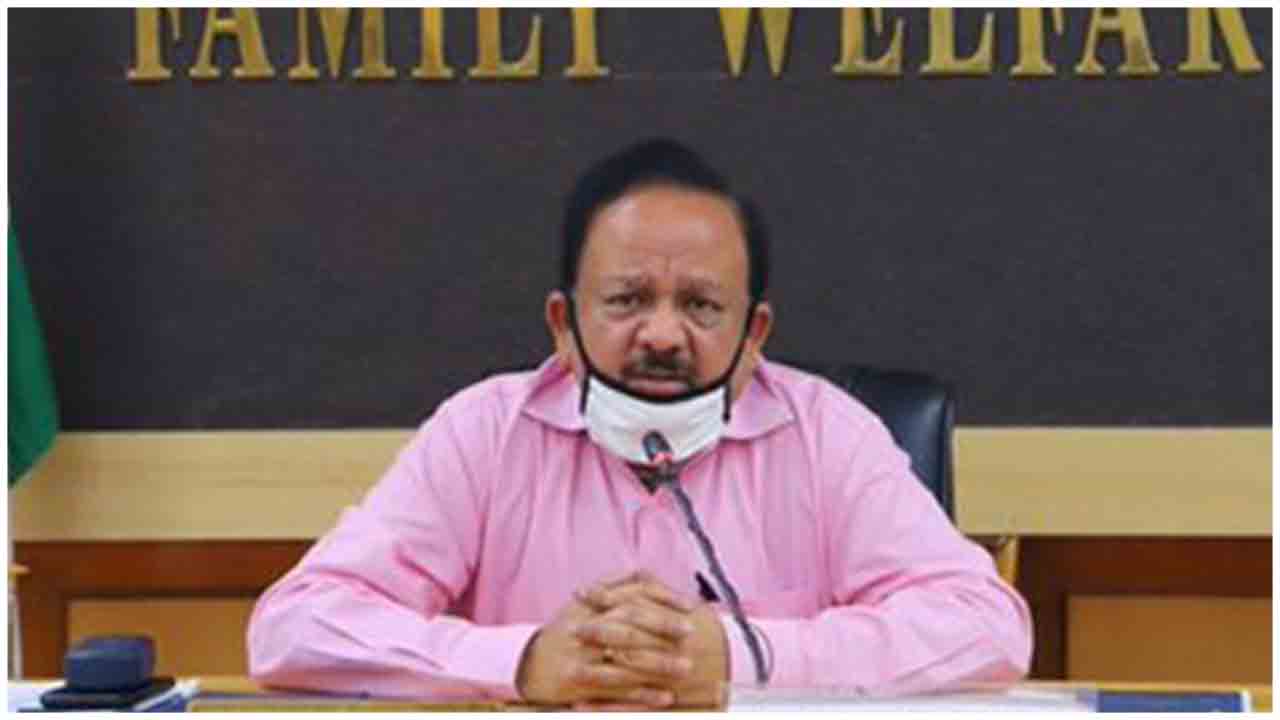
 Dr. Harsh Vardhan also highlighted that the doubling time in the past 14 days was 10.9, it has improved to 12.2 in the last three days.




Union Health Minister Dr. Harsh Vardhan today interacted with Himachal Pradesh, Uttarakhand and Jammu-Kashmir and Ladakh to review preparedness and containment measures taken for COVID-19 management.
He informed that the doubling time in the past 14 days was 10.9, it has improved to 12.2 in the last three days. He said that the fatality rate in the country is 3.2 per cent and recovery rate has improved to 31.74 per cent.
Dr. Harsh Vardhan also highlighted that the nation's testing capacity has increased to one lakh tests per day with 347 Government laboratories and 137 private laboratories. Over 17 lakh sixty two thousand eight hundred forty tests have been done so far for COVID-19.
Meanwhile Prime Minister Narendra Modi yesterday announced a special economic package worth 20 lakh crore rupees for an 'Atma-Nirbhar Bharat' or self-reliant India, saying that self reliance is the only way to ensure that 21st Century belongs to India. Addressing the nation yesterday, the Prime Minister noted that this package, together with earlier announcements by the government during COVID crisis and decisions taken by RBI, is to the tune of 20 lakh crore rupees. This is equivalent to almost 10 percent of India’s GDP.
Mr Modi said Finance Minister Nirmala Sitharaman will announce details of this special economic package. The Prime Minister observed that the package will also focus on land, labour, liquidity and laws. It will cater to various sections including cottage industry, MSMEs, labourers, middle class, industries, among others. The Prime Minister said several bold reforms are needed to make the country self-reliant, so that the impact of crisis such as COVID, can be negated in future. These reforms include supply chain reforms for agriculture, rational tax system, simple and clear laws, capable human resource and a strong financial system. These reforms will promote business, attract investment, and further strengthen Make in India.
The Prime Minister said that India bears a responsibility, recalling the Shastras, he highlighted the importance of self reliance. Mr Modi remarked that self-reliance will prepare the country for tough competition in global supply chain, and it is important that the country wins this competition. He said the COVID crisis has taught the importance of local manufacturing, local market and local supply chains. India's demands during the crisis were met ‘locally’. He said it is time now to be vocal about local products and help these local products become global.
The Prime Minister said India has resources and talent, and it will make best products, improve quality and supply chain. He pointed out that India did not produce any PPE before COVID-19 crisis and manufactured very few N-95 masks but now the nation is producing two lakh PPEs and 2 lakh N 95 masks. He said that India has converted a disaster into an opportunity. The world is now looking towards humanity centric globalisation. In this respect, the Prime Minister expressed confidence that India could lead the way.
He praised India's ancient culture saying that the wisdom of age old principles such as Vasudaiva Kutumbakam and harmony with nature ensure that world progress is central to India's conception of progress. Mr Modi clarified that when India talks about self-reliance, it is different from being self centred. He said that India considers the world as one family, and progress in India has always contributed to progress in the whole world. He also said India's initiatives such as the International Solar Alliance were a gift to the world. Our centuries old conception of self reliance has always followed the path of global progress.
The Prime Minister expressed confidence in India's capabilities and manpower. He said that India will build new supply chains, create better products and lead the global recovery. Mr Modi said India's self-reliance will be based on five pillars - economy, infrastructure, technology driven system, vibrant demography and demand. The Prime Minister also said that Coronavirus is going to be a part of people's lives for a long time, but lives cannot simply revolve around it. He said Lockdown-4 will be different and have new rules. He added that new rules will be framed on the basis of recommendations received from states, and the people will be informed about it before May 18.





.jpeg)










.jpg)
.jpg)
.jpg)
.jpg)
.jpg)
.jpg)


.jpg)