 Sunday, September 20, 2026
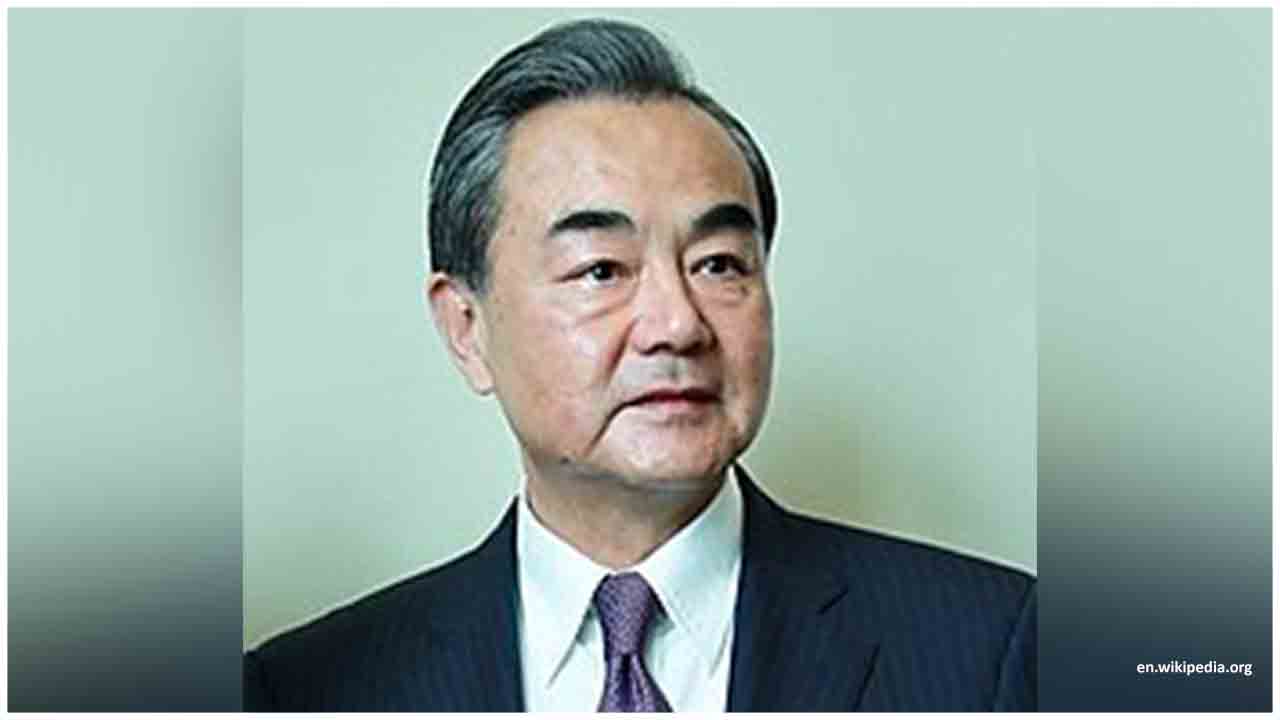
 Chinese Foreign Minister Wang Yi said that from an overall long term perspective the coronavirus will "strengthen and re-energise" BRI cooperation.




China on Sunday conceded that its multi-billion dollar Belt and Road Initiative (BRI) has been influenced by the coronavirus pandemic, yet said that the effect is "impermanent and restricted".
Chinese Foreign Minister Wang Yi said that from a general long haul point of view the coronavirus will "reinforce and reenergize" BRI participation and open-up additional opportunities.
He said the interest for general wellbeing development taking into account the COVID-19 everywhere throughout the world will give another stimulus to extend extension.
"In reality COVID-19 has influenced Belt and Road collaboration somewhat however the effect is transitory and constrained," Wang Yi told media addressing an inquiry on the effect of the coronavirus on BRI.
Sketching out the advancement made by BRI, Wang Yi said in the course of recent years, China has marked BRI collaboration archives with 138 nations, in excess of 2,000 activities have been propelled and a huge number of occupations have been made in accomplice nations.
During a similar period China's exchanging products with BRI accomplice nations have surpassed $7.8 trillion while direct Chinese speculations have topped $110 billion, he said.
The BRI was propelled by President Xi Jinping when he came to control in 2013. It plans to connect Southeast Asia, Central Asia, the Gulf locale, Africa, and Europe with a system of land and ocean courses.
The Trump organization has been very reproachful of the BRI, in which $60 billion China-Pakistan Economic Corridor (CPEC) is a leading venture, and is of the view that China's "savage" financing is leaving littler districts under colossal obligation imperiling their sway.





.jpeg)

.jpg)


.jpg)
.jpg)
.jpg)
.jpg)
.jpg)
.jpg)

.jpg)
.jpg)
.jpg)
.jpg)