 Tuesday, October 27, 2026
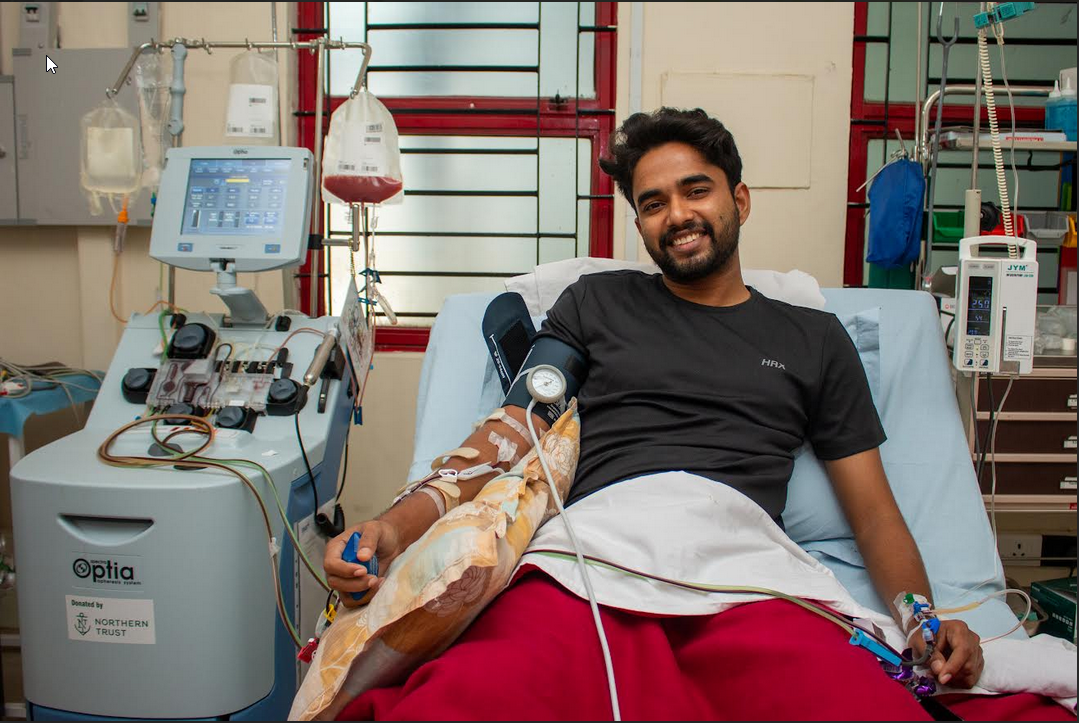
 Pauses Fast to Donate Stem Cells, Giving a Blood Cancer Patient a Second Chance at Life; Two Years Later, a Heartwarming Outcome Emerges.




Kochi, March 28, 2025: A remarkable story of selflessness and hope has emerged, highlighting the true spirit of Ramadan. Two years ago, Abdul Khader, a young man from Calicut, temporarily put his Ramadan fast on hold to donate stem cells, a decision which ultimately saved a life. Today, he received the uplifting news that the recipient of his donation is now healthy and thriving.
“Today, knowing that donating blood stem cells has helped someone recover, I feel it was the best decision I ever made. I am honored to have been chosen to be part of the patient’s recovery journey,” he stated.
Abdul, a 25-year-old IT professional, had registered as a potential blood stem cell donor with DKMS Foundation India in October 2018. In 2022, he was identified as a match for a 50-year-old patient in Kochi battling myelofibrosis, a rare type of blood cancer. Despite fasting during Ramadan, Abdul understood the urgency of the situation and agreed to donate. To ensure the procedure's success, he temporarily paused his fast, demonstrating an unwavering commitment to saving a life.
Reflecting on his experience, Abdul shared, "For me, it was a clear decision but not an easy choice," he said. "Ramadan teaches us the importance of giving and helping others. When I was asked to donate, I faced a dilemma with the thought of breaking my fast. Saving a life is the ultimate gift, and I knew I had to do it. I can always make up the fast later, but this person needed help immediately. I feel privileged to have been able to provide it.” Abdul had registered as a potential blood stem cell donor with DKMS Foundation India in October 2018.
The procedure was successful, and now, two years later, Abdul has received the heartwarming news that the patient is free of disease and enjoying a healthy life with his family in Kochi.
The treating physician Dr. Neeraj Sidharthan, a hemato-oncologist and Bone Marrow Transplant Surgeon at Amrita Institute of Medical Sciences, stated, “Myelofibrosis is a rare type of blood cancer characterised by the build-up of fibrosis tissue in the bone marrow. The bone marrow cannot make enough healthy blood cells as fibrosis tissue increases. Blood stem cell transplants are often the only curative option for patients suffering from such blood cancers.”
Explaining the blood stem cell transplant process Dr Sidharthan, said, “In a stem cell transplantation, healthy blood stem cells from a matching donor are infused into the patient to help resume healthy blood production. The best stem cell transplant outcomes happen when a patient’s human leukocyte antigen (HLA) and the HLA of a potential donor match. This is much more complex than matching blood groups. About 30% of patients find an HLA-matched donor within the family; however, the rest, 70 % of the patients, can do a half-matched transplant or look for an unrelated donor with matched HLA. The willingness of donors like Abdul is critical in saving lives. His act of kindness will inspire many more to step forward."
Patrick Paul, spokesperson at DKMS Foundation India, stated, "We are deeply moved by Abdul's extraordinary act of generosity. His willingness to prioritise saving a life during Ramadan, a month of profound spiritual significance, is a testament to the power of human kindness. His story is a powerful reminder that we all have the potential to make a difference and give hope to someone in need."
This story serves as a powerful reminder of the importance of registering as a stem cell donor and the life-saving potential of such a simple act. It highlights how, even during a time of personal sacrifice, one individual's generosity can bring immeasurable joy and hope to others.
To register as a potential stem cell donor, you must be a healthy Indian adult between 18 and 55. When you are ready to register, all you need to do is complete a consent form and swab the inside of your cheeks to collect your tissue cells. Your tissue sample is then sent to the lab to be analysed for your HLA (Human Leukocyte Antigen) and listed anonymously on the international search platform for matching stem cell donors. If you’re eligible, register as a blood stem cell donor by ordering your home swab kit at https://www.dkms-india.org/register-now to order your free home swab kit and join the movement to save lives.
About DKMS Foundation
DKMS Foundation, India, is a non-profit organisation dedicated to the fight against blood cancer and other blood disorders, such as thalassemia and aplastic anemia. They aim to improve the situation of patients who have blood cancer and other blood disorders in India and throughout the world by raising awareness about blood stem cell transplantation and registering potential blood stem cell donors. For more information, please visit www.dkms-India.org





-23-300x250.png)

.jpeg)






.jpg)
.jpg)
.jpg)
.jpg)
.jpg)
.jpg)
.jpg)
.jpg)
.jpg)

