Friday, October 23, 2026
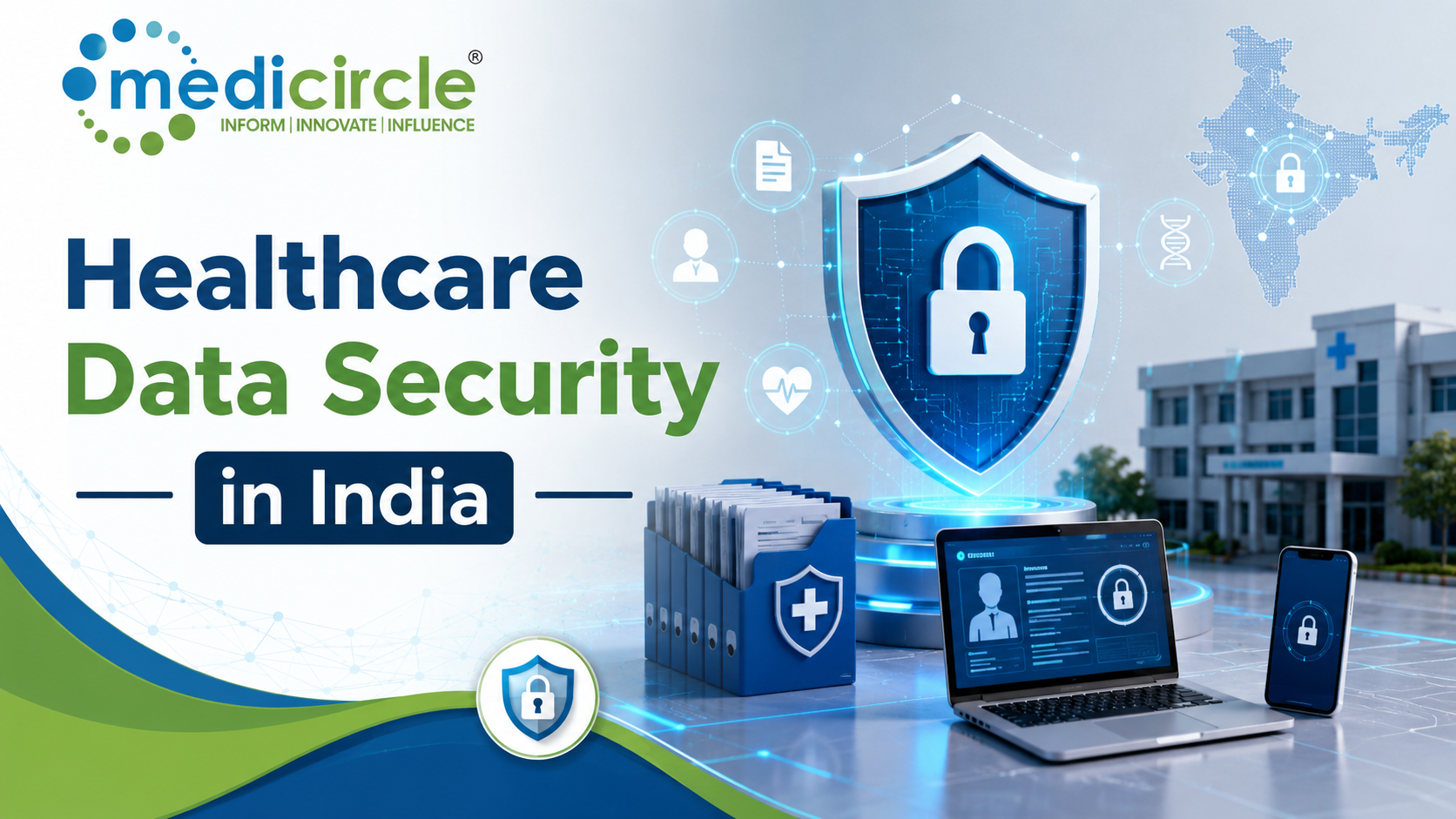
 Healthcare data security in India demands urgent attention as digitalisation expands. This article examines threats, risk factors, regulatory frameworks, and proven protection strategies for Indian healthcare organisations.





Introduction
India's healthcare sector is undergoing one of the most significant digital transformations in its history. With over 500 million citizens registered under the Ayushman Bharat Digital Mission (ABDM), the country is building a nationwide digital health infrastructure at a pace that few nations have attempted. Electronic health records, telemedicine platforms, health data exchanges, and IoT-connected medical devices are now central to how care is delivered across government hospitals, private chains, and community health centres alike.
This transformation brings enormous benefits. Doctors can access patient histories instantly. Insurers can process claims faster. Patients in Tier 2 and Tier 3 cities receive remote consultations that would have been logistically impossible a decade ago. Yet this same digitisation has turned Indian healthcare organisations into high-value targets for cybercriminals. Health data is among the most sensitive personal information a person possesses, and it is also commercially valuable. A stolen health record can carry far more monetary and exploitative value on illicit markets than a stolen credit card number, partly because the victim often remains unaware of the theft for months or years.
Healthcare data security is no longer a technical concern reserved for IT departments. It is a governance imperative, a patient safety issue, and increasingly, a legal obligation for every hospital, clinic, diagnostic centre, healthtech company, and health insurer operating in India.
Understanding Healthcare Data Security
Healthcare data security encompasses the complete set of administrative, technical, and physical safeguards that an organisation puts in place to protect patient health information from unauthorised access, disclosure, alteration, or destruction. It covers three interconnected domains.
The first is patient data security, which involves protecting identifiable personal information such as names, addresses, diagnoses, treatment histories, and insurance details. The second is medical data security, which extends to clinical records, laboratory results, radiology images, and prescription histories. The third is operational data protection, meaning the security of the systems, networks, devices, and software applications through which health data flows.
In the Indian context, healthcare data security is governed by a combination of frameworks. The Digital Personal Data Protection Act 2023 (DPDPA) establishes the foundational legal obligations for all organisations processing personal data in India, including health data. ABDM guidelines under the National Health Authority set specific requirements for entities participating in the national health data ecosystem. NABH-accredited hospitals are expected to demonstrate data governance standards as part of their accreditation process. While India does not yet have a sector-specific law equivalent to the United States' Health Insurance Portability and Accountability Act (HIPAA), the regulatory environment is strengthening considerably, and the consequences of non-compliance are becoming more significant.
Primary Threats and Risk Factors in Indian Healthcare
Understanding the threat landscape is foundational to building effective defences. Indian healthcare organisations face a combination of risks that are common globally and others that are amplified by local conditions.
Ransomware attacks have emerged as one of the most destructive threats. In a ransomware incident, malicious software encrypts a hospital's systems or patient databases, making them inaccessible. The attacker then demands payment, often in cryptocurrency, in exchange for the decryption key. Hospitals are particularly attractive targets because the disruption to patient care creates intense pressure to pay quickly. Indian government hospitals and large private chains have both faced ransomware incidents in recent years, with some resulting in delays to surgeries, ICU monitoring disruptions, and the temporary shutdown of diagnostic services.
Phishing and social engineering remain the most common entry point for attackers. A hospital employee may receive a convincingly worded email appearing to originate from a senior administrator, the IT department, or a government health authority. Clicking a malicious link or entering credentials on a fake portal can give attackers access to the entire hospital network. In large Indian hospitals with thousands of nursing staff, administrative personnel, and contractual workers, ensuring that every individual can reliably identify a phishing attempt is a persistent challenge.
Legacy systems and medical device vulnerabilities represent a structural risk that is particularly acute in India. Many government district hospitals and even some private facilities continue to operate on outdated hardware and software that cannot receive modern security patches. Diagnostic equipment such as MRI machines, CT scanners, and remote patient monitoring devices often run on older operating systems with no update pathway. These devices are frequently connected to hospital networks to enable data sharing, but their inability to be patched makes them entry points that attackers can exploit to move laterally through the entire infrastructure.
Insider threats encompass both malicious actions by employees and accidental data exposures by well-intentioned staff. A hospital employee with access to patient records may misuse that access for personal gain. More commonly, a stressed or inadequately trained staff member may leave a workstation unlocked, share login credentials for convenience, or inadvertently send patient information to an incorrect recipient. In the context of Indian public hospitals, where staff-to-patient ratios are often stretched thin, the likelihood of these human errors is elevated.
Third-party vendor risks have grown as Indian hospitals increasingly rely on external software vendors, cloud service providers, diagnostic laboratories, and insurance processing partners. Any partner with access to a hospital's network or patient data becomes part of the security perimeter. A vulnerability in a vendor's system can become a vulnerability in the hospital's own data environment.
Weak authentication and password practices remain surprisingly common. The practice of using simple, shared, or unchanged default passwords for hospital workstations, medical devices, and network endpoints creates straightforward pathways for unauthorised access.
Recognising the Warning Signs of a Security Compromise
Healthcare organisations that can identify the early indicators of a security incident are far better positioned to limit damage. Several warning signs warrant immediate investigation.
Unusual login attempts at atypical hours, particularly to administrative systems or electronic health record platforms, can indicate that credentials have been compromised. Sudden slowdowns in network performance or unexplained spikes in outbound data traffic may suggest that malware is active and transmitting stolen information. Systems that become encrypted or inaccessible without any obvious technical cause are a primary indicator of a ransomware infection. Unexpected changes to patient records, billing data, or system configurations should also trigger immediate review.
In the Indian healthcare context, where multiple staff members may share workstations or login credentials out of operational convenience, it is often difficult to trace suspicious activity to a specific individual or event. This makes continuous monitoring and detailed access logging not merely best practices but operational necessities.
Diagnosis: Assessing Your Organisation's Security Posture
Before a healthcare organisation can implement meaningful protections, it must first develop an accurate picture of its current vulnerabilities. A structured risk assessment is the starting point.
A thorough risk assessment maps every device connected to the hospital network, every application through which patient data is accessed or transmitted, every user account with elevated privileges, and every third-party integration. It identifies systems running outdated software, gaps in access control policies, weak points in data transmission protocols, and deficiencies in staff training.
Penetration testing, in which certified cybersecurity professionals simulate real-world attacks against the hospital's systems, provides a practical view of which vulnerabilities are actually exploitable. For hospitals participating in ABDM, compliance with the data security standards prescribed by the National Health Authority must be part of this assessment.
Indian healthcare organisations that have implemented NABH accreditation frameworks often find that the documentation discipline required for accreditation provides a useful foundation for security governance, though specific cybersecurity controls must be added deliberately. Organisations should also review their contracts with technology vendors to confirm that data security responsibilities are explicitly defined and that vendor compliance can be audited.
Treatment: Building Effective Healthcare Data Security
Addressing healthcare data security requires a layered strategy that combines technology, policy, and people. No single tool or measure is sufficient on its own.
Encryption is a foundational control. Patient data should be encrypted both at rest, meaning when stored on servers or devices, and in transit, meaning when moving across networks. Without an appropriate decryption key, encrypted data is unreadable even if it is intercepted or stolen. Indian hospitals sharing data through ABDM-connected platforms must ensure that data exchange occurs over secure, encrypted channels.
Role-based access control (RBAC) limits each user's access to only the data and systems required for their specific job function. A billing assistant should not have access to clinical records. A ward nurse may need access to her patients' current records but not to the historical records of patients in other departments. This principle, known as least privilege, significantly reduces the potential damage if any single account is compromised.
Multi-factor authentication (MFA) adds a critical additional layer of protection beyond usernames and passwords. With MFA enabled, even if an attacker obtains a staff member's login credentials, they cannot access the system without a second verification step, such as a one-time code sent to a registered mobile number or a biometric scan.
Regular data backups are essential for recovery from ransomware attacks. Backups should be stored off-site or in secure cloud environments that are not directly connected to the main hospital network. The backup should be tested periodically to confirm that data can actually be restored from it within an acceptable timeframe.
Continuous network monitoring uses automated tools to track all activity across hospital systems, flagging unusual patterns that may indicate an attack in progress. For hospitals that lack dedicated cybersecurity personnel, managed security service providers (MSSPs) offer this monitoring as an outsourced function.
Employee training and awareness programmes address the human element of cybersecurity, which remains the most exploited vulnerability across all industries. Training must be regular, practical, and specific to the healthcare context. Staff should know how to identify a phishing email, understand why password sharing is dangerous, and know exactly who to contact if they suspect a security incident.
Prevention and Proactive Health Measures for Data Security
Prevention in healthcare data security is always preferable to incident response. Several proactive measures can dramatically reduce an organisation's risk exposure.
- Conducting routine software updates and patch management for all connected systems and devices, including legacy medical equipment where vendor support permits
- Implementing network segmentation so that a compromised device in one part of the hospital cannot easily spread malware to critical clinical systems
- Establishing a formal incident response plan that is documented, tested, and regularly reviewed, so that every team member knows their role in the event of a breach
- Engaging with CERT-In (the Indian Computer Emergency Response Team) advisories and sector-specific cybersecurity guidance to stay informed about emerging threats
- Reviewing and strengthening data-sharing agreements with third-party vendors, requiring contractual commitments to security standards and the right to audit
The Ayushman Bharat Digital Mission has introduced specific consent-based data sharing frameworks through the Health Data Management Policy, which requires organisations participating in the national health data ecosystem to implement rigorous consent mechanisms. Healthcare organisations must align their internal data governance policies with these requirements.
For platforms like Medicircle, which connect healthcare experts, hospitals, and patients through trusted healthcare content and communication, maintaining the security and integrity of the information ecosystem is inseparable from the platform's core mission of credibility and trust. The principles of responsible healthcare communication extend naturally to responsible healthcare data governance.
Frequently Asked Questions
Q1: What is healthcare data security and why does it matter in India?
Healthcare data security refers to the policies, technologies, and practices that protect patient health information from unauthorised access, theft, and misuse. In India, where the Ayushman Bharat Digital Mission is building a national digital health infrastructure, securing this data is critical for patient trust, regulatory compliance, and the effective functioning of digital health services.
Q2: What are the biggest cybersecurity threats facing Indian hospitals today?
Indian hospitals face ransomware attacks, phishing and social engineering, insider threats, data breaches through third-party vendors, and security vulnerabilities in legacy medical equipment. The rapid adoption of electronic health records and telemedicine has expanded the attack surface considerably, making every connected device a potential point of entry.
Q3: What laws govern healthcare data protection in India?
The Digital Personal Data Protection Act 2023 (DPDPA) is the primary legal framework governing personal data, including health data, in India. ABDM guidelines under the National Health Authority govern data handling for entities in the national health ecosystem. India does not yet have a sector-specific healthcare data law equivalent to HIPAA, but the regulatory framework is evolving and becoming more stringent.
Q4: How can hospitals in India protect patient data effectively?
Hospitals should implement role-based access controls, encryption for data at rest and in transit, regular staff training and awareness programmes, multi-factor authentication, routine risk assessments, and a documented incident response plan. Keeping systems updated, monitoring network activity continuously, and strengthening third-party vendor contracts are equally important measures.
Q5: What should a hospital do immediately after a healthcare data breach?
The immediate priorities are isolating and containing the compromised systems, assessing the scope and nature of the breach, notifying affected patients and the relevant regulatory authorities within the prescribed timelines, investigating the root cause, and implementing corrective security measures. A documented incident response plan prepared and tested in advance makes this process significantly faster and limits reputational and operational damage.
Resources
- Ministry of Health and Family Welfare, Government of India: Official health policy, digital health initiatives, and regulatory frameworks for Indian healthcare organisations
- Ayushman Bharat Digital Mission (ABDM), National Health Authority: Guidelines on health data management, consent frameworks, and security standards for participants in the national digital health ecosystem
- CERT-In (Indian Computer Emergency Response Team), Ministry of Electronics and Information Technology: Cybersecurity advisories, incident reporting, and sector-specific guidance for Indian organisations
- World Health Organization (WHO), Digital Health Department: International frameworks, policy guidance, and best practice documentation on health data governance and digital health security
- PubMed Central, National Library of Medicine: Peer-reviewed research on healthcare data security, IoT-based health systems, encryption methods, and emerging cyber threats in the medical sector
Interlinking Keywords
electronic health records security, digital health India, Ayushman Bharat Digital Mission, patient data protection, hospital cybersecurity, healthtech compliance, ABDM health data, telemedicine data privacy, DPDPA healthcare, medical data breach India
Medical Disclaimer
The information provided in this article is intended for general awareness and educational purposes only. It does not constitute legal, technical, or regulatory advice. Healthcare organisations should consult qualified cybersecurity professionals and legal experts to address their specific data security requirements and ensure compliance with applicable Indian laws and regulations.
Last reviewed by:
Medicircle Editorial and Healthcare Technology Desk on 8 August 2026





-23-300x250.png)

.jpeg)


.jpg)
.jpg)
.jpg)
.jpg)
.jpg)
.jpg)
.jpg)
.jpg)
.jpg)