Friday, October 23, 2026
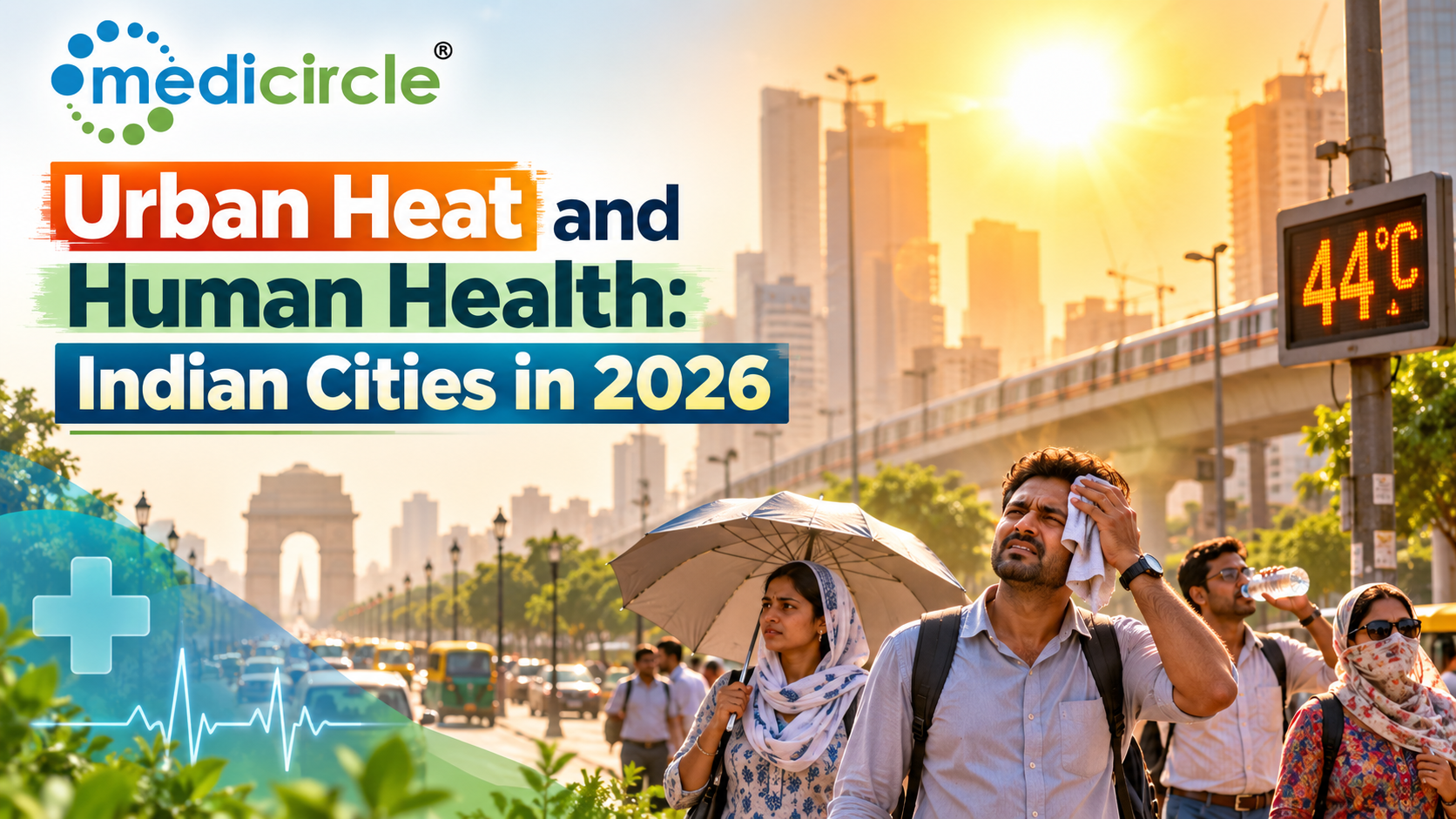
 Extreme urban heat poses a serious and escalating public health threat in Indian cities, affecting vulnerable populations most severely. Awareness, prevention, and coordinated urban policy are urgently needed.





Introduction
India's cities are getting hotter, and the consequences are no longer a distant warning. They are unfolding every summer across Mumbai, Delhi, Hyderabad, Nagpur, and dozens of other urban centres where millions of people face dangerous levels of heat. The combination of rapid urbanisation, climate change, dense concrete construction, and inadequate urban greening has created conditions that push human physiology to its limits during peak summer months.
The term "urban heat island" refers to the well-documented phenomenon where cities experience significantly higher temperatures than surrounding rural areas. In India, this effect is amplified because cities are expanding at a pace that outstrips climate adaptation planning. According to data from the India Meteorological Department (IMD), multiple Indian cities recorded temperatures above 45 degrees Celsius for extended periods in recent years, with the trend pointing sharply upward.
What makes this a public health emergency is not just the discomfort of heat. Extreme heat is a clinical stressor. It strains the cardiovascular system, impairs kidney function, triggers heat exhaustion and heat stroke, worsens chronic conditions, and disproportionately affects the elderly, children, outdoor workers, and people living in inadequately ventilated homes. India cannot afford to treat this as a seasonal inconvenience. It requires a structured, science-backed urban health response.
Understanding the Urban Heat Island Effect in the Indian Context
The urban heat island effect occurs when natural land cover is replaced by pavement, buildings, and infrastructure that absorb and retain heat rather than releasing it through evaporation. Parks, wetlands, and forests regulate temperature through shade and moisture release. Cities, by contrast, trap heat in concrete and asphalt surfaces, which radiate it back into the surrounding environment long after sunset.
In Indian cities, this problem is compounded by several local factors:
- Informal settlements and densely packed low-income housing with minimal ventilation
- Loss of tree cover due to road widening and unplanned construction
- Proliferation of air conditioning units that expel hot air into streets and neighbourhoods
- Reduced water bodies due to encroachment on urban lakes and wetlands
- Limited urban planning attention to heat as a design variable
Cities like Ahmedabad, Nagpur, and Lucknow have consistently ranked among the hottest urban areas in South Asia. The IMD's Heat Action Plan framework acknowledges that India experiences some of the world's most intense and prolonged heat wave conditions, particularly between March and June.
The health impact of urban heat is not uniform. Populations living in areas with low vegetation cover, poor housing quality, and limited access to cooling resources face a significantly higher burden of heat-related illness.
Health Risks Associated with Extreme Urban Heat
Extreme heat affects the human body across multiple organ systems, and the clinical consequences range from mild dehydration to fatal heat stroke. Understanding these risks is the first step toward prevention.
Heat exhaustion is a common presentation during peak summer months. It is characterised by heavy sweating, weakness, cold or pale skin, a fast but weak pulse, nausea, and fainting. If not addressed promptly, heat exhaustion can progress to heat stroke, which is a medical emergency.
Heat stroke occurs when the body's core temperature rises above 40 degrees Celsius and the body's ability to regulate temperature breaks down. It presents with high body temperature, confusion, loss of consciousness, and the absence of sweating. Heat stroke carries a significant mortality risk if not treated within minutes. Outdoor workers, athletes, and individuals performing strenuous activity in direct sunlight are at the highest risk.
Beyond these acute presentations, chronic heat exposure carries serious long-term consequences:
- Kidney disease: Repeated dehydration from heat exposure damages renal tubules and has been linked to the rising incidence of chronic kidney disease of unknown aetiology in agricultural and outdoor working communities across India, including in Andhra Pradesh, Telangana, and Tamil Nadu.
- Cardiovascular stress: Heat forces the heart to work harder to cool the body. For individuals with pre-existing heart disease or hypertension, sustained heat exposure can trigger cardiac events.
- Respiratory complications: High temperatures increase ground-level ozone and particulate matter in urban air, worsening asthma and chronic obstructive pulmonary disease (COPD).
- Mental health impact: Emerging research links extreme heat to increased rates of irritability, aggression, sleep disruption, and anxiety. Urban populations already under socioeconomic stress are particularly vulnerable.
- Pregnancy complications: Pregnant women exposed to extreme heat face elevated risks of preterm birth, low birth weight, and gestational complications.
Children are especially vulnerable because their thermoregulatory systems are still developing, and they often cannot recognise or communicate the early signs of heat illness. The elderly are at risk because their bodies respond more slowly to temperature changes, and many live alone without access to cooling or social support.
Vulnerable Populations in Indian Cities
A population health approach to urban heat must centre equity. Not everyone experiences heat in the same way, and in India, vulnerability to extreme heat is closely tied to occupation, housing quality, income, and access to healthcare.
Construction workers, agricultural labourers, street vendors, rickshaw pullers, and delivery workers spend the majority of their working hours outdoors, often without access to shade, water, or rest facilities. The Ministry of Labour and Employment has acknowledged that outdoor workers in India face serious occupational heat stress, particularly during peak summer months. Despite this, formal occupational heat protection policies remain inconsistently enforced across states.
Slum residents and inhabitants of urban informal settlements face a structural disadvantage. Homes made of tin, asbestos, or poorly insulated concrete trap heat at levels far above ambient temperatures. Many lack access to reliable electricity, making fans and coolers unavailable. In dense urban pockets across cities like Mumbai's Dharavi, Delhi's JJ clusters, and Hyderabad's peripheral colonies, indoor temperatures during heat waves have been recorded higher than outdoor temperatures, creating a dangerous inversion of the usual assumption that indoors is safer.
Women in these communities face an additional burden. Domestic responsibilities often require them to cook on open flames or work in poorly ventilated spaces during the hottest hours of the day.
Recognising the Warning Signs of Heat-Related Illness
Early recognition of heat-related illness is critical because intervention at the heat exhaustion stage can prevent progression to life-threatening heat stroke. Every urban resident, and especially families with elderly members, young children, or outdoor workers, should be familiar with the following warning signs.
Warning signs of heat exhaustion include:
- Heavy or excessive sweating
- Cool, pale, or clammy skin
- Rapid and weak pulse
- Nausea or vomiting
- Muscle cramps, particularly in the legs
- Tiredness and weakness
- Dizziness or fainting
When heat stroke is developing or has occurred, the warning signs shift significantly:
- Body temperature above 40 degrees Celsius
- Hot, dry, or red skin (in classic heat stroke; sweating may be absent)
- Rapid and strong pulse
- Confusion, agitation, or loss of consciousness
- Seizures in severe cases
Heat stroke is a medical emergency. Anyone showing these signs must be moved to a cool environment immediately, and emergency medical assistance must be called without delay. Cooling measures such as placing ice packs on the neck, armpits, and groin, or fanning with cool water mist, can help reduce core temperature while waiting for care.
Prevention Strategies for Individuals and Families
Preventing heat-related illness requires consistent behavioural adaptation during extreme heat periods. The following measures are evidence-based and particularly relevant for Indian urban conditions.
Hydration is the cornerstone of heat safety. Adults should drink water regularly throughout the day, regardless of whether they feel thirsty. During heat waves, thirst is often a delayed signal, and by the time one feels thirsty, mild dehydration has already begun. Oral rehydration solutions (ORS), buttermilk, coconut water, and nimbu pani are culturally familiar and effective options. Caffeinated and alcoholic beverages should be avoided as they accelerate fluid loss.
Timing of outdoor activity should be adjusted during extreme heat. The peak heat window in Indian summer months is generally between 11 AM and 4 PM. Outdoor work, exercise, and travel should be shifted to early morning or evening hours wherever possible. Workers without this flexibility need access to scheduled rest breaks, shade, and water at the workplace.
Clothing choices matter significantly. Lightweight, loose-fitting, light-coloured cotton clothing allows better air circulation and heat dissipation. Darker fabrics absorb more solar radiation. Head covering with a cap, dupatta, or umbrella provides meaningful protection from direct sun exposure.
Home cooling strategies for families without access to air conditioning include:
- Closing windows and curtains during the hottest hours to reduce solar heat gain
- Using wet khus curtains or damp cloth coverings on windows, which cool incoming air through evaporation
- Sleeping on lower floors or in rooms away from the roof, which absorbs the most heat
- Using cool water baths or wet towels on the neck and forehead to lower body temperature
Urban Policy and City-Level Preparedness
Addressing urban heat as a public health priority requires coordinated action at the city and state government level. India has made meaningful progress through the National Action Plan on Climate Change (NAPCC) and city-specific Heat Action Plans (HAPs), but implementation remains uneven.
Ahmedabad's Heat Action Plan, developed with the National Disaster Management Authority (NDMA) and international public health partners following a deadly 2010 heat wave, is widely recognised as a model for India and globally. It includes early warning systems, inter-agency coordination, public messaging in local languages, cooling shelters, and targeted outreach to vulnerable populations. Cities that have adopted similar frameworks have shown measurable reductions in heat-related mortality.
Urban greening is one of the most effective long-term interventions. Tree planting along roads, development of urban parks, restoration of water bodies, and mandating green roofs in new construction can meaningfully reduce urban temperatures. Studies have shown that tree-lined streets can be several degrees cooler than exposed urban roads.
Cool roof programmes, where rooftops are painted white or coated with reflective material, are a low-cost intervention with significant impact. The UNDP and several Indian state governments have piloted cool roof initiatives in Ahmedabad, Rajkot, and other cities, demonstrating temperature reductions of 2 to 5 degrees Celsius inside homes.
The development of publicly accessible cooling centres, particularly in low-income neighbourhoods, libraries, and community halls, provides a critical safety resource during heat emergencies. These centres should be well-communicated to residents in advance of heat wave season, ideally through local ward offices, ASHA workers, and community health volunteers.
Conclusion
Urban heat is not a background condition to be endured each summer. It is an acute and escalating public health threat that demands the same institutional seriousness as any infectious disease outbreak or pollution crisis. India's cities are at an inflection point. The decisions made now about urban planning, building design, occupational safety, public health infrastructure, and community preparedness will determine whether extreme heat becomes manageable or catastrophic in the decades ahead.
For individuals, the tools exist to protect oneself and one's family. For city planners, policymakers, and public health leaders, the evidence base and the policy models exist. What is needed is the will to act with the urgency this crisis deserves. Platforms like Medicircle play an important role in bridging the knowledge gap, ensuring that credible, evidence-based health guidance reaches not just urban professionals but also the millions of ordinary Indian citizens who are most at risk.
Frequently Asked Questions
Q1: What is the urban heat island effect and how does it affect Indian cities?
The urban heat island effect occurs when cities absorb and retain more heat than surrounding rural areas due to concrete, asphalt, and reduced green cover. In Indian cities, the effect is worsened by rapid construction, loss of lakes and trees, and increasing use of air conditioning, making summers significantly hotter and increasing the risk of heat-related illness among urban residents.
Q2: Who is most at risk from extreme heat in Indian cities?
Outdoor workers such as construction labourers, street vendors, and delivery personnel are at the highest risk. Other vulnerable groups include the elderly, young children, pregnant women, individuals with chronic heart or kidney disease, and residents of informal settlements with poor-quality housing and limited access to electricity or cooling.
Q3: What are the early signs of heat stroke and what should be done?
Heat stroke is signalled by a body temperature above 40 degrees Celsius, hot or dry skin, confusion or loss of consciousness, and a rapid pulse. It is a medical emergency. The person should be moved to a cool place immediately, ice packs applied to the neck, armpits, and groin, and emergency medical help called without delay.
Q4: What simple steps can Indian families take to stay safe during a heat wave?
Families should drink water and oral rehydration fluids regularly, avoid going outdoors between 11 AM and 4 PM, wear loose light-coloured cotton clothing, close windows and curtains during peak heat hours, use wet cloth coverings on windows, and check regularly on elderly relatives and young children. Recognising early signs of heat exhaustion is equally important.
Q5: What policies are helping Indian cities manage extreme heat?
Cities like Ahmedabad have implemented Heat Action Plans with early warning systems, cooling shelters, and community outreach. National-level frameworks such as the NAPCC and NDMA guidelines support city-level action. Urban greening, cool roof programmes, and publicly accessible cooling centres are among the interventions being adopted across Indian cities to reduce heat-related illness and mortality.
Resources
- India Meteorological Department (IMD): The official government body providing heat wave forecasts, advisories, and climate data for Indian cities and regions.
- National Disaster Management Authority (NDMA): Publishes Heat Wave Guidelines and supports city-level Heat Action Plan development across India.
- Ministry of Health and Family Welfare (MoHFW): Provides public health advisories, seasonal health alerts, and official guidance on heat-related illness prevention for Indian citizens.
- World Health Organization (WHO) India Office: Offers evidence-based global and regional guidance on climate change, extreme heat, and its impact on urban public health.
- Indian Council of Medical Research (ICMR): Conducts and publishes research on heat-related illness, climate-sensitive diseases, and their burden on the Indian population.
Interlinking Keywords
urban heat island India, heat stroke symptoms, heat wave health risks, extreme heat prevention tips, heat exhaustion treatment, urban greening India, Heat Action Plan India, outdoor worker heat safety, summer health tips India, climate change public health
Last medically reviewed by:
Dr. Manthan Tripathi, Medicircle Editorial and Medical Advisory Team on 26, September 2026.
Disclaimer
The information provided in this article is intended for general awareness and educational purposes only. It does not constitute medical advice, diagnosis, or treatment. Readers experiencing symptoms of heat-related illness or any medical condition should consult a qualified healthcare professional promptly. Medicircle does not endorse any specific treatment, product, or intervention mentioned in this article.





-23-300x250.png)

.jpeg)
.jpg)
.jpg)
.jpg)
.jpg)
.jpg)
.jpg)
.jpg)
.jpg)
.jpg)