Wednesday, November 11, 2026
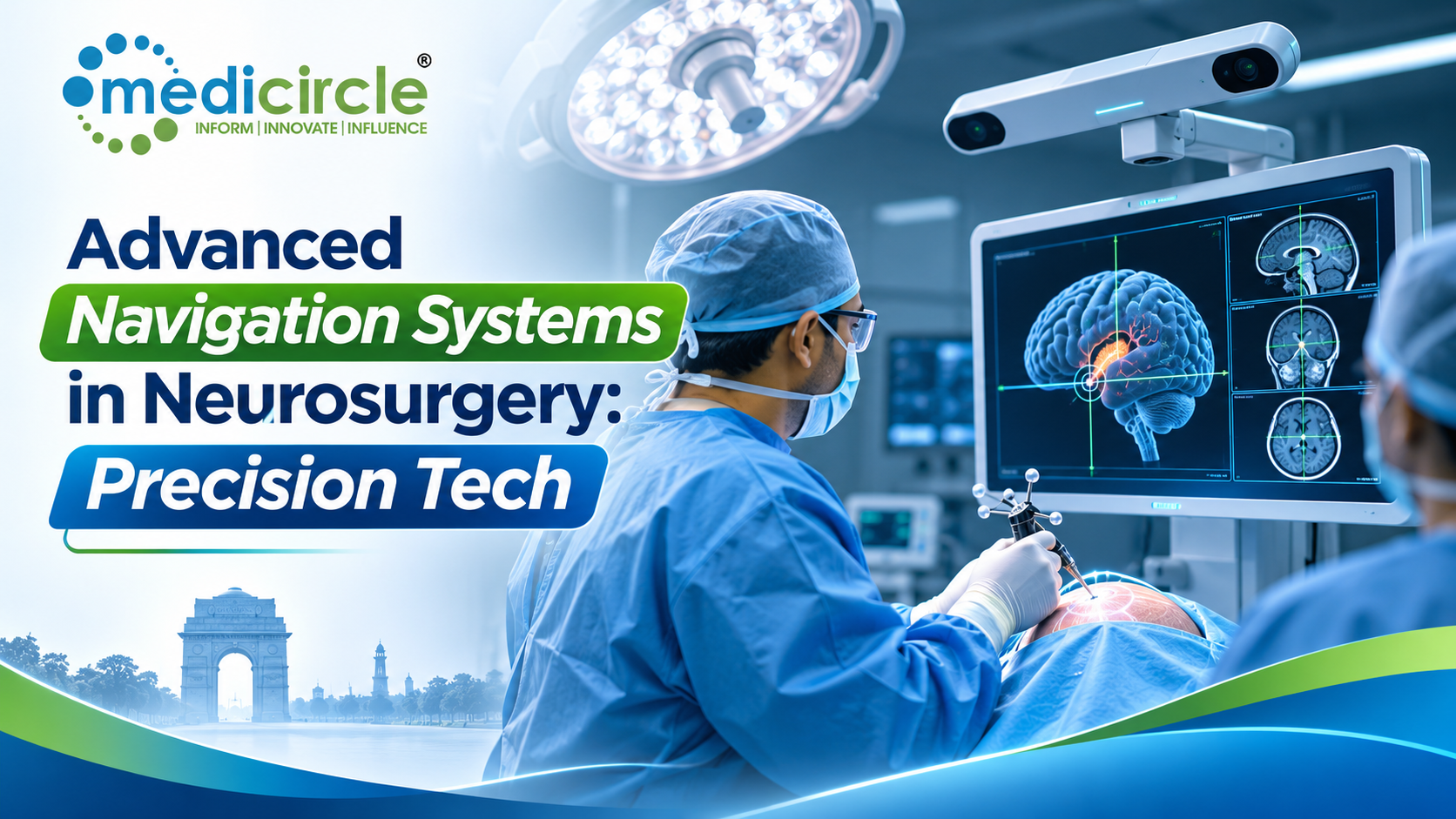
 Advanced navigation systems in neurosurgery combine real-time imaging, tracking technology, and AI to guide surgeons with precision, improving outcomes, reducing risks, and transforming brain and spine surgery in India.





Introduction
Neurosurgery is one of the most demanding disciplines in modern medicine. The human brain and spinal cord are extraordinarily complex structures where even a millimeter of unintended deviation during surgery can have irreversible consequences. For decades, neurosurgeons relied on anatomical knowledge, magnification, and clinical intuition to navigate these high-stakes environments. While those skills remain foundational, the emergence of advanced navigation systems has introduced a new level of precision that was previously unimaginable.
Today, surgical navigation technology is redefining the boundaries of what neurosurgeons can achieve. These systems allow surgeons to operate with real-time, three-dimensional guidance derived from pre-operative imaging, essentially giving them a continuously updated map of the patient's internal anatomy. For India, where the burden of neurological disorders is growing significantly, this technological shift carries enormous implications for patient care, surgical outcomes, and the future of healthcare delivery.
Understanding Neurosurgical Navigation Systems
At their core, neurosurgical navigation systems function much like the GPS systems used in everyday life, but designed for the operating room. Before surgery begins, detailed imaging studies such as magnetic resonance imaging (MRI) or computed tomography (CT) scans are obtained. These images are then uploaded into the navigation platform, which constructs a precise three-dimensional model of the patient's brain or spine.
During the surgical procedure, the navigation system uses a process called registration to match the patient's physical anatomy with the digital model created from the pre-operative scans. Optical or electromagnetic tracking technology monitors the position of surgical instruments in real time. As a result, the surgeon can see exactly where each instrument is located within the patient's anatomy at every moment, displayed on a monitor alongside the imaging data.
This technology does not replace the neurosurgeon's skill or judgment. Instead, it enhances decision-making, reduces uncertainty, and provides a continuous safety net that helps the surgical team avoid critical structures such as major blood vessels, eloquent cortex regions responsible for speech and motor function, and cranial nerves.
Types of Navigation Technologies Used in Neurosurgery
The field of intraoperative navigation has evolved considerably over the past two decades, and today several distinct technologies contribute to precision neurosurgery.
Optical navigation systems are among the most widely used. These rely on infrared cameras that track reflective markers or arrays attached to surgical instruments and to the patient. Because they depend on a direct line of sight, optical systems deliver high accuracy in environments where positioning can be maintained consistently.
Electromagnetic navigation systems use magnetic fields to track instrument position rather than optical cameras. These systems are particularly useful in procedures where maintaining a direct line of sight is difficult, such as certain endoscopic or transsphenoidal surgeries. They are also valuable in situations involving flexible instruments that need tracking through curved anatomical pathways.
Intraoperative imaging integration has further elevated the capabilities of navigation systems. Some advanced centers now combine navigation platforms with intraoperative MRI or CT scanners, allowing surgeons to update the navigation map in real time during the procedure. This addresses a major limitation known as brain shift, where the brain's position changes slightly after the skull is opened due to cerebrospinal fluid drainage or tissue manipulation. Updated intraoperative imaging compensates for this shift, maintaining the accuracy of navigation guidance throughout the surgery.
Robotic-assisted neurosurgery is an emerging frontier that integrates navigation with robotic platforms. Systems such as the ROSA Brain robot and the Mazor X Stealth Edition incorporate navigation-guided robotic arms to execute precise trajectory planning for procedures like deep brain stimulation electrode placement or biopsy needle insertion.
Clinical Applications and Surgical Procedures Benefiting From Navigation
The range of neurosurgical procedures that benefit from navigation-assisted techniques is broad and continues to expand.
Brain tumor surgery represents one of the most significant applications. When a neurosurgeon needs to resect a tumor located near eloquent brain regions, navigation allows for the most aggressive safe resection possible, maximizing the amount of tumor removed while protecting functional tissue. Studies consistently show that greater extent of resection is associated with improved survival outcomes in many brain tumor types, making navigation a clinically meaningful tool rather than merely a technical luxury.
Epilepsy surgery is another domain where navigation plays a critical role. Identifying and precisely targeting seizure focus zones, particularly in cases involving small cortical lesions or abnormalities visible only on specialized MRI sequences, requires the kind of accuracy that only navigation-assisted planning can provide.
Spinal surgery has also embraced navigation extensively. Pedicle screw placement in spinal instrumentation procedures carries inherent risks when performed without guidance, as misplaced screws can injure nerve roots or the spinal cord itself. Navigation-guided screw placement has been shown to substantially improve accuracy rates and reduce revision surgery rates.
Deep brain stimulation for Parkinson's disease, essential tremor, and dystonia requires implantation of electrodes in very small, specific brain targets such as the subthalamic nucleus or globus pallidus internus. Navigation systems combined with microelectrode recording help neurosurgeons identify and confirm the precise target, optimizing therapeutic outcomes for patients who may otherwise have limited treatment options.
Skull base surgery, vascular neurosurgery, and minimally invasive endoscopic procedures for conditions like pituitary tumors and hydrocephalus also rely heavily on navigation to manage the complex anatomy encountered in these cases.
The Indian Context: Adoption, Challenges, and Opportunities
India presents a unique and important context for understanding the spread of neurosurgical navigation technology. The country faces a rising burden of neurological disorders, including stroke, brain tumors, spinal degenerative disease, epilepsy, and traumatic brain injuries. According to data from the Indian Council of Medical Research (ICMR) and global neurological burden studies, neurological disorders account for a significant and growing proportion of disability-adjusted life years lost in India.
Major institutions such as the All India Institute of Medical Sciences (AIIMS) in New Delhi, the National Institute of Mental Health and Neurosciences (NIMHANS) in Bengaluru, and several leading private hospital chains have invested in advanced neurosurgical infrastructure, including navigation systems. Tier 1 cities such as Mumbai, Chennai, Hyderabad, and Delhi have multiple centers where navigation-assisted neurosurgery is now routinely performed.
However, the adoption curve is uneven. Tier 2 and Tier 3 cities, as well as government hospitals outside premier institutions, continue to operate with limited access to this technology. The cost of navigation systems, which can range from tens of lakhs to several crores of rupees depending on the platform and configuration, remains a significant barrier. Maintenance costs, training requirements, and the need for compatible intraoperative imaging infrastructure further complicate widespread adoption.
This gap represents both a challenge and an opportunity. As Indian healthtech companies grow and global medical device manufacturers increase their India-specific presence, the cost of navigation platforms is expected to gradually decrease. Government initiatives supporting medical technology under the National Health Policy and programs like Ayushman Bharat also create a policy environment that could encourage broader access to advanced surgical tools over time.
Platforms like Medicircle play a meaningful role in this landscape by bringing awareness of such innovations to healthcare professionals, hospital administrators, and informed patients, helping to build the kind of informed demand and clinical conversation that accelerates adoption.
Benefits, Outcomes, and Evidence Base
The clinical evidence supporting the use of navigation systems in neurosurgery is substantial and continues to grow. Research published across peer-reviewed neurosurgical journals demonstrates several consistent findings:
- Navigation-assisted brain tumor surgery achieves higher rates of gross total resection compared to conventional surgery, particularly in cases involving deep-seated or complex lesions.
- Navigation-guided pedicle screw placement in spine surgery achieves accuracy rates exceeding 95 percent in multiple large-scale studies, compared to accuracy rates of approximately 85 to 90 percent with conventional fluoroscopic guidance.
- Intraoperative MRI-guided navigation significantly reduces the incidence of unintended residual tumor tissue following glioma surgery.
- Deep brain stimulation outcomes, including therapeutic efficacy and complication rates, improve measurably when navigation-guided electrode placement is used.
Beyond measurable outcomes, navigation systems contribute to shorter operative times in experienced hands, reduced intraoperative blood loss in certain procedures, lower rates of surgical complications, and improved patient recovery profiles. These factors carry direct economic implications, reducing the cost and burden of complications, revision surgeries, and prolonged hospital stays.
The Future of Navigation Technology in Neurosurgery
The next generation of neurosurgical navigation is being shaped by several converging technological forces.
Artificial intelligence integration is enabling navigation platforms to learn from large datasets of surgical cases, offering predictive guidance, automated anatomy recognition, and real-time risk assessment during procedures. AI-powered tools are beginning to assist surgeons in identifying tumor boundaries more precisely and in flagging proximity to critical structures.
Augmented reality navigation represents a particularly exciting frontier. Rather than requiring surgeons to glance at a separate monitor, augmented reality systems project navigational overlays directly into the surgical microscope or the surgeon's field of view through specialized headsets. This keeps the surgeon's attention focused on the operative field while simultaneously receiving navigational guidance, reducing cognitive load and improving workflow.
The miniaturization of imaging technology and the development of portable intraoperative CT and MRI systems are making real-time imaging-updated navigation more accessible even in settings with limited physical space or infrastructure.
For India, the growing domestic medical device manufacturing sector, encouraged by initiatives such as the Production Linked Incentive (PLI) scheme for medical devices, may eventually contribute to more affordable navigation solutions developed specifically for the Indian market and its unique healthcare delivery context.
Frequently Asked Questions
Q1: What are navigation systems in neurosurgery?
Navigation systems in neurosurgery are advanced intraoperative tools that use pre-operative imaging data such as MRI and CT scans to create a real-time, three-dimensional map of the patient's brain or spine. This map guides the surgeon with precision throughout the procedure, reducing the risk of damage to critical structures.
Q2: How does neuronavigation improve patient safety?
Neuronavigation improves patient safety by providing continuous real-time guidance, allowing surgeons to avoid critical structures such as blood vessels, cranial nerves, and eloquent brain regions responsible for speech and movement. This reduces the risk of neurological deficits, intraoperative complications, and the need for revision surgery.
Q3: Is neuronavigation available in India?
Yes, neuronavigation systems are increasingly available in India, particularly in Tier 1 cities at premier institutions including AIIMS campuses and leading private hospital networks. Access remains limited in Tier 2 and Tier 3 cities, though awareness and adoption are growing steadily.
Q4: What types of surgeries benefit most from navigation systems?
Brain tumor resections, epilepsy surgery, deep brain stimulation for Parkinson's disease and movement disorders, spinal instrumentation procedures, skull base surgeries, and pituitary tumor surgeries are among the procedures that benefit most significantly from navigation assistance.
Q5: What is the future of navigation technology in neurosurgery?
The future of neuronavigation includes integration with artificial intelligence for predictive surgical guidance, augmented reality for direct operative field overlays, robotic-assisted surgical platforms, and real-time intraoperative MRI-updated navigation, all of which will further enhance precision and patient outcomes.
Resources
- Indian Council of Medical Research (ICMR): Guidelines, neurological disease burden data, and neurosurgical research publications relevant to the Indian healthcare context.
- World Health Organization (WHO) India: Reports on neurological disorders, global surgical care access, and technology adoption in low- and middle-income health systems.
- PubMed (National Library of Medicine): Peer-reviewed clinical studies and systematic reviews on neurosurgical navigation outcomes, evidence-based findings, and emerging technology evaluations.
- All India Institute of Medical Sciences (AIIMS): Institutional publications, neurosurgery department research, and clinical outcome data from one of India's foremost neurosurgical centers.
- Ministry of Health and Family Welfare, Government of India: National Health Policy documents, medical technology frameworks, and healthcare infrastructure development programs including Ayushman Bharat.
Interlinking Keywords
Neurosurgical navigation technology, intraoperative imaging in brain surgery, neuronavigation systems India, brain tumor surgery precision, spine surgery navigation guidance, deep brain stimulation technology, robotic neurosurgery India, minimally invasive neurosurgery, AIIMS neurosurgery advancements, medical technology innovations India
Last reviewed by:
Dr. Manthan Tripathi, Medicircle Editorial and Medical Advisory Team on 10, November 2026.
Disclaimer
The information provided in this article is intended for general awareness and educational purposes only. It does not constitute medical advice, diagnosis, or treatment recommendations. Readers are strongly advised to consult a qualified neurosurgeon or specialist physician for any medical concerns, symptoms, or treatment decisions. Medicircle does not endorse any specific medical product, device, or surgical procedure mentioned in this article. Medical science evolves continuously, and readers should refer to their treating healthcare provider for the most current and individualized clinical guidance.





-23-300x250.png)