Thursday, November 05, 2026
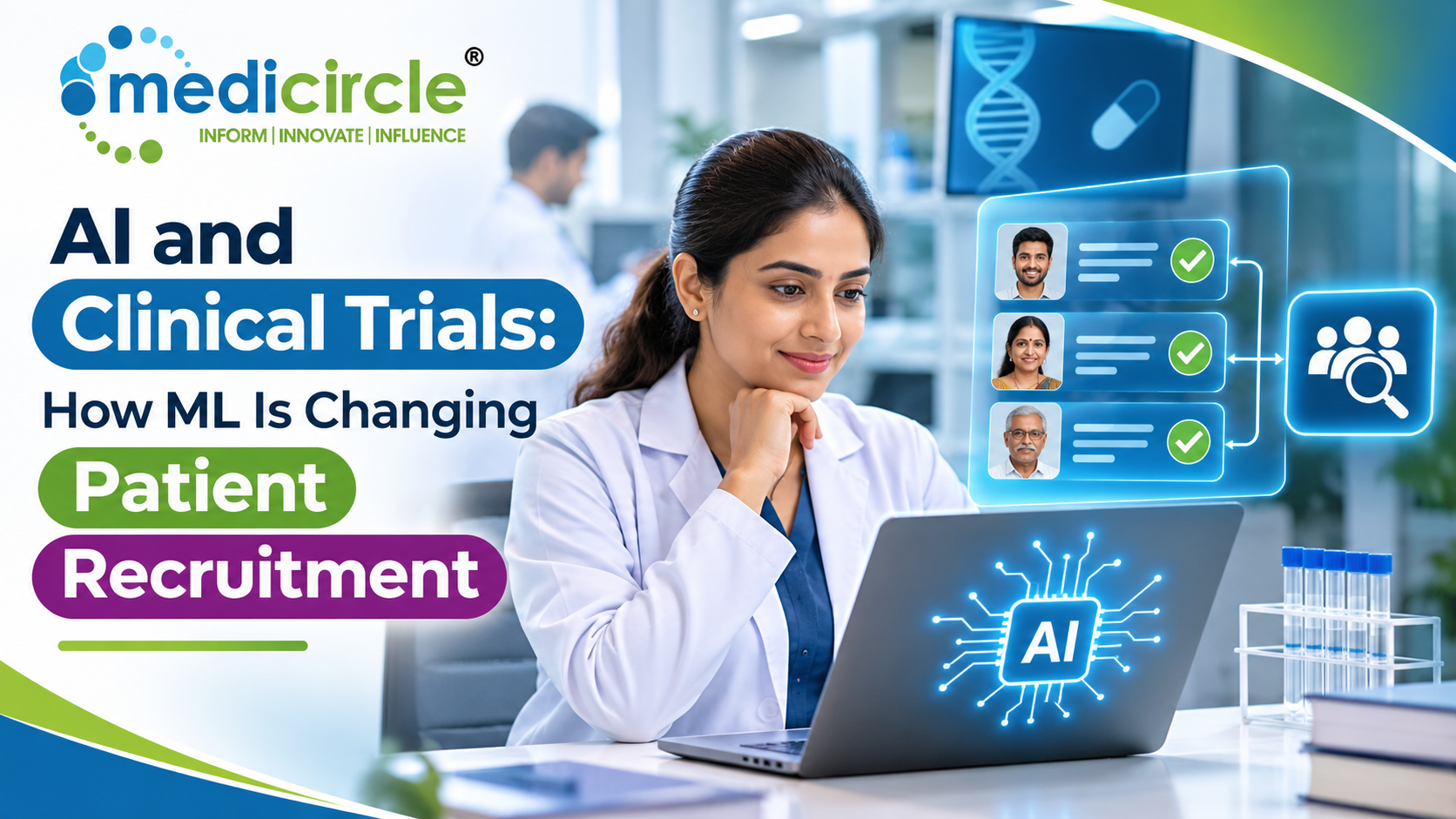
 Machine learning is transforming clinical trial patient recruitment in India by automating eligibility screening, reducing timelines, improving diversity, and strengthening the country's growing clinical research ecosystem.





Introduction
Clinical research has always depended on one fundamental requirement before any trial can begin: finding the right patients. Without an adequate, well-matched group of participants, even the most promising drug or therapy cannot be properly evaluated. For decades, this process has been slow, expensive, and riddled with inefficiencies that push back medical breakthroughs by months or even years.
Artificial intelligence, and more specifically machine learning, is now changing this reality at a foundational level. By processing enormous volumes of patient data, identifying eligibility patterns, and predicting which individuals are likely to participate and remain enrolled, AI-driven systems are cutting down recruitment timelines dramatically. For a country like India, with its massive and medically diverse population and a growing clinical research industry, this shift carries enormous significance.
This article explores how machine learning is transforming patient recruitment in clinical trials, what it means for the future of medical research in India, and what healthcare professionals, hospital administrators, and patients should understand about this evolving landscape.
Understanding Clinical Trial Recruitment and Why It Has Always Been Difficult
Before examining what AI brings to the table, it is worth understanding why patient recruitment in clinical trials has historically been such a challenging problem.
A clinical trial is not simply a matter of treating willing patients. Each trial operates under a strict protocol that defines inclusion and exclusion criteria. A participant may need to fall within a specific age range, carry a particular diagnosis, have no prior use of certain medications, and meet dozens of other conditions. Finding individuals who satisfy all criteria, confirming their eligibility, obtaining informed consent, and retaining them throughout the trial is an intensely resource-heavy process.
According to global estimates, nearly 80 percent of clinical trials fail to meet their enrollment targets on time. Many trials are delayed by one to three years due to recruitment difficulties alone. Some are cancelled entirely. The consequences are significant: delayed availability of effective treatments, enormous financial losses for pharmaceutical companies and research institutions, and missed opportunities for patients who could have benefited from experimental therapies.
In India specifically, the clinical research sector has expanded rapidly over the past two decades. The country offers a large patient pool, diverse genetic profiles, a strong network of hospitals and research institutions, and cost advantages that attract global pharmaceutical companies. However, challenges around patient identification, documentation, follow-up logistics, and site-level capacity have continued to slow the process. This is precisely where AI and machine learning are beginning to make a measurable difference.
How Machine Learning Works in the Context of Patient Recruitment
Machine learning is a branch of artificial intelligence in which algorithms learn from data to identify patterns, make predictions, and improve their accuracy over time without being explicitly programmed for each task.
In the context of clinical trial recruitment, machine learning systems are trained on large datasets that include electronic health records, diagnostic reports, genomic data, prescription histories, physician notes, and patient demographics. By learning which combinations of data points correspond to trial-eligible patients, these systems can scan populations far more rapidly and accurately than a human research coordinator ever could.
The core functions that machine learning performs in recruitment include:
- Automated eligibility screening: Algorithms analyse structured and unstructured patient data to match individuals against trial inclusion and exclusion criteria in real time.
- Predictive enrollment modelling: Machine learning can estimate which patients, once identified, are most likely to consent, enrol, and complete the trial based on behavioural and demographic patterns.
- Site performance prediction: AI tools can forecast which clinical trial sites are likely to recruit fastest based on historical performance data, helping sponsors allocate resources more effectively.
- Natural language processing for medical records: Many critical details in patient records exist in unstructured text. NLP, a subfield of machine learning, can extract relevant information from physician notes, discharge summaries, and radiology reports to surface eligible candidates.
These capabilities are not theoretical. Multiple global pharmaceutical companies and contract research organisations are already deploying machine learning recruitment platforms as a standard part of their trial operations.
Real-World Impact on Recruitment Timelines and Trial Quality
The practical effects of machine learning on recruitment are significant and increasingly well-documented.
Studies and industry analyses suggest that AI-assisted recruitment tools can reduce patient identification time by 50 to 70 percent compared to traditional manual methods. Some platforms have reported the ability to screen millions of patient records within hours, a task that would take large teams of coordinators weeks or months to complete manually.
Beyond speed, machine learning also improves the quality of recruitment by reducing protocol deviations. When a patient is enrolled who does not fully meet eligibility criteria, it creates complications during data analysis and can jeopardise the validity of trial results. Automated screening systems reduce this risk by applying criteria consistently and without the fatigue or oversight errors that can affect human reviewers.
There is also a meaningful impact on trial diversity. One of the longstanding criticisms of clinical research globally, including in India, is that trial populations often do not reflect the full diversity of the patient populations who will eventually use the therapies being tested. AI tools, when designed thoughtfully, can be directed to actively identify underrepresented groups, including patients from Tier 2 and Tier 3 cities, specific age groups, or populations with particular genetic profiles. This has the potential to make trial outcomes more generalisable and ultimately improve health outcomes for a broader segment of the population.
The Indian Context: Opportunities and Challenges
India's position in the global clinical research landscape makes the adoption of AI-driven recruitment particularly consequential.
The country is home to more than 1.4 billion people, with a high and growing burden of non-communicable diseases such as diabetes, cardiovascular disease, and cancer. India also has a strong presence of CDSCO-registered clinical trial sites, a large pool of trained investigators, and competitive operational costs. The Indian Council of Medical Research (ICMR) and the Central Drugs Standard Control Organisation (CDSCO) have both been working to strengthen the regulatory framework for clinical research in recent years.
At the same time, challenges remain. Patient data in India is fragmented across a large number of hospitals, clinics, and healthcare providers, many of which still rely on paper-based records or incompatible digital systems. This lack of data standardisation makes it harder to build and deploy machine learning models at scale. The Ayushman Bharat Digital Mission (ABDM), which aims to create a unified digital health ecosystem through the creation of Ayushman Bharat Health Accounts (ABHA) and a federated health data infrastructure, holds significant promise in this regard. As ABDM matures and more patient data is digitised and standardised, the foundation for AI-driven clinical recruitment in India will become considerably stronger.
Privacy and consent are also critical considerations. Machine learning recruitment tools must operate within the bounds of applicable data protection frameworks. India's Digital Personal Data Protection Act, 2023 establishes important requirements around the processing of personal health data, and clinical research platforms operating in the country must ensure compliance. Transparent patient communication, robust consent processes, and institutional review board oversight remain non-negotiable pillars of ethical clinical research.
What This Means for Hospitals, Research Sites, and Healthcare Professionals in India
For hospitals and clinical research sites across India, the adoption of AI recruitment tools represents both an opportunity and a responsibility.
Hospitals that invest in digitising and standardising their patient data will be better positioned to participate in AI-assisted trials. This means working toward interoperability with ABDM infrastructure, maintaining clean and well-structured electronic health records, and training clinical research staff to work alongside AI platforms rather than viewing them as replacements.
For physicians and investigators, machine learning recruitment tools do not diminish clinical judgment. They serve as powerful filters that surface relevant candidates from large populations, but the responsibility for patient interaction, informed consent, and clinical decision-making remains entirely with qualified healthcare professionals. If anything, AI reduces the administrative burden on investigators, freeing them to spend more time on the patient-facing aspects of research.
The contract research organisation (CRO) sector in India, which supports a large volume of global clinical trials conducted in the country, is already beginning to integrate AI tools into site selection, patient identification, and retention strategies. As these capabilities mature, India-based CROs that adopt AI-driven approaches will likely gain a competitive advantage in attracting global trial sponsors.
Platforms like Medicircle play a meaningful role in this ecosystem by keeping healthcare professionals, hospital leaders, and healthcare innovators informed about technological changes shaping the future of medicine. Awareness and education at the institutional level are essential for responsible adoption of AI in clinical research.
The Road Ahead: What the Future of AI-Driven Recruitment Looks Like
Machine learning in clinical trial recruitment is not a finished technology. It is a rapidly evolving field, and the next several years will likely bring substantial advances.
Federated learning, an approach in which AI models are trained across multiple institutions without centralising raw patient data, is gaining attention as a privacy-preserving solution for building powerful recruitment algorithms. This model is particularly relevant for India, where patient data is spread across a large number of geographically dispersed sites.
Wearable health technology and remote monitoring are expanding the data inputs available for recruitment algorithms. As more patients in India use connected health devices, their real-time health data can potentially be incorporated into trial matching systems, enabling more dynamic and responsive recruitment.
There is also growing interest in AI tools that go beyond recruitment and support patient retention throughout a trial. Dropout rates are a significant problem in long trials, and machine learning systems that identify patients at risk of disengaging early can help research teams intervene proactively.
The convergence of AI, digital health infrastructure, and regulatory modernisation creates a compelling opportunity for India to position itself not just as a destination for clinical trials designed elsewhere, but as a hub for AI-driven clinical research innovation. Realising this potential will require coordinated action from regulators, research institutions, technology developers, hospitals, and healthcare professionals.
Conclusion
Machine learning is fundamentally changing how patients are identified, screened, and enrolled in clinical trials. By automating eligibility screening, improving site selection, increasing trial diversity, and reducing recruitment timelines, AI is addressing one of the most persistent and costly bottlenecks in medical research. For India, with its vast and medically diverse population and a strengthening digital health infrastructure, the implications are profound. The path forward requires thoughtful adoption, strong data governance, ethical oversight, and ongoing investment in the digital foundations that make AI-driven recruitment possible. The ultimate beneficiaries of this progress are patients, who will gain faster access to new therapies developed through more efficient and representative research.
Frequently Asked Questions
Q1: What is AI-driven patient recruitment in clinical trials?
AI-driven patient recruitment refers to the use of artificial intelligence and machine learning algorithms to automatically screen large volumes of patient data, identify individuals who meet a trial's eligibility criteria, and predict which patients are most likely to enrol and complete the study. It significantly reduces the time and manual effort required compared to traditional recruitment methods.
Q2: How does machine learning improve the speed of clinical trial recruitment?
Machine learning systems can process millions of patient records within hours by scanning electronic health records, diagnostic data, and prescription histories for patterns that match trial criteria. Tasks that previously required research coordinators weeks or months to complete can now be accomplished in a fraction of the time, with greater consistency and fewer errors.
Q3: Is AI-based patient recruitment being used in India?
AI-based recruitment tools are beginning to be adopted by contract research organisations and clinical trial sponsors operating in India. However, widespread deployment depends on greater standardisation of patient data and broader adoption of digital health infrastructure such as the Ayushman Bharat Digital Mission. As these foundations mature, AI-driven recruitment in India is expected to grow significantly.
Q4: What are the privacy concerns related to using AI in patient recruitment?
AI recruitment systems process sensitive personal health data, which raises legitimate privacy concerns. In India, the Digital Personal Data Protection Act, 2023 governs how such data may be processed. Clinical trials also require informed consent from participants. Ethical AI recruitment must operate within these regulatory frameworks and maintain transparency with patients about how their data is used.
Q5: Can AI help make clinical trials more diverse and inclusive?
Yes. When designed with diversity as an explicit goal, AI recruitment tools can be directed to identify and prioritise underrepresented patient groups, including those from smaller cities, specific age groups, or populations with distinct genetic profiles. This has the potential to improve the generalisability of trial results and ultimately benefit a broader range of patients.
Resources
- Indian Council of Medical Research (ICMR): Guidelines on biomedical and health research involving human participants in India.
- Central Drugs Standard Control Organisation (CDSCO): Regulatory framework and guidelines for clinical trials conducted in India.
- Ayushman Bharat Digital Mission (ABDM): National digital health infrastructure initiative building the foundation for interoperable health data in India.
- World Health Organization (WHO): International clinical trial registration and research ethics guidelines.
- PubMed (National Library of Medicine): Peer-reviewed research on machine learning applications in clinical trial recruitment and patient matching.
Interlinking Keywords
machine learning in healthcare, artificial intelligence in clinical trials, patient recruitment challenges, clinical research in India, ABDM digital health, CDSCO clinical trial regulations, electronic health records India, contract research organisations India, AI in drug development, digital health innovation India
Last reviewed by:
Dr. Manthan Tripathi, Medicircle Editorial and Medical Advisory Team on 4, November 2026.
Disclaimer
This article is intended for general informational and educational purposes only. It does not constitute medical advice, clinical guidance, or a recommendation to participate in any clinical trial. Readers should consult qualified healthcare professionals and refer to applicable regulatory authorities before making any decisions related to clinical research participation or the adoption of AI-based tools in healthcare settings. Medicircle does not endorse any specific technology platform, pharmaceutical company, or research organisation mentioned in this article.





-23-300x250.png)