 Friday, November 27, 2026
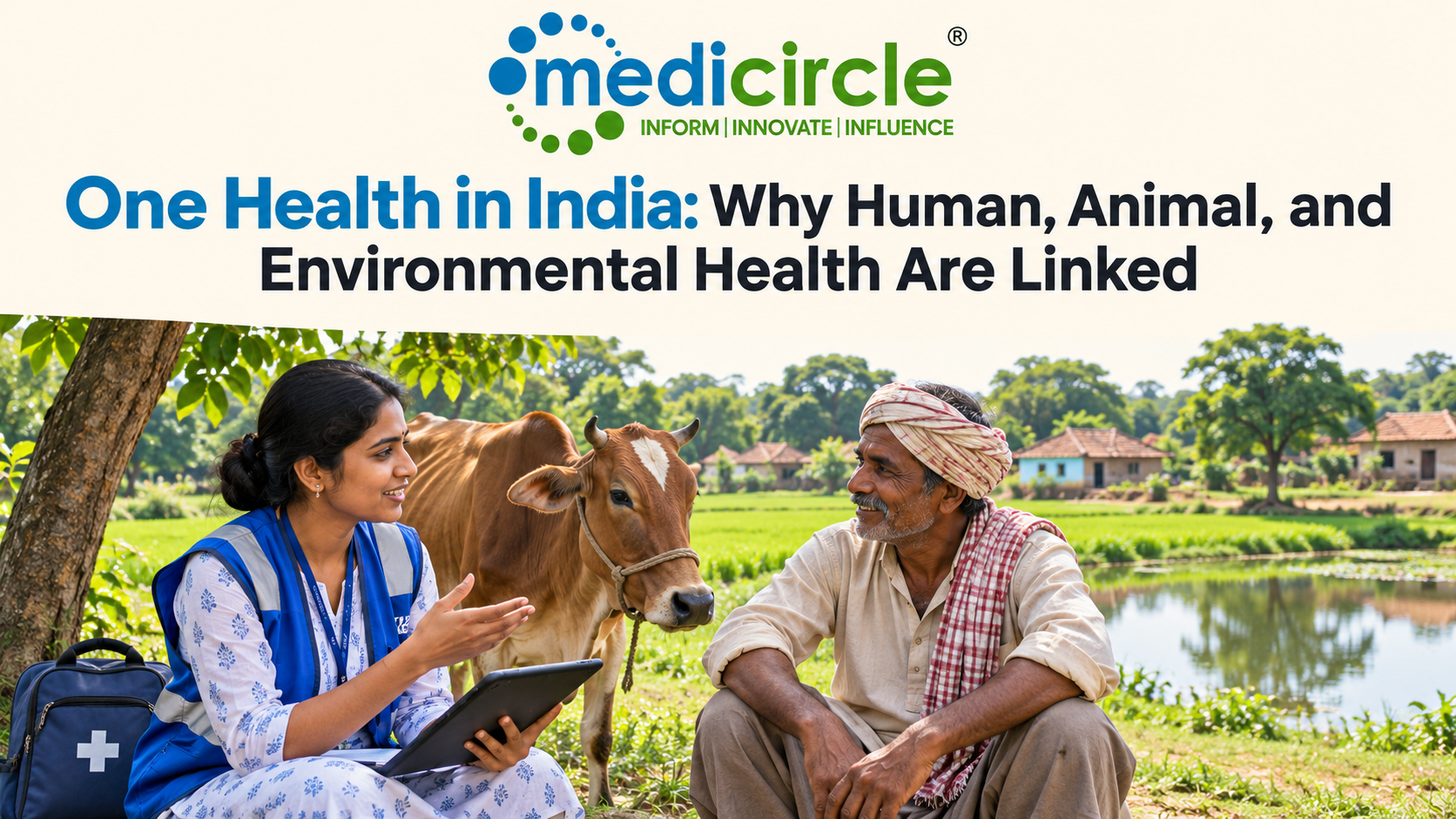
 One Health in India recognizes the inseparable link between human, animal, and environmental health, and calls for integrated surveillance, policy coordination, and community action to prevent disease.





Introduction
The idea that human health exists in isolation from the world around it has long been proven incomplete. Every time a new virus crosses from an animal to a human host, every time a river becomes too polluted to sustain aquatic life, and every time antibiotic-resistant bacteria spread across a farm and into a community, the same truth reasserts itself. Human health, animal health, and environmental health are not three separate problems. They are three dimensions of a single, deeply connected reality.
This is the foundation of the One Health approach, a concept that has gained significant global recognition and urgent relevance for India. With over 1.4 billion people living in close proximity to livestock, wildlife, and ecosystems that are rapidly changing due to urbanization and climate pressures, India stands at a critical intersection where this integrated approach is not simply a policy preference but a public health necessity.
Understanding the One Health Framework
The One Health concept is formally defined as a collaborative, multisectoral, and transdisciplinary approach that recognizes that the health of people, animals, plants, and the environment are closely linked and interdependent. The World Health Organization, the Food and Agriculture Organization, and the World Organisation for Animal Health have jointly championed this framework as the most logical and effective way to address health threats that do not respect the boundaries between species or ecosystems.
The framework operates across three interconnected domains.
The human health domain addresses disease burden, healthcare access, nutrition, and the prevention of infections that originate from animal or environmental sources. The animal health domain covers both domestic livestock and wildlife, focusing on disease surveillance, veterinary care, and the management of zoonotic risks. The environmental health domain examines how ecosystem degradation, climate change, deforestation, water contamination, and soil health influence the emergence and spread of disease.
None of these domains functions effectively without the others. A disease outbreak in cattle populations, for example, does not remain a veterinary problem. It quickly becomes a human health crisis, an economic setback for farming communities, and a signal of broader ecological stress in that region.
Why One Health Is Especially Critical for India
India presents a uniquely complex landscape for One Health implementation. The country is home to roughly 535 million livestock animals, the largest such population in the world. It also hosts extraordinary biodiversity, including wildlife corridors and forest ecosystems that bring animals into regular contact with human populations at the urban-rural fringe.
Several structural realities make India particularly vulnerable to health threats that emerge at the human-animal-environment interface.
Zoonotic disease burden is substantial. According to estimates from the Indian Council of Medical Research, more than 60 percent of known infectious diseases affecting humans are zoonotic in origin, meaning they originate in or are transmitted by animals. India has experienced repeated outbreaks of Nipah virus in Kerala, avian influenza in poultry-dense states, brucellosis transmitted through raw milk, and leptospirosis in flood-prone regions. Each of these events reflects the permeability of the boundary between animal and human health.
Antimicrobial resistance represents another critical concern at this intersection. India is among the highest consumers of antibiotics globally, in both human medicine and animal husbandry. The overuse of antibiotics in livestock farming accelerates the development of resistant bacteria that can transfer to humans through food, water, and direct contact. This is a One Health problem in the most direct sense because it cannot be resolved by acting in one sector alone.
Deforestation and habitat encroachment are driving animals into closer contact with human settlements. As forests in states like Maharashtra, Uttarakhand, and the Northeast shrink under development pressure, wildlife carries pathogens into agricultural and peri-urban zones. The COVID-19 pandemic, which is widely understood to have originated at a wildlife-human interface, demonstrated at a global scale what ecologists and public health experts in India have long warned about at a local one.
Key Disease Threats Emerging at the Human-Animal-Environment Interface in India
India's disease landscape is increasingly shaped by threats that emerge precisely where human activity intersects with animal populations and stressed ecosystems.
Nipah Virus: Kerala has witnessed multiple Nipah outbreaks, with the virus transmitted from fruit bats to humans, often through contaminated date palm sap or infected animals. Each outbreak has required coordinated public health responses that involved human medicine, veterinary surveillance, and environmental tracking. This is One Health response in practice.
Avian Influenza: Outbreaks of H5N1 and H5N8 in poultry populations across India have repeatedly raised concerns about potential spillover into human populations. The poultry industry, smallholder farmers, and public health authorities must work in coordination to contain such events before they escalate.
Rabies: India accounts for approximately 36 percent of global rabies deaths, primarily transmitted through dog bites. Effective rabies control requires both animal vaccination campaigns and human post-exposure prophylaxis, a dual intervention that is inherently a One Health strategy.
Leptospirosis and Brucellosis: These bacterial infections, transmitted through contact with infected animal urine or unpasteurized milk, disproportionately affect agricultural workers and rural communities. Strengthening veterinary public health, improving animal husbandry practices, and ensuring food safety are all part of the solution.
India's Policy Response and Institutional Framework
India has taken meaningful steps toward institutionalizing the One Health approach, though significant gaps remain between policy intent and ground-level implementation.
The National One Health Mission was announced as part of India's post-pandemic preparedness framework, aiming to integrate disease surveillance across human, animal, and environmental sectors. The Ministry of Health and Family Welfare, the Ministry of Fisheries, Animal Husbandry and Dairying, and the Ministry of Environment, Forest and Climate Change are the three central departments whose coordination is essential for this mission to function effectively.
The Indian Council of Medical Research and the Indian Council of Agricultural Research have both acknowledged the need for collaborative research that spans both medical and veterinary sciences. However, in practice, the two councils have historically operated in separate silos with limited data sharing and research collaboration.
The National Centre for Disease Control plays a key role in disease surveillance and outbreak response. Its Integrated Disease Surveillance Programme collects data on communicable diseases from across the country. Extending this surveillance network to include animal disease data from state veterinary departments and environmental monitoring data from pollution control boards is a critical step that India is working to implement but has not yet fully achieved.
India's participation in global frameworks such as the Global Health Security Agenda reflects its recognition that health security in the 21st century requires this kind of integrated thinking. However, the translation of international commitments into district-level action, where most of the actual human-animal-environment interface plays out, remains a persistent challenge.
The Role of Climate Change in Amplifying One Health Risks
Climate change is not a distant or abstract threat to India's One Health equation. It is already reshaping the geographic range of disease vectors, altering wildlife behavior, and stressing the ecosystems that buffer communities from disease emergence.
Rising temperatures are expanding the habitat range of mosquitoes that carry dengue, malaria, and chikungunya into previously unaffected high-altitude regions of Himachal Pradesh and Uttarakhand. Erratic monsoons are creating flood conditions that concentrate humans, animals, and pathogens in ways that accelerate transmission. Prolonged droughts push wildlife toward human settlements in search of food and water, increasing the probability of contact events that could spark new outbreaks.
For India, which is already highly exposed to climate risk and carries a heavy infectious disease burden, the intersection of climate change and the One Health framework is not a future concern. It is a present-day public health emergency that demands attention now.
Practical Steps Toward a One Health Future in India
Addressing One Health challenges in India requires action at multiple levels simultaneously.
At the national policy level, genuine integration of human, animal, and environmental health surveillance systems is essential. This means creating shared data platforms, joint outbreak response protocols, and cross-ministerial coordination mechanisms that function in real time and not only after a crisis has already emerged.
At the research level, funding for interdisciplinary science that brings together epidemiologists, veterinarians, ecologists, and social scientists is critical. India has the academic and scientific capacity to lead on One Health research, but this requires deliberate investment and institutional incentives that reward collaborative rather than siloed scholarship.
At the community level, awareness and behavior change are foundational. Farmers who understand the risks of antibiotic overuse in their livestock, communities who know how to report unusual animal deaths, and citizens who appreciate the connection between forest conservation and disease prevention are all active participants in the One Health system.
At the healthcare delivery level, training medical professionals and veterinarians in One Health thinking will improve how outbreaks are identified, reported, and contained. A physician who recognizes a cluster of unexplained fevers in a farming community and immediately initiates both human and animal surveillance is practicing One Health in the most practical sense.
Conclusion
The One Health approach is not a new concept, but it has never been more relevant or more urgent for India than it is today. The country's size, its biodiversity, its agricultural dependence, its disease burden, and its climate vulnerability all make the integration of human, animal, and environmental health a strategic imperative rather than an optional policy choice.
India has the institutional foundations, the scientific expertise, and the policy frameworks to lead on One Health in South Asia and beyond. What is needed now is the sustained political will, interdisciplinary coordination, and community engagement to move from framework to function. Every outbreak prevented at the animal-human interface, every ecosystem preserved, and every resistant bacterial strain contained through collaborative action is a demonstration that One Health is not simply a philosophy. It is a practical and powerful path toward a healthier India.
Frequently Asked Questions
Q1: What is the One Health approach and why does it matter for India?
The One Health approach recognizes that human, animal, and environmental health are deeply interconnected and cannot be addressed in isolation. For India, this matters profoundly because the country hosts the world's largest livestock population, faces a high zoonotic disease burden, and is experiencing rapid environmental change. Addressing health threats through a coordinated, cross-sectoral lens is essential for effective disease prevention and outbreak response in the Indian context.
Q2: What are examples of zoonotic diseases in India that demonstrate the need for One Health?
Several disease outbreaks in India illustrate why One Health thinking is necessary. Nipah virus outbreaks in Kerala involved transmission from fruit bats to humans. Avian influenza has repeatedly emerged from poultry populations. Rabies, brucellosis, and leptospirosis all involve animal reservoirs and affect large numbers of people, particularly in rural and agricultural communities. Each of these conditions requires a response that spans human medicine, veterinary science, and environmental monitoring.
Q3: How is antimicrobial resistance connected to the One Health framework?
Antimicrobial resistance develops when antibiotics are overused in both human medicine and animal husbandry. In India, the widespread use of antibiotics in livestock farming creates resistant bacteria that can transfer to humans through food, water, and direct contact. Because resistance develops across both sectors and spreads through shared environments, it can only be effectively addressed through a One Health strategy that coordinates action in human health, veterinary care, and food safety simultaneously.
Q4: What role does climate change play in One Health risks in India?
Climate change is amplifying One Health risks in India by expanding the geographic range of disease vectors, pushing wildlife into closer contact with human settlements, and creating environmental conditions such as flooding and drought that increase the probability of disease transmission. Rising temperatures are bringing mosquito-borne diseases like dengue and malaria to previously unaffected high-altitude areas, while stressed ecosystems reduce the natural buffers that separate wildlife from human communities.
Q5: What steps is India taking to implement the One Health approach?
India has announced a National One Health Mission as part of its pandemic preparedness framework, which aims to integrate disease surveillance across human, animal, and environmental sectors. Key institutions including the Ministry of Health and Family Welfare, the Ministry of Fisheries, Animal Husbandry and Dairying, and the Ministry of Environment are involved. The Indian Council of Medical Research and the National Centre for Disease Control are also working to strengthen interdisciplinary surveillance and outbreak response, though full integration at the district level remains a work in progress.
Resources
- World Health Organization (WHO): One Health framework documentation and global guidance on integrated human-animal-environmental health approaches.
- Indian Council of Medical Research (ICMR): Publications and research on zoonotic diseases, antimicrobial resistance, and infectious disease burden in India.
- Food and Agriculture Organization of the United Nations (FAO): Reports on livestock health, food safety, and zoonotic disease prevention at the human-animal-environment interface.
- National Centre for Disease Control (NCDC), India: Integrated Disease Surveillance Programme data, outbreak reports, and public health guidelines relevant to One Health in the Indian context.
- Ministry of Fisheries, Animal Husbandry and Dairying, Government of India: Policy frameworks, animal disease reports, and veterinary public health updates related to the National One Health Mission.
Interlinking Keywords
One Health approach India, zoonotic diseases India, antimicrobial resistance India, Nipah virus Kerala, avian influenza poultry India, National One Health Mission, environmental health India, human animal health interface, disease surveillance India, public health India
Last reviewed by:
Dr. Manthan Tripathi, Medicircle Editorial and Medical Advisory Team on 26, November 2026.
Disclaimer
The information provided in this article is intended for general awareness and educational purposes only. It does not constitute medical advice, diagnosis, or treatment. Readers are advised to consult a qualified medical professional or healthcare provider for any personal health concerns or questions. Medicircle does not endorse any specific treatment, medication, or clinical intervention. All statistics and data referenced are based on publicly available information from recognized national and international health bodies.





-23-300x250.png)