 Thursday, November 26, 2026
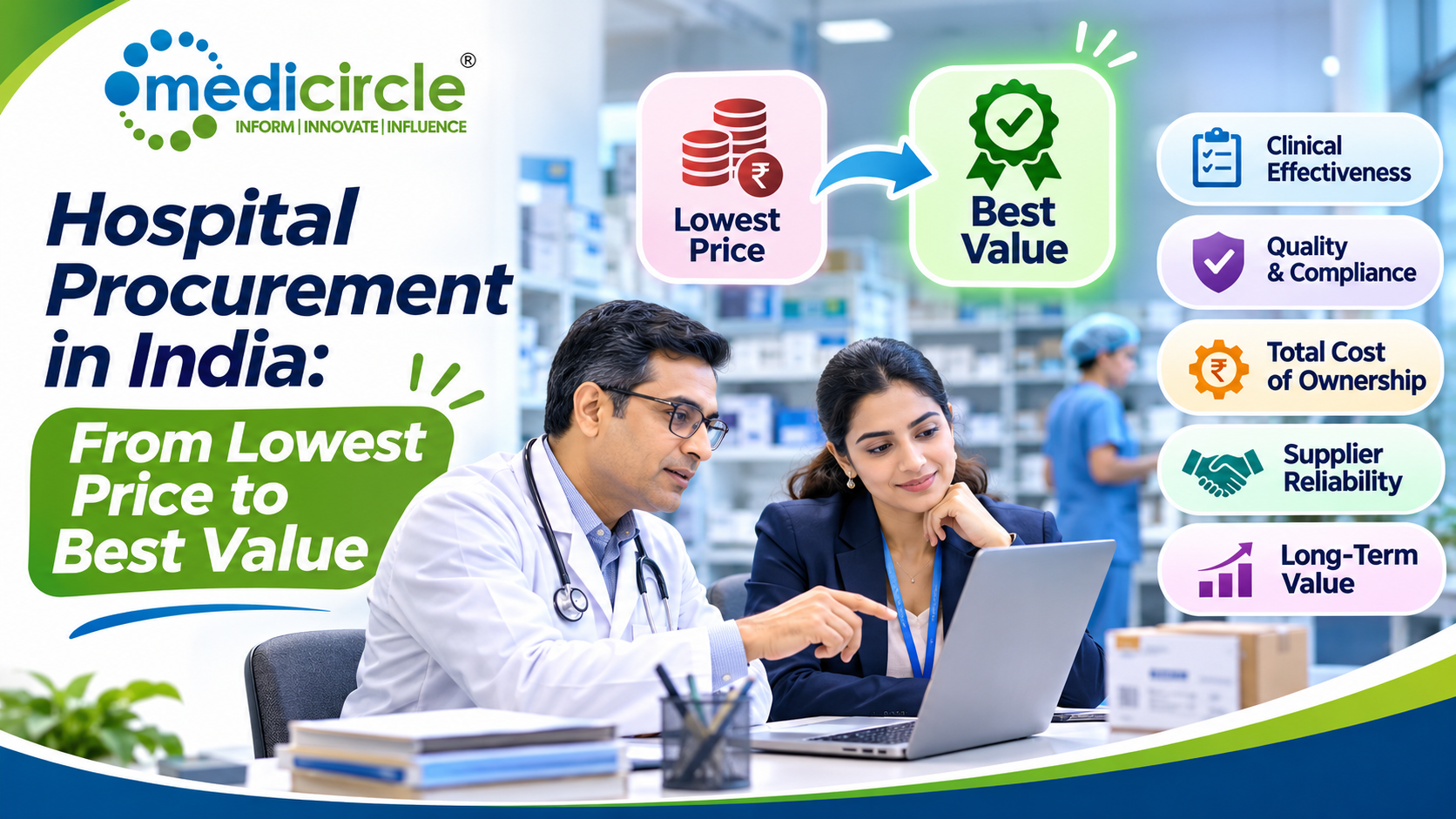
 Indian hospitals are moving from price-driven to value-based procurement, using digital tools, clinical governance, and strategic vendor partnerships to improve supply chain efficiency and patient outcomes.





Introduction
For decades, procurement in Indian hospitals followed a straightforward logic: find the cheapest supplier, approve the purchase, and move on. The finance team celebrated savings. The clinical team complained about quality. And somewhere in between, patient outcomes quietly suffered.
That equation is now changing. Across India's healthcare landscape, from large tertiary care hospitals in Mumbai and Delhi to multi-specialty chains expanding into Tier 2 cities like Indore and Coimbatore, procurement teams are asking a more important question: not what costs the least, but what delivers the most value.
This shift is not incidental. It is being driven by the convergence of three powerful forces: rising operational pressures on hospital margins, the digital transformation of supply chain infrastructure, and a growing recognition that procurement quality directly influences clinical quality. For Indian healthcare leaders, understanding this evolution is no longer optional. It is a strategic imperative.
Understanding Traditional Hospital Procurement and Its Limitations
Hospital procurement in India has historically been fragmented, manually intensive, and largely reactive. Most hospitals, particularly those outside the top metropolitan chains, operated on a system of approved vendor lists, verbal negotiations, and paper-based purchase orders. Decisions were made based on price, familiarity with vendors, and the availability of items at short notice.
This model created predictable problems. Price-driven procurement often meant trading quality for cost savings. Hospitals sourcing surgical consumables, implants, diagnostic reagents, or pharmaceutical supplies at the lowest bid frequently encountered:
- Inconsistent product quality across batches
- Supply disruptions due to financially unstable vendors
- Lack of post-sales service and warranty support
- Higher long-term replacement and maintenance costs
- Regulatory compliance gaps when vendor credentials were not rigorously verified
The bigger issue was structural. Traditional procurement was not connected to clinical outcomes. A hospital could save significantly on a ventilator purchase but spend far more in maintenance, downtime, and patient complications if the product failed to meet performance benchmarks. The savings on paper were illusory.
According to data from the National Health Authority (NHA) and procurement analysis conducted under the Ayushman Bharat Digital Mission (ABDM) framework, procurement inefficiencies account for a significant share of avoidable costs in Indian hospitals. With India's hospital sector growing rapidly and operating margins under pressure, this inefficiency has become impossible to ignore.
The Digital Transformation of Healthcare Supply Chains
The most visible change in hospital procurement today is the adoption of digital platforms. Hospital management systems, enterprise resource planning tools, and dedicated procurement software are replacing paper-based workflows across a growing number of Indian hospitals.
What digital procurement platforms enable is not just speed or convenience. They enable data. When a hospital's procurement is routed through a centralized digital system, administrators can track:
- Real-time inventory levels across departments and locations
- Vendor performance metrics including delivery timelines, rejection rates, and complaint histories
- Comparative pricing across multiple suppliers over time
- Consumption patterns that predict future demand
- Expiry management for pharmaceutical and consumable stock
This data infrastructure changes the nature of procurement decisions entirely. Instead of a purchase officer making a call based on memory or habit, decisions are informed by historical evidence and predictive analytics.
Indian hospital chains have been early adopters of this model. Organizations operating across multiple facilities have strong incentives to centralize procurement digitally, as it allows volume consolidation, standardized vendor agreements, and group purchasing leverage. The benefits extend to smaller hospitals as well, with software-as-a-service procurement platforms now making these tools accessible to independent hospitals without the capital investment required for on-premises enterprise systems.
The integration of ABDM's health data infrastructure also creates the possibility of aligning procurement data with clinical outcome data, a development that could make value measurement far more precise in the coming years.
From Price to Value: What the Shift Actually Means
The concept of value-based procurement is frequently discussed but often poorly understood in operational terms. It is not simply about buying better products. It is about evaluating the total cost of ownership and the clinical return on every procurement decision.
Consider a hospital evaluating two infusion pump options. Pump A costs significantly less upfront. Pump B carries a higher purchase price but includes a five-year preventive maintenance contract, real-time alarm monitoring, and a proven record of reduced adverse medication events across comparable hospital settings. Under price-based procurement logic, Pump A wins every time. Under value-based logic, the total cost of ownership, including downtime, maintenance calls, clinical risk exposure, and staff retraining costs, may make Pump B the clearly superior choice.
This framework extends across virtually every procurement category in a hospital:
- Surgical gloves and gowns, where quality directly impacts infection control
- Diagnostic imaging equipment, where resolution and uptime determine diagnostic accuracy
- Pharmaceutical sourcing, where generic substitution must be balanced against bioavailability and regulatory standing
- Medical gases, where supply continuity is literally a matter of patient survival
The shift to value-based procurement requires hospitals to build cross-functional procurement committees that include clinical leads, infection control officers, biomedical engineers, and finance representatives alongside traditional purchase officers. It also requires vendors to present data, not just price sheets.
Vendor Management and the Role of Strategic Partnerships
One of the most consequential changes in modern hospital procurement is the redefinition of vendor relationships. Transactional buying, where the hospital and supplier interact only at the point of purchase, is giving way to strategic vendor partnerships.
Strategic vendor partnerships are built on longer contractual commitments, shared performance benchmarks, and mutual accountability. In this model, vendors are evaluated not just on unit price but on:
- Delivery reliability and lead time consistency
- Product quality and batch consistency
- Responsiveness to complaints and product recalls
- Regulatory compliance, including manufacturing certifications
- Willingness to support clinical staff training and product orientation
For Indian hospitals, this model offers particular advantages. The country's pharmaceutical and medical device manufacturing ecosystem is vast but uneven in quality. By developing long-term relationships with vendors who meet rigorous qualification standards, hospitals create a supply chain that is more resilient, more consistent, and more aligned with clinical expectations.
NABH (National Accreditation Board for Hospitals and Healthcare Providers) accreditation standards already require hospitals to maintain documented vendor qualification processes. Progressive hospitals are building on this foundation by integrating vendor scorecards, annual performance reviews, and periodic audits into their procurement governance frameworks.
Technology Tools Reshaping Procurement in Indian Hospitals
Beyond enterprise procurement systems, several specific technologies are beginning to reshape how Indian hospitals manage their supply chains.
Artificial intelligence and machine learning tools are being applied to demand forecasting, reducing both stockouts and overstock situations that waste budget and storage space. Blockchain-based supply chain verification is emerging as a solution to the significant problem of counterfeit medical supplies, a genuine concern in certain segments of India's healthcare supply market.
Radio frequency identification (RFID) tagging is enabling real-time asset tracking for high-value medical equipment, reducing loss and improving utilization rates. E-procurement platforms with reverse auction functionality are bringing price transparency and competitive discipline to vendor selection, while still allowing quality parameters to be set as non-negotiable qualifying criteria.
Telemedicine and remote monitoring platforms are also beginning to influence procurement indirectly. As more care moves outside hospital walls, procurement teams must evaluate technology ecosystems rather than individual devices, requiring a more sophisticated and holistic approach to vendor evaluation and technology integration.
Challenges Facing Indian Hospitals in This Transition
Despite the momentum toward smarter procurement, significant barriers remain for many Indian hospitals.
Smaller and mid-sized hospitals, which make up the majority of India's private hospital sector, often lack the internal expertise to implement sophisticated procurement systems. The capital cost of enterprise software, the time required to train staff, and the complexity of integrating procurement data with clinical systems can be prohibitive without external support.
There is also a cultural dimension. In many hospitals, procurement decisions remain closely held by owners or senior administrators, with limited institutional processes. Building trust in data-driven systems requires cultural change that cannot be mandated overnight.
Additionally, vendor resistance is real. Suppliers accustomed to relationship-based selling must adapt to environments where performance data, not personal rapport, determines contract renewals. This creates short-term friction even when the long-term outcome is a healthier supply chain.
The Road Ahead for Indian Healthcare Procurement
The trajectory is clear. As Indian hospitals grow in size, complexity, and competitive pressure, procurement will increasingly become a strategic function rather than an administrative one. The hospitals that invest early in procurement transformation, building the digital infrastructure, clinical governance, and vendor management capabilities required for value-based purchasing, will be better positioned across every dimension of performance.
Government initiatives also support this direction. The push toward ABDM integration, the expansion of Ayushman Bharat coverage, and the increasing focus on cost accountability under health insurance frameworks all create structural incentives for hospitals to move from price-based to value-based procurement thinking.
Platforms that connect healthcare providers, suppliers, and industry stakeholders play a meaningful role in this transition by creating visibility, facilitating knowledge exchange, and helping the broader ecosystem understand what progressive procurement leadership looks like in practice.
Conclusion
Hospital procurement in India is undergoing a fundamental transformation. The shift from lowest-price thinking to best-value decision-making is not just a financial strategy. It is a clinical one. When hospitals invest in procurement quality, they invest in patient safety, operational resilience, and institutional credibility.
Digital tools are enabling this shift at scale, but technology alone is not sufficient. The hospitals leading this transformation are those that combine data infrastructure with clinical governance, vendor partnership thinking, and a genuine commitment to measuring what matters. For Indian healthcare, this is not a future aspiration. It is an ongoing and accelerating reality.
Frequently Asked Questions
Q1: What is value-based procurement in hospitals?
Value-based procurement is an approach where hospitals evaluate purchases based on total cost of ownership and clinical outcomes rather than the lowest upfront price. It considers factors like product quality, vendor reliability, maintenance costs, and patient safety outcomes to determine the best overall value.
Q2: How are Indian hospitals using digital tools for procurement?
Indian hospitals are adopting enterprise resource planning software, hospital management systems, and dedicated procurement platforms to centralize purchasing, track vendor performance, manage inventory in real time, and analyze consumption patterns for better demand forecasting and cost control.
Q3: What role does NABH accreditation play in hospital procurement?
NABH accreditation requires hospitals to follow documented vendor qualification processes, maintain quality standards for medical supplies, and demonstrate systematic procurement governance. Many hospitals use NABH compliance as a foundation for building more comprehensive value-based procurement frameworks.
Q4: What are the main challenges for smaller Indian hospitals in upgrading procurement?
Smaller hospitals often face limited budgets for technology investment, a shortage of trained procurement professionals, cultural resistance to process-driven purchasing, and difficulty evaluating vendors beyond price. Cloud-based and software-as-a-service procurement tools are gradually making digital procurement more accessible for smaller facilities.
Q5: How does digital procurement improve patient safety in hospitals?
Digital procurement improves patient safety by enabling better quality control over medical supplies, reducing the risk of counterfeit or substandard products entering the supply chain, ensuring that critical items are never out of stock, and creating documented audit trails for every purchasing decision linked to clinical use.
Resources
- National Accreditation Board for Hospitals and Healthcare Providers (NABH): Standards and guidelines for hospital quality and procurement governance in India
- Ayushman Bharat Digital Mission (ABDM): Framework for health data integration and digital infrastructure development across Indian healthcare facilities
- World Health Organization (WHO): Global guidance on medical product procurement, supply chain management, and health systems strengthening
- Ministry of Health and Family Welfare (MoHFW): Policy documents, national health guidelines, and regulatory frameworks governing hospital operations in India
Interlinking Keywords
Hospital supply chain management, value-based healthcare India, NABH accreditation standards, digital health infrastructure India, medical procurement best practices, Ayushman Bharat Digital Mission, hospital vendor management, healthcare cost optimization India
Last reviewed by:
Dr. Manthan Tripathi, Medicircle Editorial and Medical Advisory Team on 25, November 2026.
Disclaimer
The information provided in this article is intended for general awareness and informational purposes only. It does not constitute medical, financial, or operational advice for any specific hospital or healthcare organization. Procurement decisions should be made in consultation with qualified professionals and in accordance with applicable regulatory guidelines. Medicircle does not endorse any specific vendor, product, platform, or procurement system mentioned or implied in this article.





-23-300x250.png)