 Friday, November 27, 2026
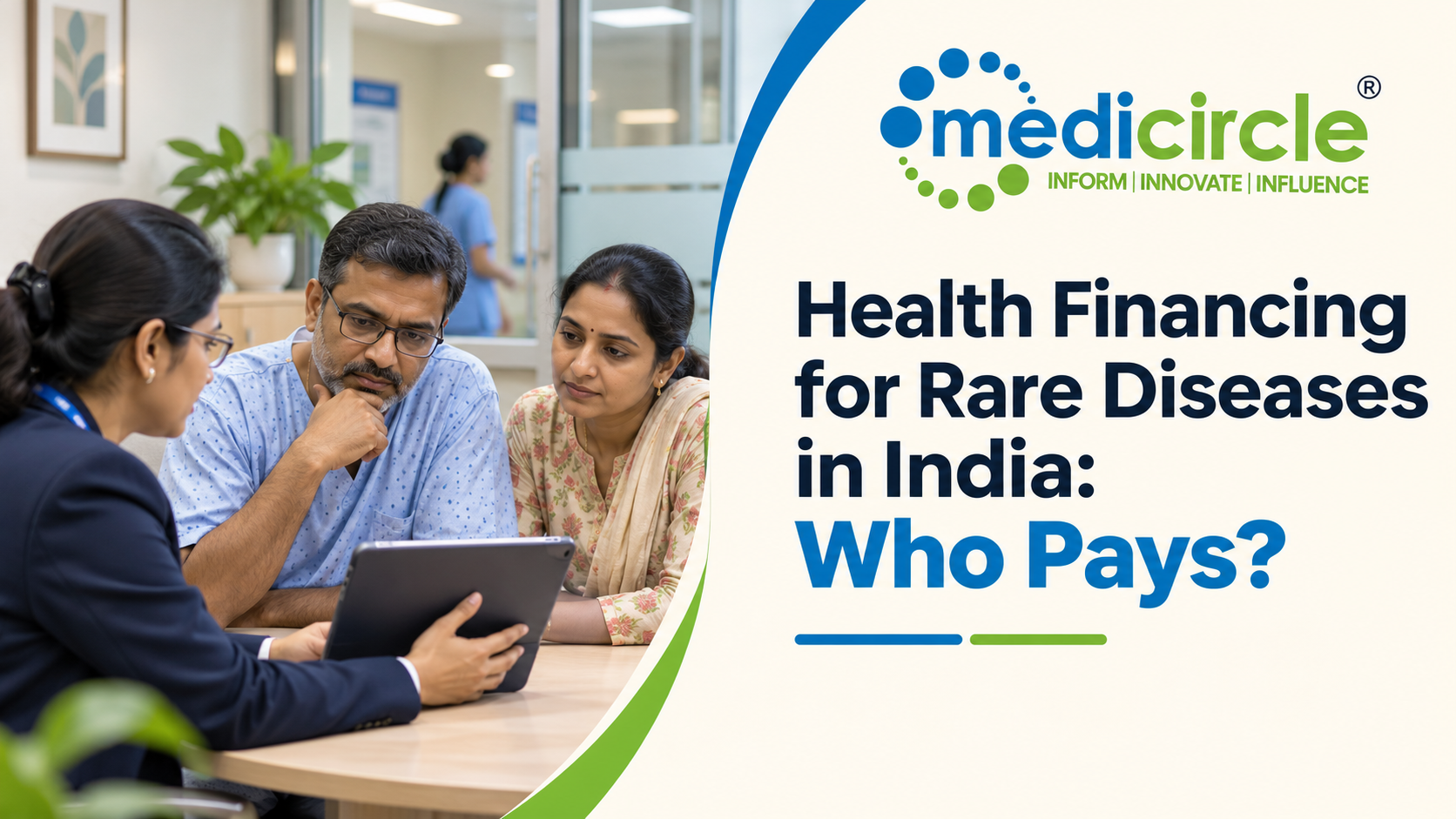
 Rare diseases impose catastrophic financial burdens on Indian families. Sustainable financing requires coordinated government funding, mandatory insurance inclusion, pharmaceutical price negotiation, and structured philanthropic support.





Introduction
When a child is diagnosed with Spinal Muscular Atrophy, Pompe disease, or Gaucher disease in India, the family is often handed something far heavier than a diagnosis. They receive an estimated treatment cost that can run into several crores of rupees per year, sometimes for a lifetime. For the vast majority of Indian families, that number is simply incomprehensible.
Rare diseases are, by definition, uncommon. The National Policy for Rare Diseases 2021 defines a rare disease as one that affects fewer than 1 in 2500 people in India. But uncommon does not mean unimportant. It is estimated that over 70 million Indians live with one of approximately 7000 to 8000 identified rare diseases globally. The cumulative burden is not rare at all.
What makes rare disease care uniquely difficult is not just the medical complexity. It is the intersection of limited treatment availability, high drug prices, absent or inadequate insurance coverage, and a healthcare financing system that was not designed with ultra-high-cost conditions in mind. The question of who should pay is not merely an economic one. It is a question about values, equity, and the kind of society India wants to build as its healthcare system matures.
Understanding Rare Diseases and Why They Cost So Much
Rare diseases are predominantly genetic in origin, with roughly 80 percent linked to genetic factors. Many manifest in infancy or early childhood and require lifelong disease management. Because patient populations are small, the pharmaceutical industry faces limited commercial incentive to develop treatments, which means research and development costs are spread over a very small number of patients worldwide.
This results in what the global health community calls "orphan drugs," medicines developed specifically for rare diseases that carry extraordinarily high price tags. A single annual dose of a treatment like Nusinersen, used for Spinal Muscular Atrophy, can cost upward of six crore rupees in India before any subsidies. Enzyme replacement therapies for lysosomal storage disorders can require indefinite monthly infusions at similarly prohibitive costs.
The financial burden falls into several distinct categories:
- Direct medical costs: drugs, hospital stays, specialist consultations, laboratory investigations, and medical devices
- Indirect costs: lost income when parents or caregivers must leave employment to provide care
- Out-of-pocket expenditure: for the majority of Indian families without adequate insurance, every rupee of this comes from family savings, property sales, or borrowing
India's out-of-pocket health expenditure remains among the higher proportions globally for a country at its income level, and rare disease families bear this disproportionately.
The Role of Government Policy in Rare Disease Financing
The National Policy for Rare Diseases 2021 was a landmark step. For the first time, India acknowledged rare disease care as a public health responsibility rather than purely a private family burden. The policy established a framework for financial support, designating eight Centers of Excellence across the country and creating a funding mechanism through the Rashtriya Arogya Nidhi for one-time curative treatments.
Under the current policy, financial assistance of up to 50 lakh rupees is available to below-poverty-line patients with rare diseases that have one-time curative treatment options, such as bone marrow transplants. For conditions requiring long-term treatment, however, the policy support is significantly more limited.
There are three categories defined under the policy:
- Group 1: Disorders amenable to one-time curative treatment
- Group 2: Diseases requiring long-term management but with relatively lower treatment costs
- Group 3: Diseases requiring costly long-term treatment with no definitive cure
Group 3 is where the financing gap is most severe. These are conditions like Pompe disease, Fabry disease, and Mucopolysaccharidosis, where enzyme replacement therapies must continue indefinitely, and costs remain astronomically high year after year. The policy acknowledges this challenge but does not yet provide a sustainable financing mechanism for Group 3 conditions.
The Ministry of Health and Family Welfare and ICMR continue to work on expanding the rare disease registry and research agenda, which is a necessary foundational step. But policy intent and financial reality remain separated by a significant distance.
Can Insurance Fill the Gap?
For urban, employed, and formally insured Indians, the instinct is often to turn to health insurance. But the reality of insurance coverage for rare diseases in India is sobering. Most standard individual and group health insurance policies either explicitly exclude rare diseases, cap coverage at levels that are entirely inadequate for high-cost treatments, or list orphan drugs as non-covered items within their policy exclusions.
Ayushman Bharat Pradhan Mantri Jan Arogya Yojana, which is India's flagship publicly funded health insurance scheme, covers hospitalisation for a wide range of conditions up to five lakh rupees per family per year. For rare disease patients in Group 3, five lakh rupees may not cover even a single month of enzyme replacement therapy.
Some movement is visible in the private insurance space. The Insurance Regulatory and Development Authority of India has been pushing insurers toward more inclusive products. A handful of policies now offer higher sum insured options in the range of one to two crore rupees, which is more meaningful for rare disease costs, but premiums for such policies remain out of reach for most Indian households.
The honest assessment is this: at current policy and product design, insurance alone cannot finance rare disease care equitably in India. A multi-payer model is necessary.
The Philanthropy and Crowdfunding Reality
In the absence of adequate government funding and insurance coverage, Indian rare disease families have increasingly turned to philanthropy and crowdfunding platforms. Platforms like Milaap, Ketto, and ImpactGuru have collectively raised hundreds of crores for medical emergencies in India, with rare disease campaigns representing a significant portion of that activity.
Philanthropy has genuine value as a bridge. It has allowed individual children to access Zolgensma, a gene therapy for Spinal Muscular Atrophy that costs over 16 crore rupees per dose, through public campaigns that received national media attention. These stories are genuinely moving. But they are also genuinely inadequate as a systemic solution.
Crowdfunding success depends heavily on:
- Social media reach and campaigning ability
- Sympathetic framing of the patient's story
- Access to influential networks
- Urban and English-language communication advantages
This means that rural families, families without social networks, and families without digital access are significantly less likely to benefit. Philanthropy and crowdfunding, without structural backing, reproduce existing social inequalities rather than addressing them. They are a supplement, not a solution.
Corporate and Manufacturer Responsibility
Pharmaceutical manufacturers who produce orphan drugs carry a unique moral and commercial responsibility in this conversation. Several global rare disease drug manufacturers have patient assistance programs that offer compassionate access or subsidised pricing for patients in low- and middle-income countries, but awareness of these programs in India remains low, and eligibility criteria can be restrictive.
A coordinated approach between the Indian government and pharmaceutical manufacturers, similar to what has been achieved in some other emerging markets, could include negotiated price caps for orphan drugs sold in India, volume guarantees in exchange for tiered pricing, and mandatory patient access programs tied to market approval in India. The Competition Commission of India and the Ministry of Chemicals and Fertilizers have roles to play in creating a policy environment where such negotiations become standard practice rather than case-by-case exceptions.
Drug price negotiation for rare diseases is politically and commercially complex, but it is not impossible. Thailand, Brazil, and Colombia have demonstrated that assertive government negotiation can bring orphan drug prices to levels that are more sustainable for public financing.
What a Sustainable Financing Model Looks Like for India
A sustainable financing model for rare disease care in India will need to draw on multiple sources simultaneously. No single payer can or should bear the full burden. The architecture that is needed includes the following:
The first pillar is government funding, with a dedicated rare disease fund that is adequately capitalised and regularly reviewed. This fund should cover Group 1 and Group 2 conditions comprehensively and progressively expand coverage to Group 3 as drug prices are negotiated down.
The second pillar is mandatory insurance inclusion. IRDAI should work with insurers to develop standardised rare disease riders or standalone products, with premium pooling across a large insured base to distribute risk effectively.
The third pillar is industry partnership. Pharmaceutical manufacturers seeking approval for orphan drugs in India should be required to submit patient access and pricing plans as part of the approval process, in coordination with the Central Drugs Standard Control Organisation.
The fourth pillar is state-level complementary funding. Several Indian states, including Karnataka and Kerala, have shown greater willingness to co-finance rare disease treatment beyond central government limits. A national framework that incentivises state co-financing could expand coverage meaningfully.
The fifth pillar is civil society and philanthropic channelling, structured through registered rare disease foundations that can aggregate donations with tax efficiency and deploy them transparently to families in need.
Medicircle, as a platform that amplifies expert voices and patient awareness stories, plays a role in making this conversation louder and more visible. The more Indians understand the rare disease financing crisis, the more public and political will is generated for structural solutions.
Prevention, Newborn Screening, and the Long-Term Cost Argument
One important dimension of rare disease financing that is sometimes overlooked is the economic case for early detection. Newborn screening programs, which test for a panel of rare metabolic and genetic disorders within the first days of life, can identify affected children before symptoms become severe. Early intervention, in conditions like Phenylketonuria or Congenital Hypothyroidism, can dramatically reduce the cost and complexity of long-term management.
India's newborn screening coverage is currently highly uneven. Some private hospitals in Tier 1 cities offer comprehensive newborn screening panels. Government facilities in many states offer limited or no screening. Expanding the Universal Immunisation Programme to include a standardised newborn screening panel, as recommended by ICMR, would not only improve outcomes but could reduce long-term rare disease treatment costs significantly.
Similarly, expanded genetic counselling services can help families make informed reproductive decisions, which over time reduces the incidence of some hereditary rare diseases. These are investments in prevention that have clear long-term financial logic alongside their humanitarian value.
Frequently Asked Questions
Q1: What is the government's current financial support for rare disease patients in India?
The National Policy for Rare Diseases 2021 provides financial assistance of up to 50 lakh rupees for below-poverty-line patients with rare diseases classified under Group 1, which includes conditions treatable through one-time curative procedures. For Group 3 conditions requiring costly long-term treatment, structured government financing is currently limited, and families must rely on a combination of partial support, insurance, and philanthropy.
Q2: Does Ayushman Bharat cover rare disease treatments?
Ayushman Bharat Pradhan Mantri Jan Arogya Yojana provides hospitalisation coverage of up to five lakh rupees per family per year. For most rare diseases requiring costly orphan drugs or long-term enzyme replacement therapy, this coverage is insufficient. Some rare disease procedures may be covered under specific DRG codes within the scheme, but comprehensive coverage for high-cost rare disease treatments is not yet part of the scheme's design.
Q3: Can Indian families access free or subsidised orphan drugs through manufacturer programs?
Several pharmaceutical companies that manufacture orphan drugs operate patient assistance programs or compassionate use programs that offer subsidised or free access in certain circumstances. However, awareness of these programs in India remains low, and eligibility criteria can be difficult to navigate. Patients are advised to consult with their treating physician and contact the drug manufacturer's India office directly to inquire about available access programs.
Q4: Is crowdfunding a reliable solution for financing rare disease treatment?
Crowdfunding has helped individual families access treatments that would otherwise be completely unaffordable, and several high-profile rare disease campaigns in India have raised significant amounts. However, crowdfunding is not a reliable or equitable systemic solution. Success depends heavily on social networks, digital access, and campaigning ability, which disadvantages rural and lower-income families. It is best viewed as a supplementary bridge rather than a primary financing mechanism.
Q5: What can be done to reduce the cost of orphan drugs in India?
The most effective approaches to reducing orphan drug costs include government-to-manufacturer price negotiations, inclusion of orphan drugs in national essential medicines lists with regulated pricing, compulsory licensing under India's Patents Act in cases of extreme public health need, and regional procurement collaborations with other countries to increase purchasing power. India has the legal and policy tools available to pursue these approaches and has used similar mechanisms in the past for HIV antiretrovirals.
Resources
- Ministry of Health and Family Welfare, Government of India: National Policy for Rare Diseases 2021, available through the official MOHFW portal
- Indian Council of Medical Research (ICMR): Guidelines and research publications on rare disease identification, registry, and newborn screening in India
- World Health Organization (WHO): Global reports and frameworks on rare diseases, orphan drugs, and health financing for high-cost conditions
- NITI Aayog: Health sector reports and working group recommendations relevant to universal health coverage and financing equity in India
- Organisation for Rare Diseases India (ORDI): Patient advocacy resources, disease-specific support networks, and policy submissions related to rare disease financing in India
Interlinking Keywords
rare disease treatment cost India, National Policy for Rare Diseases 2021, Ayushman Bharat rare diseases, orphan drugs in India, rare disease insurance coverage India, newborn screening India, Rashtriya Arogya Nidhi, health financing India, ICMR rare disease registry, rare disease patient support India
Last reviewed by:
Dr. Manthan Tripathi, Medicircle Editorial and Medical Advisory Team on 26, November 2026.
Disclaimer
This article is intended for general health awareness and informational purposes only. It does not constitute medical advice, diagnosis, or treatment recommendations. Readers are strongly advised to consult a qualified medical professional or specialist for any health-related concerns, treatment decisions, or questions regarding rare disease management. All policy details mentioned are based on publicly available information and may be subject to revision. Medicircle does not endorse any specific drug, treatment, insurance product, or financial scheme mentioned in this article.





-23-300x250.png)