 Friday, November 13, 2026
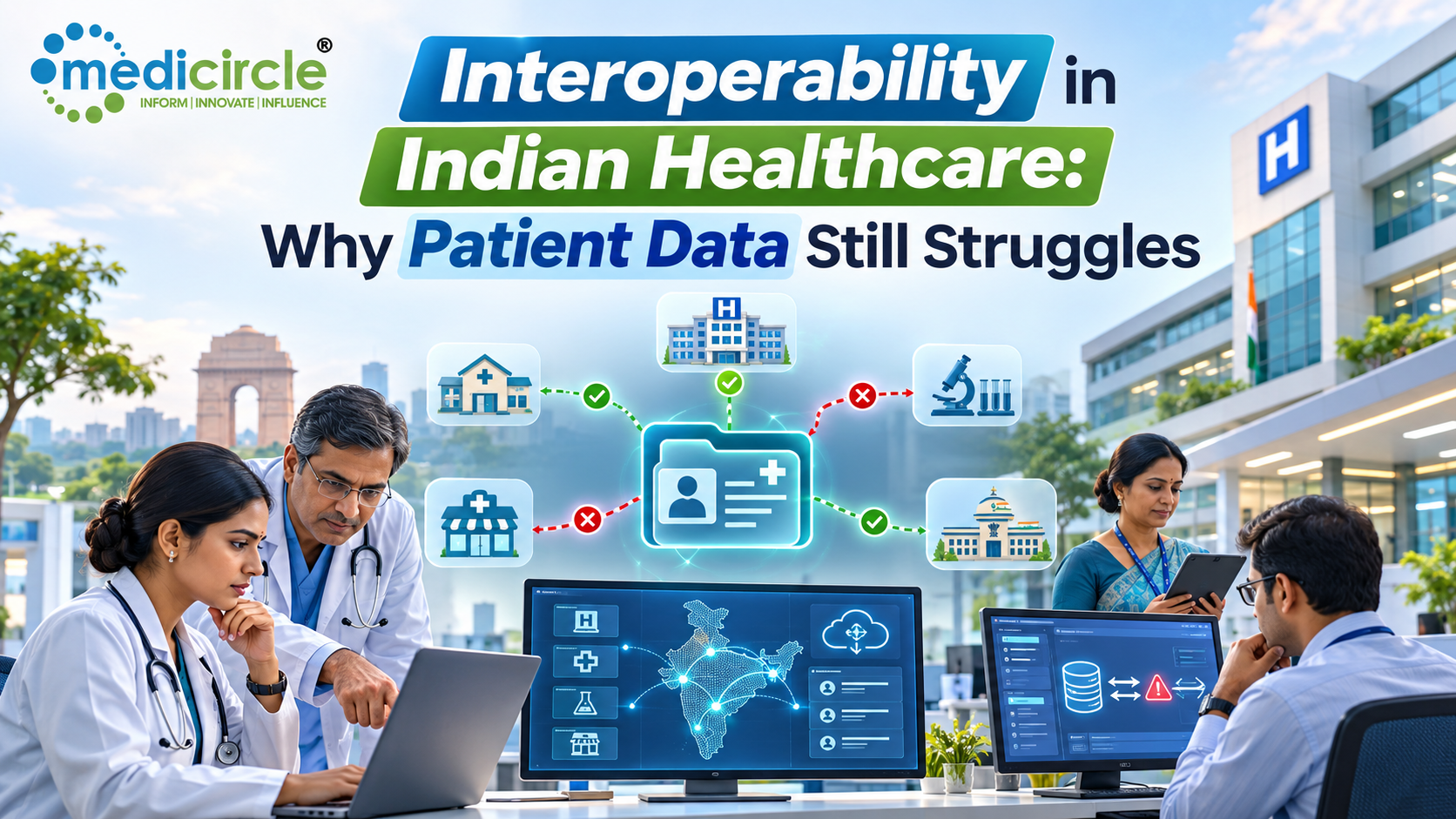
 India's healthcare system faces significant barriers to health data interoperability, limiting patient record continuity across facilities, with ABDM providing the foundational framework for change.





Introduction
Every day, millions of patients across India walk into hospitals, clinics, and diagnostic centres carrying physical files, printed reports, and handwritten prescriptions. A patient who visits a cardiologist in Mumbai may have no way to share their recent blood reports from a Pune laboratory with that specialist without physically carrying the documents. A diabetic patient shifting from one city to another must start their medical history almost from scratch with the new doctor. This is not an isolated problem. It is one of the most persistent structural gaps in Indian healthcare today.
The term for solving this problem is health data interoperability. It refers to the ability of different healthcare systems, software platforms, hospitals, and devices to exchange and use patient information in a consistent, accurate, and meaningful way. When interoperability works as intended, a patient's health record travels with them. When it does not, the patient bears the burden of continuity.
India has taken significant steps toward solving this challenge, most notably through the Ayushman Bharat Digital Mission, known as ABDM. Yet the gap between policy design and ground-level adoption remains wide. Understanding why health data interoperability remains difficult in India requires looking at the technical, regulatory, operational, and cultural layers of the problem together.
What Health Data Interoperability Actually Means
Interoperability in healthcare is not simply about digitising records. Many hospitals and clinics in India have already done that to varying degrees. The deeper challenge is ensuring that digital records created in one system can be accessed, understood, and used by a completely different system without manual intervention or data loss.
Healthcare interoperability is typically discussed at three levels. The first is foundational interoperability, which means two systems can exchange data even if the receiving system cannot interpret it meaningfully. The second is structural interoperability, which means the data follows a defined format and syntax so the receiving system can read it correctly. The third and most advanced is semantic interoperability, which means both systems not only exchange and read the data but also actually understand its clinical meaning in the same way.
India is currently navigating the transition from foundational to structural interoperability, with semantic interoperability remaining a longer-term goal for most of the ecosystem. The health records being generated today across India's public and private sectors often exist in different formats, use different terminology standards, and are stored on systems that have no built-in mechanism to communicate with each other.
Why India's Health Data Struggles to Flow Freely
The reasons why patient data does not move smoothly across India's healthcare system are layered and interconnected.
Fragmented Digital InfrastructureIndia's healthcare delivery happens across a highly fragmented landscape. Government hospitals at the district and sub-district level, private corporate hospitals, independent nursing homes, and standalone diagnostic labs all operate with different levels of digital maturity. Many primary health centres and rural facilities still rely on paper-based records. Even among facilities that have Hospital Management Information Systems, the software is often proprietary and not designed to communicate with systems at other facilities.
The result is a patchwork of data silos. A tertiary care hospital in Delhi may have an advanced electronic health record system, while the community health centre that referred the patient to them operates on a basic spreadsheet or not at all. These systems do not speak to each other.
Absence of Uniform Data StandardsFor health records to be interoperable, every system that generates or stores those records must follow shared standards for how data is structured, labelled, and transmitted. In India, the adoption of clinical data standards such as HL7 FHIR (Fast Healthcare Interoperability Resources) and SNOMED CT has been limited and uneven. Different software vendors have used different approaches, making the records they generate incompatible by default.
ABDM has introduced a Health Data Management Policy and has anchored its architecture around FHIR-based standards. However, mandating compliance and achieving it in practice across thousands of healthcare facilities are two different challenges.
Weak Incentive Structures for Private HospitalsA significant portion of healthcare delivery in India, particularly in urban areas, happens in the private sector. Many private hospitals and clinic chains have invested in proprietary software systems that have become central to their workflows. Migrating to or integrating with government-led interoperability frameworks involves cost, technical effort, workflow disruption, and perceived risk to data security.
Without a clear regulatory mandate or strong financial incentive, many private players have been cautious about connecting their systems to platforms like ABDM's Health Information Exchange and Ecosystem. The voluntary nature of participation has slowed the pace of adoption considerably.
Patient Awareness and Consent ArchitectureABDM's design is built around a consent-based model. Patients are required to create an Ayushman Bharat Health Account, known as an ABHA number, and must provide explicit consent before their data is shared between health information providers and health information users. This is a thoughtfully designed privacy-first architecture. However, it also depends on patient awareness, digital literacy, and willingness to engage with the system.
In a country where a large portion of the population has limited familiarity with digital health systems, the consent layer can become a barrier to adoption rather than a safeguard. Patients who do not know what an ABHA number is, or who are hesitant about data sharing, do not participate in the ecosystem, which limits the overall value the ecosystem can generate.
Data Security Concerns and Trust DeficitConcerns about data privacy and misuse are real and well-founded. India is still building its data protection regulatory framework, with the Digital Personal Data Protection Act of 2023 providing the foundational legislation. Healthcare data is particularly sensitive, and both patients and healthcare providers have legitimate concerns about how centralised health records might be accessed, misused, or breached.
Building trust in a shared health data ecosystem requires not only strong technical safeguards but also transparent communication, clear accountability, and a track record of responsible data stewardship. India's digital health infrastructure is still in the process of building that trust base.
What ABDM Is Doing and Where It Stands Today
The Ayushman Bharat Digital Mission, launched by the National Health Authority, represents the most ambitious attempt India has made to build a national interoperability framework. Its core components include:
- The ABHA number, which serves as a unique health identifier for each individual
- The Health Facility Registry, which maintains a verified database of healthcare facilities across India
- The Healthcare Professionals Registry, which catalogs registered medical practitioners
- The Personal Health Records application, which allows individuals to access and manage their health data
- The Unified Health Interface, which enables discovery and booking of health services across platforms
- The Health Information Exchange and Ecosystem, which is the data-sharing backbone allowing records to flow between providers with patient consent
By mid-2026, ABDM has registered over 700 million ABHA numbers, and thousands of hospitals and labs have been integrated into the ecosystem. These are meaningful numbers. However, the actual volume of health records being actively linked and shared through ABDM relative to the total volume of healthcare interactions happening in India each day remains a small fraction. Scale and consistent usage are the next frontier.
Global Lessons India Can Apply
Countries that have made significant progress on health data interoperability offer instructive lessons. Estonia's digital health infrastructure is frequently cited as one of the most advanced in the world, built on a secure national identity framework that allows health records to be shared across the system with tight patient control. Australia's My Health Record program took years to achieve meaningful adoption, and its journey included multiple design revisions based on provider and patient feedback. The United States has used regulatory mechanisms under the 21st Century Cures Act to mandate that healthcare software vendors support FHIR-based data sharing.
The common thread across successful models is a combination of regulatory clarity, technical standardisation, strong trust-building communication, and incentives for both providers and patients to participate. India's ABDM has the architectural ambition. The gap lies in translating that architecture into consistent, end-to-end usage across the country.
The Path Forward for Indian Healthcare Interoperability
Bridging the interoperability gap in India will require action at multiple levels simultaneously.
On the regulatory side, clearer mandates for private sector participation in ABDM are necessary. Voluntary adoption has its limits. Requiring ABDM integration as part of NABH accreditation standards or as a condition for certain healthcare licenses would significantly accelerate adoption across the private sector.
On the technical side, investment in open-source, affordable interoperability middleware for smaller facilities, including community health centres and independent clinics, would help facilities that lack the budget for proprietary systems to still participate meaningfully in the shared ecosystem.
On the awareness side, frontline health workers, doctors, and hospital administrative staff all need continued education about why interoperability matters and how to use ABDM tools effectively in day-to-day practice. Patients need communication in local languages explaining what the ABHA number does for them and why linking their health records benefits their own care.
Platforms like Medicircle play a meaningful role in this education process by bringing reliable, expert-informed healthcare conversations to doctors, healthcare administrators, and the general public. When the healthcare community is well-informed about the importance of interoperability and understands the practical steps toward it, adoption becomes a shared priority rather than a government-imposed obligation.
Conclusion
India stands at a consequential moment in its digital health journey. The infrastructure for health data interoperability exists in the form of ABDM, the ABHA framework, and the Health Information Exchange. The challenge now is not design. It is implementation, adoption, trust, and scale. Closing the gap between a patient in Jaipur and their health records sitting in a server in Chennai requires not only better technology but also better incentives, clearer regulation, deeper awareness, and a healthcare system that sees data continuity as inseparable from care continuity. When health data moves freely and securely with the patient, every consultation becomes better informed, every referral becomes more efficient, and every patient becomes safer.
Frequently Asked Questions
Q1: What is health data interoperability in simple terms?
Health data interoperability means that medical records, test reports, prescriptions, and other health information created at one hospital or clinic can be accessed and used accurately by another hospital or doctor, without the patient needing to carry physical documents or re-enter information manually.
Q2: What is the ABHA number and why does it matter for interoperability?
The ABHA number, or Ayushman Bharat Health Account number, is a unique 14-digit identifier assigned to individuals under India's Ayushman Bharat Digital Mission. It acts as a digital health ID that links a person's health records across different facilities, making it possible to share those records securely and with patient consent.
Q3: Why are private hospitals slow to adopt ABDM integration?
Many private hospitals have existing proprietary software systems and face significant costs and operational challenges in switching to or integrating with ABDM's framework. Without a regulatory mandate or strong financial incentive, adoption remains largely voluntary and therefore uneven across the sector.
Q4: Is patient data safe in a shared health information system?
ABDM uses a consent-based architecture, meaning a patient must give explicit permission before their data is shared. India's Digital Personal Data Protection Act of 2023 also provides a legal framework for data protection. However, trust in these systems depends on consistent implementation, transparent communication, and strong technical security measures being maintained over time.
Q5: What can individual patients do to benefit from ABDM today?
Patients can create their ABHA number through the Ayushman Bharat app or through participating hospitals. Once registered, they can begin linking health records from ABDM-integrated facilities, access their records through the Personal Health Records application, and share them with doctors during consultations, reducing the need to carry physical files.
Resources
- Ayushman Bharat Digital Mission (ABDM): Official government platform overseeing India's national digital health infrastructure, including the ABHA framework and Health Information Exchange.
- National Health Authority (NHA): Apex body responsible for implementing ABDM and India's health data policy framework.
- Ministry of Health and Family Welfare (MoHFW): Central government body overseeing healthcare regulation and digital health policy in India.
- World Health Organization (WHO) Digital Health: International reference body for global digital health standards, interoperability frameworks, and country implementation guidance.
- HL7 International: Global authority on health data exchange standards including FHIR, which forms the technical backbone of India's interoperability architecture under ABDM.
Interlinking Keywords
Health data interoperability in India, ABDM digital health, ABHA number registration, Ayushman Bharat Digital Mission, electronic health records India, Health Information Exchange India, digital health policy India, patient data sharing India, FHIR healthcare standards, National Health Authority India, NABH accreditation digital health, healthcare data privacy India
Last reviewed by:
Dr. Manthan Tripathi, Medicircle Editorial and Medical Advisory Team on 12, November 2026.
Disclaimer
The information provided in this article is intended for general awareness and educational purposes only. It does not constitute medical advice, clinical guidance, or a substitute for professional medical consultation. Readers are advised to consult qualified healthcare professionals for any health-related decisions. Medicircle does not endorse any specific product, service, treatment, or healthcare provider. All content is created to support healthcare awareness and education in accordance with responsible publishing standards.





-23-300x250.png)