Thursday, November 12, 2026

 Gamma Knife radiosurgery is transforming brain care in India by offering a precise, non-invasive alternative for treating tumors, AVMs, and functional neurological disorders with minimal recovery time.





Introduction
Brain surgery has long been associated with high risk, lengthy recovery periods, and significant anxiety for patients and families alike. For decades, the idea of treating a brain tumor or a vascular abnormality deep within the skull meant opening the skull itself, a procedure that carried inherent dangers regardless of the surgeon's skill. That understanding is now changing, and changing rapidly.
Gamma Knife radiosurgery represents one of the most significant advances in neuroscience over the past half century. Despite its name, it does not involve a knife, a blade, or any incision at all. It is a highly sophisticated, computer-guided radiation technology that delivers beams of gamma energy with sub-millimeter precision to a targeted area inside the brain, leaving the surrounding healthy tissue largely untouched. For patients in India who are living with brain tumors, arteriovenous malformations, or certain functional neurological disorders, this technology is opening doors that were previously closed.
India's neurosurgery landscape is at a critical juncture. The country carries a substantial burden of neurological disease, with brain tumors, strokes, and movement disorders affecting millions every year. At the same time, access to advanced neurosurgical care has historically been concentrated in a small number of large urban hospitals. As Gamma Knife technology and other forms of stereotactic radiosurgery become more widely available across Indian cities, the question is no longer whether this treatment exists, but how patients, doctors, and healthcare systems can make better use of it.
Understanding Gamma Knife Radiosurgery
Gamma Knife radiosurgery is a type of stereotactic radiosurgery. The word stereotactic refers to a three-dimensional targeting system that uses imaging coordinates to precisely locate a structure inside the brain. When used in Gamma Knife treatment, this system allows physicians to direct up to 192 individual beams of gamma radiation from different angles, all converging on a single target point within the brain.
Each individual beam carries a relatively low dose of radiation. At the point of convergence, however, the cumulative dose is high enough to destroy abnormal tissue or disrupt abnormal blood vessel function. This principle is what makes Gamma Knife both safe and effective: the target receives a concentrated therapeutic dose while surrounding structures receive only a fraction of that radiation.
The procedure typically takes place in a single session lasting a few hours. The patient is fitted with a lightweight frame that stabilizes the head, MRI or CT scans are taken to map the target, and the radiation delivery is then carried out with millimeter accuracy. Most patients go home the same day or within twenty-four hours.
Since its introduction in the 1960s by Swedish neurosurgeon Lars Leksell, Gamma Knife technology has evolved significantly. Modern systems such as the Gamma Knife Icon offer mask-based immobilization and cone-beam CT imaging, making the procedure even more accessible to patients who may not be able to tolerate a rigid frame. These advances are relevant for Indian hospitals that treat a wide age range of patients, including elderly individuals and those with significant comorbidities.
Clinical Applications: What Gamma Knife Treats
The range of conditions that Gamma Knife radiosurgery can address is broader than many people realize. It is not limited to brain tumors alone.
Brain tumors represent the most common indication. This includes primary brain tumors such as meningiomas, acoustic neuromas, and pituitary adenomas, as well as secondary or metastatic tumors that have spread from cancers in the lung, breast, or other organs. In India, the burden of metastatic brain disease is growing alongside rising cancer incidence, making effective, low-morbidity treatment options especially important.
Arteriovenous malformations, or AVMs, are tangles of abnormal blood vessels in the brain that carry a risk of bleeding. These are often difficult to treat with open surgery due to their location and the complexity of the vascular architecture. Gamma Knife can shrink and eventually obliterate these malformations over a period of two to three years, reducing the risk of rupture.
Trigeminal neuralgia is a condition characterized by severe, electric shock-like facial pain that can be debilitating. When medications fail, Gamma Knife can deliver a targeted dose to the trigeminal nerve root, providing significant pain relief in a majority of patients. This application is particularly meaningful in India, where many patients with trigeminal neuralgia go undiagnosed or undertreated for years.
Gamma Knife also has an established role in treating:
- Selected cases of Parkinson's disease and essential tremor when deep brain stimulation is not feasible
- Certain psychiatric conditions such as obsessive-compulsive disorder in carefully selected refractory cases
- Small recurrent or residual tumors after conventional surgery
Diagnosis and Patient Selection for Radiosurgery
Not every patient with a brain condition is a candidate for Gamma Knife treatment. The selection process is careful, multidisciplinary, and deeply individualized. At most centers where the technology is available in India, a team comprising a neurosurgeon, radiation oncologist, and medical physicist evaluates each case together.
Imaging plays a central role. High-resolution MRI is used to define the tumor boundary, its proximity to critical structures such as the optic nerves or brainstem, and its volume. The size of the lesion is an important determinant of eligibility. Gamma Knife works best for lesions smaller than three to four centimeters in diameter. Larger tumors may require conventional surgery first, followed by radiosurgery for any residual disease.
A thorough neurological assessment is also conducted to understand the patient's current functional status, the trajectory of the disease, and what outcome is realistically expected. For patients with metastatic disease, the overall cancer burden and life expectancy are considered. For patients with benign tumors such as acoustic neuromas, the goal may be long-term tumor control while preserving hearing and facial nerve function.
India presents unique challenges in patient selection. Many patients arrive at tertiary centers after long delays, often presenting with larger tumors or more advanced disease than ideal for radiosurgery. Improving early detection through primary care networks and public health awareness campaigns remains a priority if the full benefit of technologies like Gamma Knife is to be realized.
Treatment Process and What Patients Can Expect
Understanding what actually happens during a Gamma Knife procedure helps reduce anxiety and improves cooperation, both of which influence outcomes. The process can be broken down into four stages: preparation, imaging and planning, treatment delivery, and recovery.
On the day of the procedure, the patient arrives at the hospital in the morning. A lightweight stereotactic frame or a thermoplastic mask is fitted to stabilize the head. MRI or CT scans are then performed with the frame in place. These images are uploaded to a planning workstation where the medical physics team and radiation oncologist design a treatment plan, selecting beam angles, radiation doses, and exposure durations to maximize dose to the target and minimize exposure to surrounding structures.
Once the plan is approved, the patient is positioned on the Gamma Knife unit and the treatment is delivered. The patient lies still but is fully conscious. The machine makes no noise during delivery and the patient feels nothing. The actual radiation delivery portion typically lasts anywhere from fifteen minutes to two hours depending on the complexity of the case.
After treatment, most patients rest for a short period and are then discharged. Some experience mild headaches or fatigue in the days that follow, which are generally manageable with standard medications. Follow-up imaging is scheduled at three to six months to assess the treatment response.
Precision Neurosurgery Beyond Gamma Knife
While Gamma Knife is the most well-known radiosurgery system in the world, it exists within a broader ecosystem of precision neurosurgery tools that are gradually becoming available in India.
Linear accelerator-based systems, commonly known as LINAC systems, can perform functions similar to Gamma Knife using X-ray beams instead of gamma rays. Products such as the CyberKnife and TrueBeam STx fall within this category. These systems offer flexibility in treating targets outside the brain, including spinal tumors and metastases.
Focused ultrasound is an emerging technology that uses high-intensity ultrasound waves focused through the skull to treat conditions like essential tremor without any radiation at all. Though still limited in availability in India, early adoption at select academic centers signals the direction in which precision neurosurgery is heading.
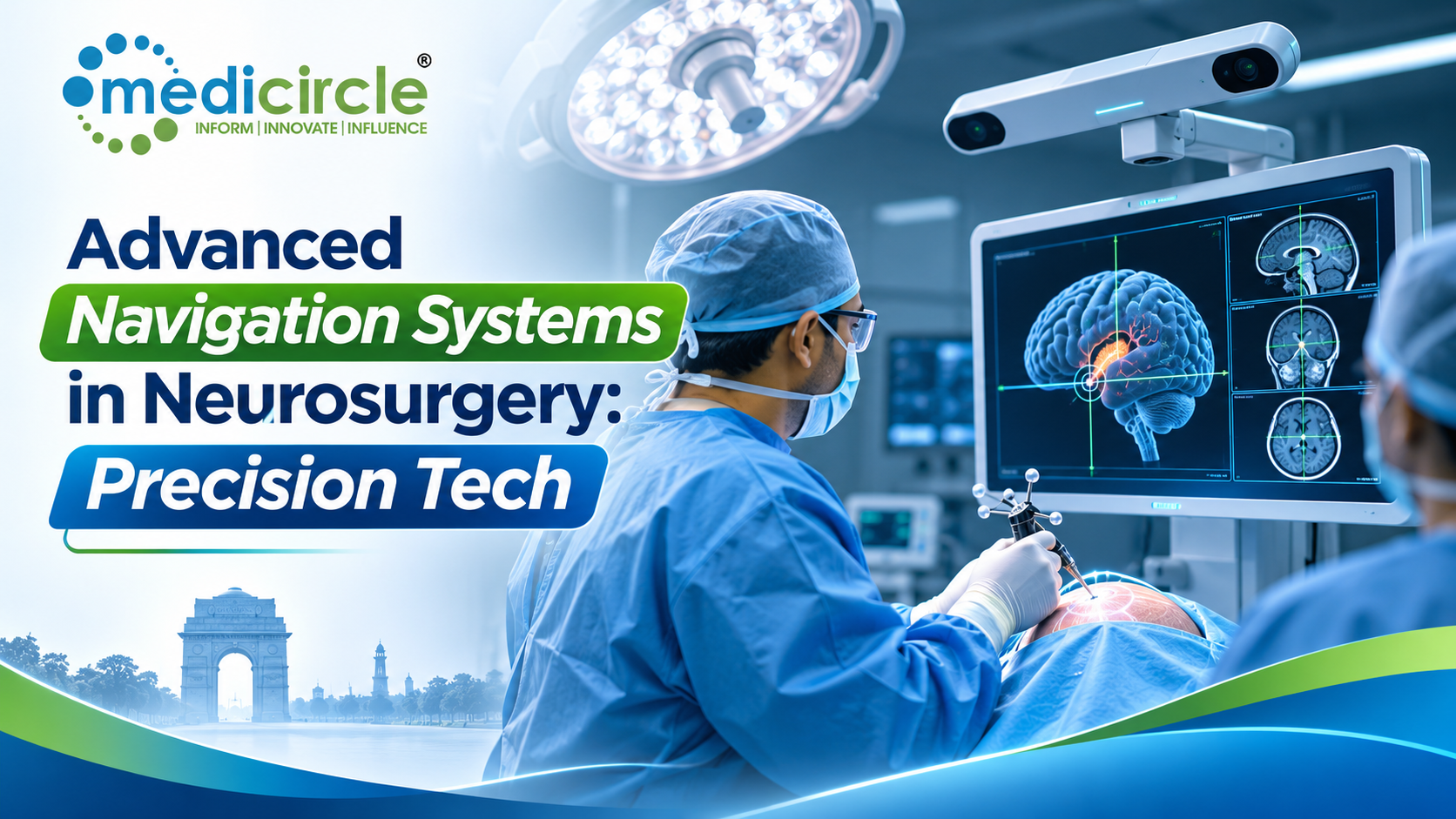
Intraoperative MRI and augmented reality navigation are enhancing conventional neurosurgery as well. When traditional open surgery is necessary, surgeons in leading Indian hospitals now have access to real-time imaging feedback and navigation systems that improve the accuracy of tumor resection and reduce complications.
Precision Neurosurgery in the Indian Healthcare Context
India is home to a growing number of hospitals that have invested in advanced neurosurgical infrastructure. AIIMS New Delhi, the Christian Medical College in Vellore, Tata Memorial Hospital in Mumbai, Manipal Hospitals, Apollo Hospitals, and Fortis Healthcare are among the institutions that have either installed Gamma Knife units or offer comparable radiosurgery platforms.
The cost of Gamma Knife treatment in India is significantly lower than in Western countries. While the procedure in the United States can cost the equivalent of twenty to thirty lakh rupees or more, treatment at Indian centers may range from three to eight lakh rupees depending on the institution and the complexity of the case. This relative affordability, combined with India's growing reputation for medical excellence, is driving health tourism from neighboring countries in South Asia and the Middle East.
However, access within India remains uneven. Gamma Knife units are largely concentrated in Tier 1 cities. Patients in Tier 2 and Tier 3 cities, and those in rural areas, often have to travel long distances to access this care. Telemedicine platforms, centralized referral networks, and government schemes under the Ayushman Bharat Pradhan Mantri Jan Arogya Yojana are beginning to bridge some of these gaps, though significant work remains.
Raising awareness among both clinicians and patients about the availability and appropriateness of radiosurgery is equally important. Many patients who could benefit from Gamma Knife are never referred because their treating physicians are unfamiliar with the technology or because the perception persists that brain conditions always require invasive surgery.
The Future of Non-Invasive Brain Treatment in India
The trajectory of precision neurosurgery in India points toward greater accessibility, better outcomes, and an expanding range of treatable conditions. Several trends are shaping this future.
Artificial intelligence is being integrated into treatment planning systems, enabling faster and more accurate dose calculations. This reduces planning time and potentially increases the precision of dose delivery. AI-powered image segmentation tools can automatically delineate tumor boundaries, reducing inter-operator variability.
Genomic profiling of brain tumors is allowing oncologists to predict which tumors are most likely to respond to radiosurgery and which may require a combined approach. This precision oncology framework, when applied to neurosurgery, means that treatment decisions will increasingly be guided by tumor biology rather than imaging alone.
India's National Medical Commission and health regulators are gradually developing clearer frameworks for the credentialing of radiosurgery specialists and the accreditation of centers offering these services. As NABH standards evolve to include specialized neurosurgery parameters, quality benchmarks across institutions will improve.
For platforms like Medicircle, the opportunity lies in making these complex developments understandable to the broader public, to patients who may be considering Gamma Knife treatment, to caregivers navigating these decisions, and to healthcare professionals who want to stay current with where neurosurgical care is heading. Bridging the knowledge gap between advanced hospital infrastructure and the patients who need it remains one of the most meaningful contributions that responsible health communication can make.
Frequently Asked Questions
Q1: What is Gamma Knife surgery and how does it work?
Gamma Knife surgery is a form of stereotactic radiosurgery that delivers focused beams of gamma radiation from multiple angles to a precisely targeted area inside the brain. Each individual beam is low in energy, but the point where all beams converge receives a concentrated dose high enough to destroy abnormal tissue. No incision is made, and the procedure is completed in a single session under local anesthesia or mild sedation.
Q2: Is Gamma Knife surgery available in India and where can it be accessed?
Yes, Gamma Knife surgery is available in India at select tertiary care hospitals. Institutions including AIIMS New Delhi, Tata Memorial Hospital in Mumbai, Apollo Hospitals, Manipal Hospitals, and Fortis Healthcare have either installed Gamma Knife units or offer comparable stereotactic radiosurgery platforms. Most centers are located in major Tier 1 cities at present.
Q3: Who is a suitable candidate for Gamma Knife treatment?
Suitable candidates include patients with small to medium-sized brain tumors such as meningiomas, acoustic neuromas, or metastatic brain lesions, as well as individuals with arteriovenous malformations or trigeminal neuralgia. Patients who cannot undergo open surgery due to advanced age, medical comorbidities, or the location of the lesion near critical brain structures are also good candidates. Eligibility is determined through a multidisciplinary evaluation involving a neurosurgeon, radiation oncologist, and medical physicist.
Q4: What are the risks and side effects of Gamma Knife radiosurgery?
Gamma Knife is generally considered safe, but like any medical procedure, it carries some risks. These may include temporary fatigue, mild headaches, nausea, and scalp discomfort at the frame attachment sites. In a small number of cases, swelling around the treated area or delayed radiation injury can occur. Serious complications are uncommon but should be discussed with the treating team before proceeding.
Q5: How does Gamma Knife compare to conventional open brain surgery?
Conventional brain surgery involves a craniotomy, which means opening the skull under general anesthesia, with associated risks of infection, bleeding, and prolonged recovery. Gamma Knife requires no incision, no general anesthesia in most cases, no hospital stay beyond one day, and allows the patient to return to normal activities within days. For lesions that are surgically difficult to reach or for patients who are poor surgical candidates, Gamma Knife often offers a safer and equally effective alternative.
Resources
- World Health Organization (WHO): Global information on neurological disorders and cancer burden relevant to brain tumor management.
- Indian Council of Medical Research (ICMR): National data, clinical guidelines, and research publications on cancer and neurological diseases in India.
- National Brain Research Centre (NBRC), India: Research on neurological conditions and brain science specific to the Indian population.
- PubMed, National Library of Medicine: Peer-reviewed clinical studies on Gamma Knife radiosurgery outcomes, safety, and emerging applications.
- Ministry of Health and Family Welfare, Government of India: Policies, schemes including Ayushman Bharat, and updates on advanced medical technology access across India.
Interlinking Keywords
Gamma Knife surgery India, stereotactic radiosurgery, non-invasive brain treatment, brain tumor treatment India, precision neurosurgery, radiosurgery for brain metastases, trigeminal neuralgia treatment, arteriovenous malformation treatment, neurosurgery advances India, Ayushman Bharat cancer care
Last reviewed by:
Dr. Manthan Tripathi, Medicircle Editorial and Medical Advisory Team on 11, November 2026.
Disclaimer
This article is intended for general informational and educational purposes only. It does not constitute medical advice, diagnosis, or a treatment recommendation. Readers should not make any medical decisions based solely on the information provided here. All treatment decisions, including consideration of Gamma Knife radiosurgery or any other neurosurgical procedure, must be made in consultation with a qualified and licensed medical professional. Individual medical conditions vary, and only a treating physician familiar with a patient's complete clinical history is in a position to advise on appropriate care options. Medicircle is a healthcare communication platform and does not endorse any specific hospital, physician, device manufacturer, or treatment protocol.




-23-300x250.png)