Friday, October 23, 2026
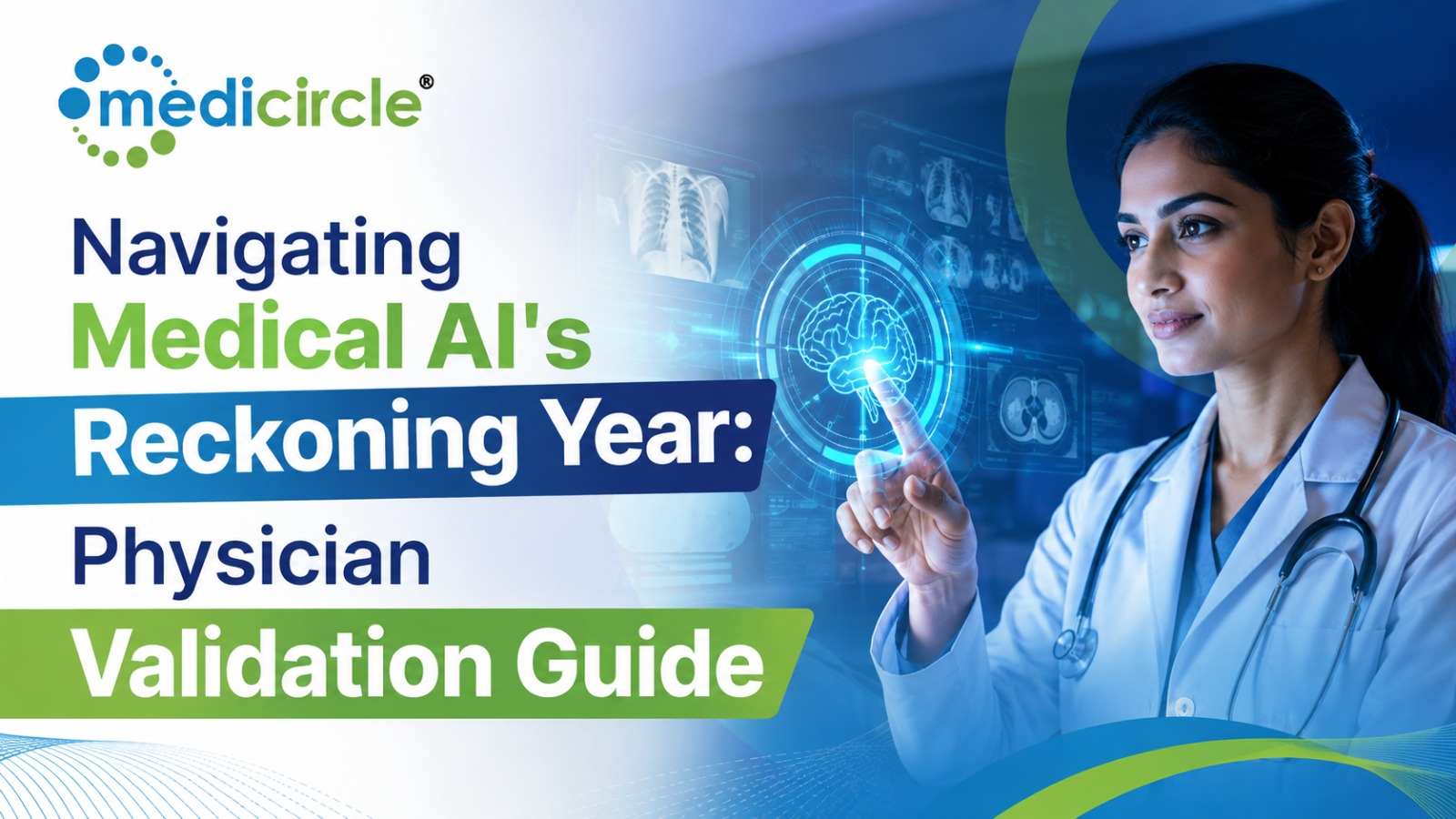
 Artificial Intelligence in healthcare is entering a critical phase of clinical validation. This article examines how physicians can evaluate AI diagnostic tools through demographic alignment, workflow adaptability, biological plausibility, and dynamic safety guardrails, ensuring technology delivers reliable, evidence-based, patient-centered clinical value.




The initial wave of uncritical enthusiasm surrounding Artificial Intelligence in healthcare has arrived at a structural turning point. What was once celebrated as an infallible diagnostic cure-all is shifting from inflated expectations toward a sobering phase of real-world clinical validation. As high-quality clinical evidence steadily accumulates, healthcare systems are discovering a quiet friction: many cutting-edge algorithmic tools fall short when confronted with real-world technical noise, workflow mismatches, and deep demographic biases.
We have entered a necessary "reckoning year"—a period where medicine must actively separate marketing hype from validated clinical utility. For the modern physician, this paradigm shift requires moving away from passive adoption and stepping into the role of a rigorous tech-validator. To safeguard patient care and maximize technological efficacy, clinicians need a structured, high-level framework to evaluate any AI diagnostic model before deploying it at the bedside.
1. The Physician’s Practical AI Validation Checklist
When analyzing a diagnostic algorithm for potential clinical integration, a medical practitioner should measure the technology against four fundamental pillars of evidence:
- Demographic Alignment & Epidemiological Fit: Determine if the model’s training data mirrors your local patient population. Algorithms built exclusively on foreign datasets frequently exhibit diagnostic bias, dropping in accuracy when applied to distinct local genetic backgrounds, environmental exposures, or regional clinical realities.
- Workflow Ingestion & Environmental Adaptability: Evaluate how the tool handles imperfect, real-world data. While an algorithm may achieve flawless precision on pristine laboratory inputs, it must be validated to maintain accuracy despite everyday clinical constraints, such as patient motion artifacts, varying scan qualities, or chaotic bedside environments.
- Explainability & Biological Plausibility: Assess whether the model operates as a complete clinical "black box" or anchors its logic in verifiable human biology. High-ranking diagnostic software should map back to measurable physiological indicators, multi-omic datasets, or established anatomical structures rather than relying on abstract numerical correlations alone.
- Dynamic Closed-Loop Guardrails: Verify if the system features automated safety checkpoints. For tools that process real-time patient parameters or delicate imaging sequences, the software must be capable of identifying data corruption or baseline biological shifts instantly without delivering a misleading or definitive output.
2. Connecting the AI Checklist to the Frontiers of Modern Science
To truly appreciate why this validation checklist is essential, one must observe how these exact algorithmic vulnerabilities present themselves across the broader landscape of modern medical research.
A. The Trap of Foreign Training DataConsider the ongoing battle against complex, multi-factorial conditions like preterm birth. For decades, applying generalized diagnostic assumptions to diverse populations has left deep gaps in accuracy. Initiatives like India's GARBH-INi pregnancy cohort study have demonstrated that predicting a condition shaped by genetic, microbial, and nutritional variations requires thousands of localized patient profiles and over a million population-specific ultrasound images. An AI diagnostic model cannot simply be imported; its validation depends entirely on indigenous data that reflects local clinical realities.
B. Pristine Software vs. Live Biological NoiseA similar pattern emerges in the field of non-invasive biomarkers. Breakthroughs in machine learning have shown high accuracy rates in classifying specific neurodegenerative diseases—like Alzheimer’s, ALS, and Frontotemporal dementia—by mapping polarized light scattering patterns across retinal tissue.
Yet, when transitioning this software from a controlled laboratory setting into a community clinic, the workflow fit changes completely. Living eyes move constantly, fluctuating tear films distort optical measurements, and benign age-related ocular changes introduce data noise. A high laboratory score is meaningless if the algorithm cannot filter out everyday physiological variations at the bedside. Furthermore, because these neurological conditions are systemic, an isolated eye-based screening tool can never act as a standalone solution; it must be balanced as one component of a holistic clinical evaluation that includes comprehensive brain imaging and behavioral metrics.
C. Bypassing the Human Element: The Hype of Direct-to-Consumer SolutionsThe validation checklist also serves as a defense against commercial hype bypassing the balance of clinical judgment. The global fascination with GLP-1 receptor agonists for weight loss illustrates what happens when a highly potent prescription metabolic medication is reframed by public marketing as an effortless lifestyle product.
Obesity is an incredibly complex metabolic condition driven by genetics, hormonal balance, and neural pathways. When digital campaigns encourage patients to seek out shortcuts, the critical safety framework of a physician’s evaluation is lost, undercutting the necessity of long-term risk management and structured behavioral interventions.
D. The Engineering of Human Interaction: Closed-Loop AdaptabilityAt the apex of technological innovation, such as implantable brain-computer interfaces (BCIs) or precision neuromodulation for treatment-resistant depression, static AI models are outright failing. In closed-loop systems like PACE (Personalized Adaptive Cortical Electro-Stimulation), the software must do something traditional models cannot: it must continuously "listen" to fluid neural networks and adjust its electrical output in real time.
Because the human brain changes constantly in response to emotions and environmental stimuli, static programming results in highly inconsistent outcomes. The software must adapt to the user dynamically, managing the delicate boundaries where biology ends and technology begins.
Similarly, the rise of programmable molecular engineering—such as DNA nanorobots built via DNA origami for targeted oncological drug delivery—faces the chaotic, physical reality of the human body. Inside living tissues, these nanoscale structures are assaulted by Brownian motion and broken down by native enzymes. True medical validation for these molecular machines relies on designing smart, responsive coatings and precise chemical control systems that can withstand an unpredictable biological environment.
3. Evaluating Clinical Integration Factors
Understanding how AI algorithms transition from software environments to clinical care helps highlight critical evaluation points:
- Training Data Origin:
- Laboratory/Beta Phase: Single-center, homogenous demographic datasets.
- Clinical Reality: Highly diverse local populations with unique genetic and lifestyle profiles.
- Input Quality Handling:
- Laboratory/Beta Phase: High-resolution, pristine images without noise or artifacts.
- Clinical Reality: Inconsistent scan qualities, patient movement, and chaotic bedside environments.
- Decision-Making Framework:
- Laboratory/Beta Phase: "Black box" statistical correlation scores.
- Clinical Reality: Transparent, biologically plausible reasoning mapped to human physiological mechanisms.
- Operational Control:
- Laboratory/Beta Phase: Static execution without real-time adjustments.
- Clinical Reality: Dynamic closed-loop guardrails that adapt continuously to physiological shifts.
4. A Return to Clinical Ground Truths
Ultimately, the insights of this reckoning year remind us that the human body resists simple, computerized reductionism. Whether evaluating an algorithm designed to track the subtle mechanics of a patient’s gait to treat knee osteoarthritis, or analyzing a predictive model decoding the physical context of human body language over facial expressions during an emotional crisis, data is only as good as the context in which it is gathered.
Even as we witness the dawn of "n-of-one" precision medicine—where fully customized CRISPR-based base-editing therapies can be engineered within months to repair a single child's unique genetic mutation—the clinical standard remains unyielding. True medical progress requires balancing scientific enthusiasm with clinical responsibility. By utilizing a practical validation checklist, the modern physician ensures that technology remains an elegant tool for healing, grounded firmly in evidence, safety, and the real-world complexity of the human experience.
10 Frequently Asked Questions (FAQs)
Q1. What does the term "reckoning year" mean in the context of medical AI?The "reckoning year" refers to the current transition phase in healthcare where initial marketing hype around AI is giving way to rigorous, evidence-based evaluation. Healthcare systems are moving from passive adoption to demanding real-world clinical validation, demographic accuracy, and proven bedside safety.
Q2. Why do medical AI algorithms trained on foreign datasets often fail locally?AI algorithms learn patterns strictly from their training data. If a model is trained exclusively on foreign demographic populations, it may perform poorly when exposed to local patient groups with different genetic backgrounds, environmental exposures, disease prevalence rates, or regional clinical workflows.
Q3. What is "biological plausibility" in diagnostic AI software?Biological plausibility means that the AI's diagnostic reasoning aligns with established human biology, anatomy, and pathophysiology. Rather than relying on abstract statistical correlations ("black box" outputs), biologically plausible models map their findings back to verifiable physiological indicators or anatomical structures.
Q4. How does real-world biological noise impact diagnostic accuracy?In clinical settings, factors like patient movement, fluctuating body fluids (e.g., tear film stability during eye scans), variations in equipment operator technique, and ambient environmental conditions introduce technical noise. An algorithm validated only on pristine laboratory data often experiences significant drop-offs in diagnostic accuracy when handling this real-world noise.
Q5. What is a "closed-loop" AI system in advanced medical devices?A closed-loop AI system continuously monitors real-time physiological signals from a patient, processes the data through algorithmic models, and automatically adjusts therapeutic delivery (such as electrical stimulation in brain-computer interfaces) in real time without requiring manual external adjustments.
Q6. Why can't retinal screening tools act as standalone diagnostic solutions for neurodegenerative diseases?While polarized light scattering across retinal tissue offers non-invasive biomarkers for neurodegenerative conditions, systemic diseases like Alzheimer's affect broader neural and vascular networks. Retinal scans must be combined with comprehensive brain imaging, cognitive testing, and clinical evaluations to achieve accurate diagnosis and risk management.
Q7. What are dynamic safety guardrails in healthcare algorithms?Dynamic safety guardrails are automated software checkpoints that monitor incoming data quality and patient baseline shifts. If the system detects data corruption, severe artifacts, or out-of-bounds biological parameters, it halts execution or alerts clinicians rather than issuing a potentially dangerous, inaccurate diagnostic result.
Q8. How does demographic bias manifest in maternal and fetal health AI models?In maternal health conditions like preterm birth, risk factors are heavily influenced by local genetic variants, regional nutritional habits, and community microbial environments. Models trained without diverse population profiles struggle to accurately predict outcomes across distinct demographic groups.
Q9. What is the danger of direct-to-consumer medical AI marketing?Direct-to-consumer digital marketing can encourage patients to view complex medical interventions (such as metabolic prescription drugs) as simple lifestyle quick fixes. Bypassing comprehensive clinical evaluation increases safety risks and undermines long-term, holistic patient care.
Q10. What is "n-of-one" precision medicine?"N-of-one" precision medicine refers to highly individualized therapeutic interventions—such as custom CRISPR base-editing therapies—designed specifically to target a single patient's unique genetic mutation, rather than treating broader population-level disease categories.





-23-300x250.png)

.jpeg)


.jpg)
.jpg)
.jpg)
.jpg)
.jpg)
.jpg)
.jpg)
.jpg)
.jpg)