 Friday, October 09, 2026
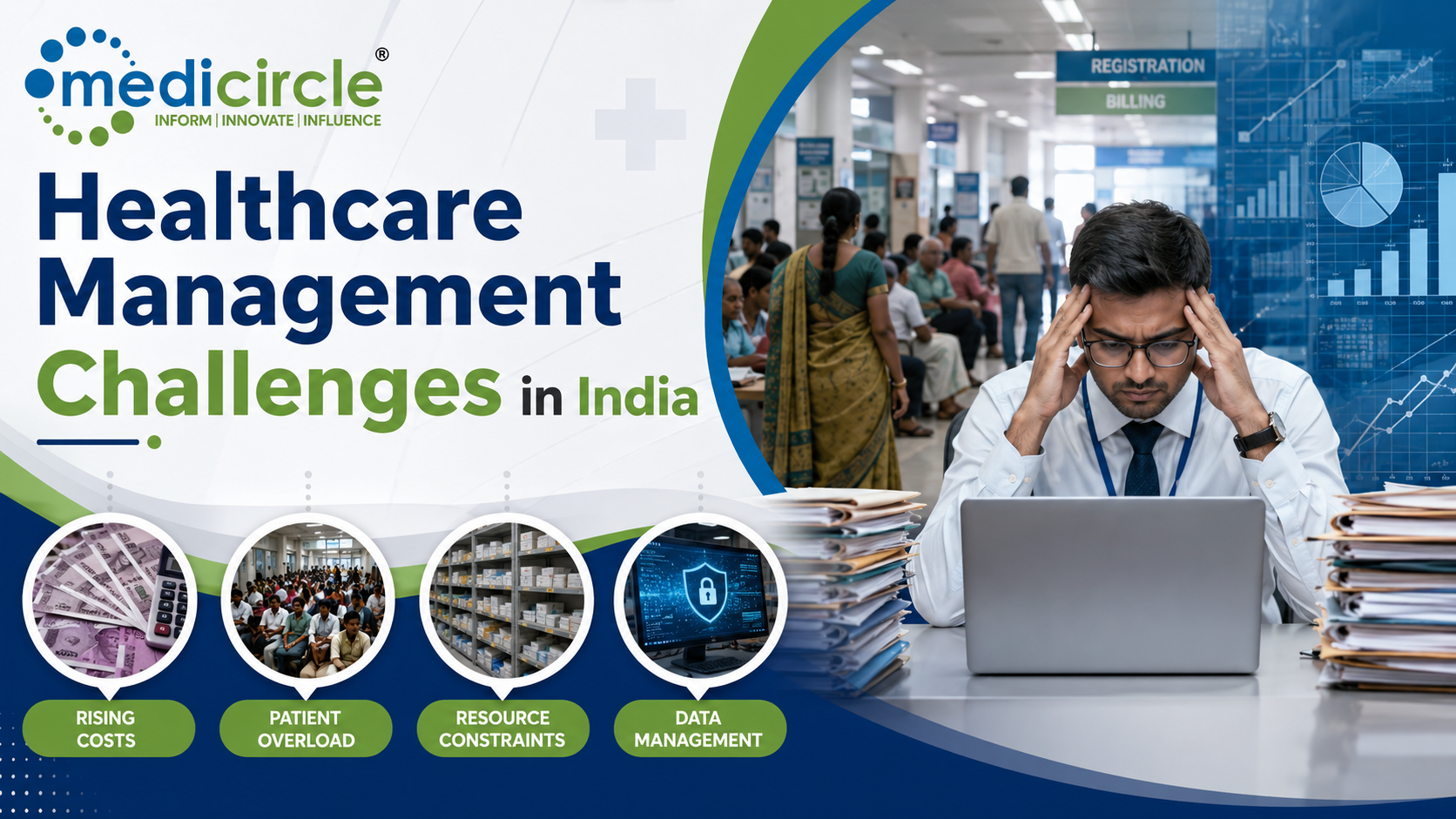
 This article examines India's most pressing healthcare management challenges, including workforce shortages, rising costs, digital transformation gaps, health inequity, and regulatory complexity, offering insights for hospital leaders and administrators.





Introduction
India's healthcare sector stands at a defining crossroads. On one side, there is an expanding middle class demanding better medical services, a growing burden of non-communicable diseases, and a government actively investing in digital health infrastructure through initiatives like the Ayushman Bharat Digital Mission (ABDM). On the other side, hospitals and healthcare institutions are grappling with chronic staffing gaps, rising operational costs, outdated management systems, and the complex expectations of an increasingly informed patient population.
Healthcare management in India is no longer a back-office function. It has become a strategic discipline that directly shapes patient outcomes, institutional survival, and public health at scale. Doctors, nurses, and frontline staff can only do so much if the systems behind them are fragmented, understaffed, or poorly governed. The most pressing healthcare management challenges of today require leaders who understand both clinical realities and operational imperatives.
This article examines the critical challenges that hospital administrators, healthcare managers, and medical leaders across India must confront, and what thoughtful, informed management can do to address them.
Understanding the Landscape of Healthcare Management in India
Healthcare management encompasses the planning, coordination, administration, and oversight of hospitals, clinics, primary health centres, and broader healthcare systems. In the Indian context, this means navigating a uniquely complex environment that includes:
- A mixed public-private healthcare delivery model
- Government schemes like Ayushman Bharat PM-JAY serving over 500 million beneficiaries
- Regulatory frameworks set by the National Medical Commission (NMC), NABH, and the Ministry of Health and Family Welfare
- A rapidly evolving digital health ecosystem under ABDM
India spends approximately 3.8 percent of its GDP on healthcare, a figure that remains below international benchmarks and contributes to the resource constraints that healthcare managers must navigate daily. The urban-rural divide further complicates management, as tier-2 and tier-3 cities and rural regions face acute shortages of both infrastructure and qualified personnel.
Understanding these structural realities is essential before examining specific management challenges in depth.
Critical Workforce Challenges Facing Healthcare Institutions
The most immediate and far-reaching challenge in Indian healthcare management is the workforce crisis. India has approximately 13 lakh registered allopathic doctors for a population of over 140 crore people. According to the National Health Profile, the country faces a significant shortfall against the WHO-recommended doctor-to-population ratio of 1:1000. The nursing workforce deficit is equally serious, with rural and semi-urban hospitals bearing the heaviest burden.
For healthcare managers, this shortage creates a cascading set of problems:
- Existing staff carry disproportionately high patient loads, leading to burnout and increased error risk
- High attrition rates disrupt continuity of care and inflate recruitment costs
- Speciality gaps in areas such as oncology, psychiatry, and geriatrics force urban referrals, straining tertiary hospitals
Research published in Frontiers in Psychology has documented how occupational burnout among healthcare workers, driven by factors including high workload, poor interpersonal support, and inadequate resources, directly undermines both staff wellbeing and patient care quality. Indian hospitals frequently reflect these same dynamics, compounded by infrastructure gaps and wage disparities between urban and rural postings.
Healthcare management professionals must move beyond reactive hiring toward comprehensive workforce planning. This includes structured mentorship programs, competitive and transparent compensation structures, investments in staff mental health support, and creating career development pathways that incentivize talented professionals to remain within the institution and the public health system.
Rising Operational Costs and Financial Sustainability
Managing a hospital in India today is a financially complex undertaking. The cost of medical equipment, pharmaceuticals, consumables, diagnostics, and technology infrastructure has risen sharply over the past decade. For private hospitals, particularly those serving semi-urban or rural populations, the margins are thin and the financial pressures are constant.
Several factors compound this challenge:
The transition toward value-based care models, encouraged by Ayushman Bharat and NABH quality frameworks, requires hospitals to invest in quality improvement processes, data systems, and staff training without proportionate short-term revenue gains. Delayed or disputed insurance reimbursements, particularly under government schemes, create cash flow gaps that affect day-to-day operations. Many hospitals also absorb significant uncompensated care costs for patients who cannot afford treatment.
Healthcare administrators must approach financial sustainability with the same rigour that clinicians apply to diagnostics. This means implementing robust hospital management information systems (HMIS), improving billing accuracy, conducting regular financial audits, and strategically diversifying revenue streams. Effective supply chain management, group procurement arrangements, and renegotiated vendor contracts can yield meaningful savings without compromising care quality.
Technology Integration and the Digital Transformation Gap
India has made considerable progress in building a digital health infrastructure. The ABDM framework, the Ayushman Bharat Health Account (ABHA) system, and the National Health Digital Mission represent ambitious steps toward interoperable, patient-centred digital health records. Yet at the institutional level, digital transformation in Indian hospitals remains uneven and often incomplete.
Many hospitals, particularly outside metropolitan areas, still rely on paper-based processes for patient registration, clinical documentation, pharmacy management, and reporting. Even those with electronic health records often struggle with:
- Lack of interoperability between different systems and vendors
- Inadequate data security protocols, leaving patient records vulnerable
- Insufficient training for clinical and administrative staff to use technology effectively
- High upfront costs of implementing and maintaining digital systems
For healthcare managers, the digital transformation challenge is not simply a technology procurement problem. It is fundamentally a change management challenge. Staff must understand why digital systems matter for patient safety and operational efficiency. Data governance policies must be established. Cybersecurity cannot be treated as an afterthought. As healthcare data breaches increase globally, Indian hospitals must prioritise digital security as a core management responsibility.
Telemedicine, which gained significant momentum during the COVID-19 pandemic and received formal recognition through the Telemedicine Practice Guidelines 2020, also requires sustained management attention. Expanding telehealth services can address access gaps in tier-2 and tier-3 cities and reduce unnecessary referrals to tertiary centres, but it requires infrastructure investment, regulatory compliance, and continuous quality oversight.
Patient-Centered Care and the Evolving Expectations of Indian Patients
Today's healthcare consumers in India are more informed, more vocal, and more demanding than ever before. Social media, digital health platforms, and greater health literacy mean that patients arrive with expectations that extend well beyond the clinical consultation. They expect clear communication, minimal wait times, transparent billing, digital appointment systems, and post-care follow-up.
Meeting these expectations is a management challenge as much as a clinical one. When patient experience suffers, it affects institutional reputation, patient retention, and even clinical outcomes. Research consistently demonstrates that patient satisfaction is linked to better adherence to treatment plans and improved health outcomes.
Healthcare managers must build patient experience into the institutional culture, not treat it as an add-on. This means:
- Implementing structured patient feedback mechanisms and acting on the data
- Training frontline staff in communication, empathy, and conflict resolution
- Reducing administrative friction in appointment booking, billing, and discharge processes
- Ensuring that language and cultural barriers are addressed in diverse patient populations
India's linguistic and cultural diversity requires particular sensitivity. A hospital serving a multilingual patient base must ensure that clinical communication is accurate and accessible, not just technically compliant.
Regulatory Compliance and Quality Accreditation
Indian hospitals operate within an increasingly complex regulatory environment. The National Medical Commission sets standards for medical education and practice. NABH accreditation benchmarks hospital quality and patient safety. FSSAI governs dietary and nutritional services within hospital settings. ABDM sets interoperability standards for digital health systems. State-level regulations add additional layers of compliance responsibility.
For healthcare management professionals, staying current with this regulatory landscape while maintaining operational momentum is a genuine challenge. Non-compliance carries serious consequences, from financial penalties to reputational damage and, in extreme cases, licence revocations.
NABH accreditation in particular has become a gold standard for Indian hospitals committed to quality. But achieving and maintaining accreditation requires sustained commitment from the entire institution. Administrators must embed quality improvement into routine processes, conduct regular internal audits, train staff consistently, and foster a culture where patient safety is a shared responsibility rather than a regulatory obligation.
The introduction of ABDM also places new compliance demands on hospitals, particularly around patient data rights, health record interoperability, and consent management. Healthcare managers must work closely with legal, IT, and clinical teams to build compliance frameworks that are practical, sustainable, and aligned with national health policy.
Health Equity and the Urban-Rural Divide
One of the most persistent challenges in Indian healthcare management is the profound disparity in access and quality between urban and rural populations. While metropolitan cities like Mumbai, Delhi, Bengaluru, and Chennai boast world-class private hospitals, vast stretches of rural India remain underserved, with primary health centres operating below capacity due to staff vacancies, supply shortages, and poor infrastructure.
The consequences of this inequity fall most heavily on the populations who can least afford them. Preventable diseases go undetected. Maternal and child health outcomes in rural areas lag significantly behind urban benchmarks. Patients from low-income backgrounds delay seeking care due to cost barriers, often arriving at hospitals with advanced disease that is more expensive and difficult to treat.
For healthcare managers working in public health, mission-driven private institutions, or government-supported facilities, addressing health equity is both an ethical imperative and a management challenge. It requires creative thinking about outreach models, community health worker programmes, mobile health units, and technology-enabled care delivery. Platforms that connect trusted healthcare information with underserved communities, such as what Medicircle aims to facilitate, play a meaningful role in building health awareness at the community level.
Emergency Preparedness and Crisis Management
The COVID-19 pandemic revealed structural vulnerabilities in healthcare management systems across India. Hospital administrators faced simultaneous crises in supply chain disruption, staff shortages, bed capacity, oxygen supply, and public communication. Those institutions that had invested in robust crisis management frameworks, clear communication protocols, and flexible resource deployment managed the surge significantly better than those operating without such systems.
Healthcare management must now treat emergency preparedness as a permanent operational priority rather than an occasional exercise. This means maintaining strategic reserves of critical supplies, cross-training staff for surge scenarios, building coordination mechanisms with government health agencies, and conducting regular simulation drills. The lessons of the pandemic should be institutionalised, not filed away.
Conclusion
Healthcare management in India is a discipline that carries enormous responsibility. The challenges outlined in this article are not abstract problems confined to administrative corridors. They directly affect whether a patient in a tier-2 city receives timely diagnosis, whether a nurse in a rural district hospital can sustain her career without burning out, and whether India's healthcare system can equitably serve the needs of its 140 crore people.
The path forward requires healthcare leaders who are not only clinically informed but strategically capable of managing complexity, driving institutional change, and advocating for the resources and policies that healthcare systems need. Trustworthy healthcare communication, reliable clinical information, and meaningful engagement between experts and the public all contribute to this broader mission of building a stronger, more equitable Indian healthcare ecosystem.
Medicircle remains committed to supporting this mission by bringing credible healthcare conversations, expert voices, and patient awareness stories to the fore, helping bridge the knowledge gap between healthcare institutions and the communities they serve.
Frequently Asked Questions
Q1: What are the biggest healthcare management challenges in India?
The biggest healthcare management challenges in India include critical workforce shortages, rising operational costs, slow digital transformation, health inequity between urban and rural areas, and increasing regulatory compliance demands under frameworks like ABDM and NABH.
Q2: How does the doctor-patient ratio affect healthcare management in India?
India currently has a doctor-to-patient ratio far below the WHO-recommended standard of 1:1000. This shortage places immense pressure on healthcare administrators to manage patient volumes, staff workloads, and care quality simultaneously, making workforce planning one of the most urgent management priorities.
Q3: What role does technology play in solving healthcare management challenges?
Technology, including electronic health records, AI-assisted diagnostics, telemedicine, and hospital management systems, plays a transformative role in addressing operational inefficiencies, reducing administrative burden, improving patient outcomes, and enabling data-driven decisions at the hospital level.
Q4: How does Ayushman Bharat impact hospital management in India?
Ayushman Bharat PM-JAY has expanded insurance coverage to over 500 million beneficiaries, increasing patient inflow to empanelled hospitals. While this improves healthcare access, it also creates management challenges around claim processing, bed capacity, workforce allocation, and quality compliance for hospital administrators.
Q5: What is the importance of NABH accreditation in healthcare management?
NABH accreditation establishes standardized quality and safety benchmarks for Indian hospitals. For healthcare managers, achieving and maintaining NABH accreditation requires robust process management, continuous staff training, and systematic quality audits, all of which strengthen long-term institutional credibility.
Resources
- National Health Authority (NHA), Government of India: Official resource for Ayushman Bharat PM-JAY scheme data, hospital empanelment guidelines, and digital health updates
- Ministry of Health and Family Welfare (MoHFW): National health policy documents, workforce statistics, and public health reports for Indian healthcare administrators
- National Accreditation Board for Hospitals and Healthcare Providers (NABH): Accreditation standards, quality frameworks, and hospital assessment guidelines for Indian health institutions
- Indian Council of Medical Research (ICMR): Evidence-based research on disease burden, clinical guidelines, and public health priorities relevant to healthcare management in India
- World Health Organization (WHO) India Country Office: Global and regional health standards, workforce benchmarks, and health systems performance reports applicable to the Indian context
Interlinking Keywords:
healthcare management India, hospital workforce shortage, Ayushman Bharat PM-JAY, NABH accreditation, digital health transformation, telemedicine India, ABDM healthcare, patient-centred care, health equity India, hospital operational costs
Medical Disclaimer:
The information provided in this article is intended for general awareness and educational purposes only. It does not constitute medical advice, clinical guidance, or professional healthcare management consultation. Readers are advised to consult qualified healthcare professionals and refer to official regulatory bodies such as the Ministry of Health and Family Welfare, NMC, or NABH for specific institutional or clinical decisions.
Last reviewed by:
Medicircle Editorial and Healthcare Advisory Team on 7 August 2026






.jpeg)










.jpg)
.jpg)
.jpg)
.jpg)
.jpg)
.jpg)


.jpg)