 Monday, November 16, 2026
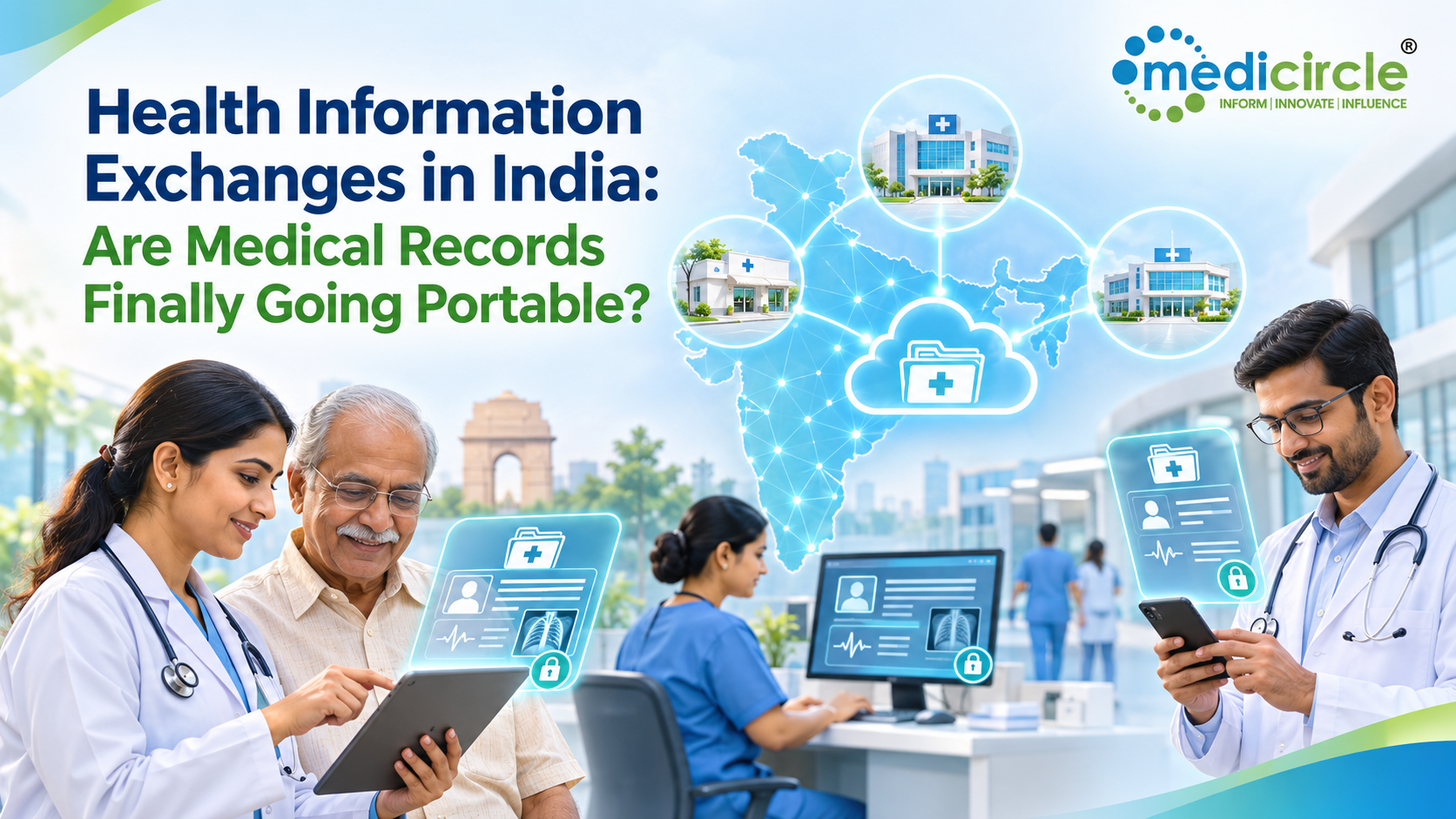
 India's Ayushman Bharat Digital Mission is building the foundational infrastructure for Health Information Exchanges, aiming to make medical records portable, interoperable, and patient-controlled nationwide.





Introduction
Every year, millions of Indians carry crumpled discharge summaries, printed lab reports, and handwritten prescriptions from one doctor to another. A patient in Jaipur who visits a specialist in Mumbai starts from zero. A diabetic patient switching hospitals in the same city hands over a folder of yellowing papers and hopes the new doctor reads them carefully. The story is familiar across the country, and the cost is real: repeated tests, missed diagnoses, delayed treatment decisions, and unnecessary medical spending.
The concept of a Health Information Exchange (HIE) addresses precisely this problem. An HIE is a secure, standardized system that allows patient health records to move electronically between hospitals, clinics, diagnostic laboratories, pharmacies, and other healthcare providers. It places the right medical information in front of the right doctor at the right time. In countries like the United States, HIE networks have been operational for years. In India, the promise is finally beginning to take shape, backed by a government-led digital health architecture that is growing in ambition and scale.
The question that matters for patients, doctors, and healthcare institutions today is straightforward: is India close to making medical records genuinely portable, and what does that journey actually look like?
Understanding Health Information Exchanges and Why They Matter
A Health Information Exchange is not simply a digital record room. It is a living, interoperable network where data flows securely between authorized participants according to defined technical standards. When a patient visits an emergency department and the treating physician can instantly access that patient's history of allergies, existing medications, previous surgeries, and recent lab values, clinical decisions improve dramatically.
There are broadly three models of HIE. The first is centralized, where records are stored in a single repository and accessed from there. The second is federated or decentralized, where records stay with individual providers but can be queried through a common network. The third is a hybrid model that combines elements of both. India's approach under the Ayushman Bharat Digital Mission (ABDM) leans toward a federated model with a central consent management layer, which means patients retain control over what is shared and with whom.
The clinical benefits of a functioning HIE are well documented globally. Physicians avoid duplicate testing, emergency care becomes safer, chronic disease management improves because longitudinal records are available, and rural patients who travel to urban centers for specialist care arrive with their full history intact. For India, where out-of-pocket health expenditure remains among the highest in the world and where diagnostic duplication is an enormous burden on families, the stakes are particularly high.
The Indian Architecture: ABDM, ABHA, and the Health Data Network
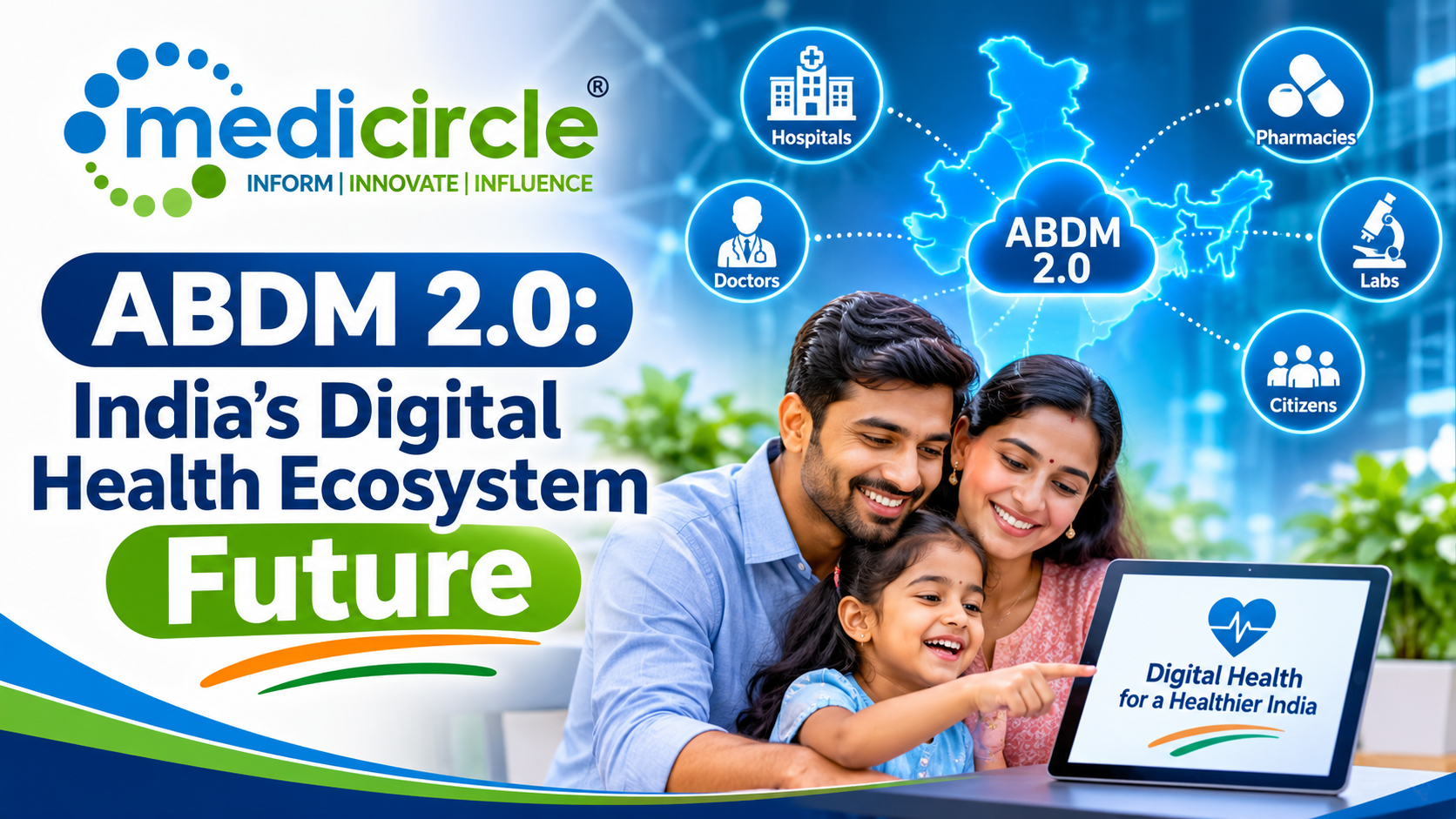
India's most significant step toward Health Information Exchanges is the Ayushman Bharat Digital Mission, launched by the Government of India in 2021 as a national initiative to build an open, interoperable, and inclusive digital health ecosystem. ABDM does not build a single HIE; instead, it creates the foundational digital rails on which Health Information Exchanges can operate.
At the center of this architecture is the Ayushman Bharat Health Account, commonly called ABHA. This is a unique 14-digit health identifier assigned to every enrolled Indian citizen. The ABHA ID functions as a universal patient identifier, linking health records generated at different facilities to a single identity. When a patient gives consent, records linked to their ABHA ID become accessible to authorized healthcare providers through the Health Information Exchange and Ecosystem, formally called HIE-CM or the Health Information Exchange and Consent Manager under ABDM.
Several building blocks support this framework. The Healthcare Professionals Registry and the Health Facility Registry ensure that doctors and hospitals operating within the system are verified and authenticated. The Unified Health Interface (UHI) allows applications and health service providers to plug into the network. Health Locker applications, similar in concept to a personal digital vault, allow patients to store and manage their own health records.
As of recent reports from the National Health Authority, more than 630 million ABHA IDs have been created, and over 300,000 health facilities have registered on the network. These are significant numbers. However, the volume of health records actually flowing through the exchange network remains far smaller, which is where the gap between architecture and real-world function becomes visible.
Barriers That India Still Has to Overcome
Building an HIE network at India's scale is not simply a technology project. It is simultaneously a governance challenge, a behavior change program, and a legal reform effort. Several barriers continue to slow progress.
The first and most significant barrier is fragmented adoption across the healthcare delivery system. India's healthcare ecosystem is highly heterogeneous. Large corporate hospital chains in metropolitan cities have invested in Hospital Management Systems and Electronic Health Record platforms. However, a substantial proportion of outpatient care in India is delivered by small private clinics, solo-practice doctors, and nursing homes that still operate on paper. Without these providers participating in the HIE network, the promise of a complete patient record remains unrealized.
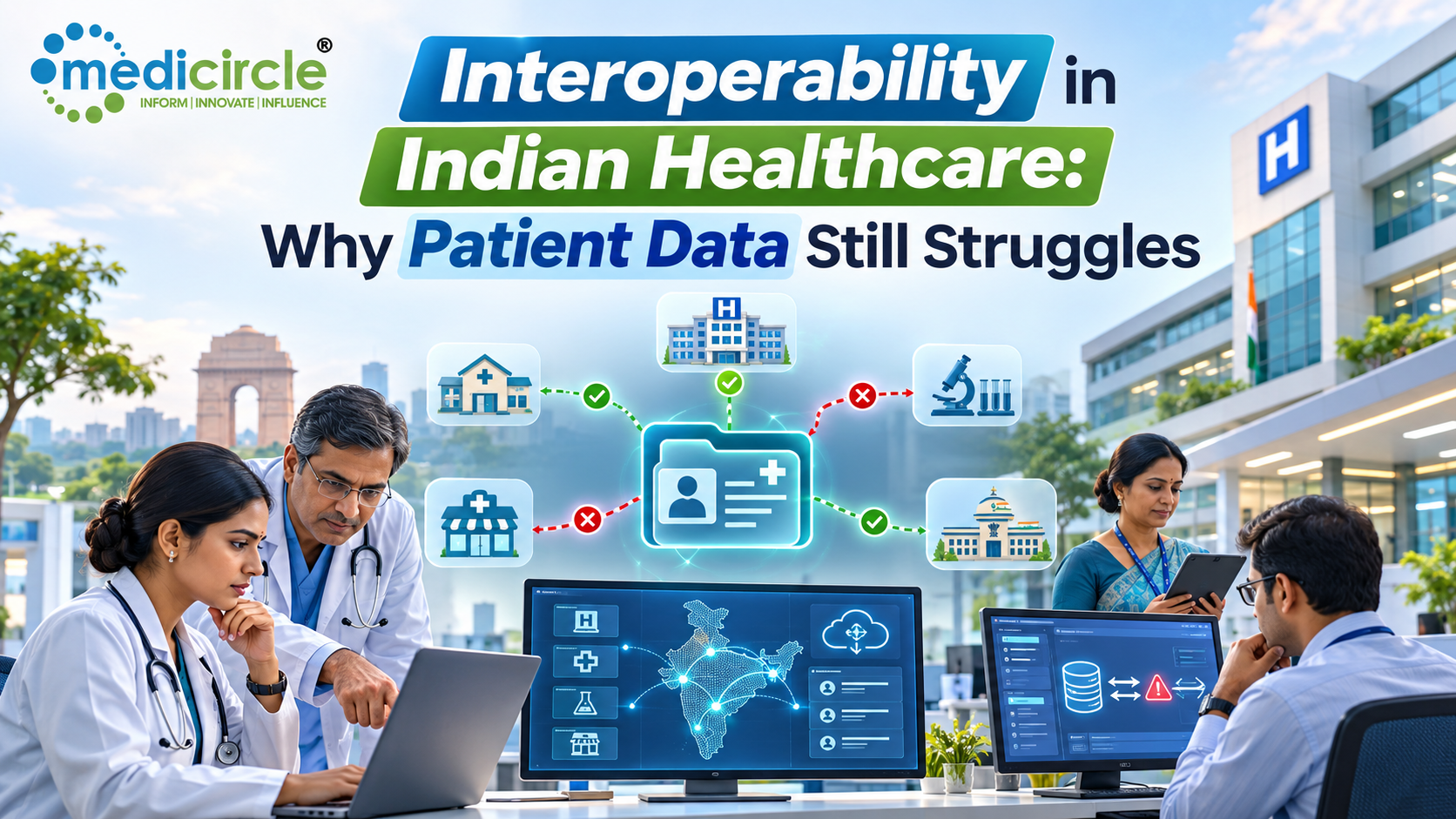
The second barrier is interoperability at the technical level. Even among hospitals with existing digital systems, proprietary software formats create silos. A laboratory information system in one hospital may generate reports in a format that cannot be automatically read by the HIS in another. ABDM has adopted FHIR (Fast Healthcare Interoperability Resources), an international standard for health data exchange, to address this. However, legacy systems require costly upgrades, and smaller facilities lack the financial or technical capacity to make those transitions quickly.
The third barrier is digital literacy and patient engagement. The ABHA system requires patients to actively create an account, link their records, and provide or revoke consent through a digital interface. For India's large rural population, elderly patients, and those with limited smartphone access, this is a genuine obstacle. ABDM has introduced assisted enrollment options, but the gap remains wide.
The fourth barrier is the absence of a comprehensive health data protection law. India enacted the Digital Personal Data Protection Act in 2023, which provides a broad framework for data privacy. However, health data, given its sensitive nature, requires specific protections around secondary use, breach notifications, and cross-border transfers. Without a dedicated health data regulation, both patients and healthcare institutions have legitimate concerns about participation in a shared health data network.
Rural connectivity is an additional structural challenge. Reliable broadband access is still inconsistent across Tier 2 and Tier 3 cities and large parts of rural India, making real-time HIE queries difficult for facilities in those regions.
What Progress Looks Like on the Ground
Despite these challenges, there are meaningful developments worth acknowledging. ABDM has seen increasing engagement from states that have made ABHA integration mandatory for beneficiaries under government health schemes. Ayushman Bharat Pradhan Mantri Jan Arogya Yojana (AB-PMJAY) beneficiaries are progressively being linked to ABHA IDs, which creates a large segment of the population whose hospital encounters generate linked records.
Several private health technology companies have built ABDM-compliant Health Locker and Personal Health Record applications. Platforms like National Health Authority's ABHA app, and third-party partners who have integrated with ABDM's sandbox, are beginning to demonstrate how patients can aggregate records from multiple providers in one place.
Telemedicine platforms, which expanded rapidly after the COVID-19 pandemic, are increasingly integrating with ABDM. This is significant because telemedicine consultations in India now run into tens of millions annually, and digital records generated through these consultations can be directly linked to a patient's ABHA account.
AIIMS Delhi and several government medical colleges have been working on ABDM integration as pilot sites. The learnings from these pilots are expected to inform the broader national rollout. State governments like Telangana, Andhra Pradesh, and Delhi have made early commitments to digital health infrastructure that complements the ABDM framework.
The Role of Artificial Intelligence and Emerging Technology
The value of Health Information Exchanges multiplies considerably when combined with artificial intelligence and machine learning. When large volumes of longitudinal health data flow through a standardized exchange, AI-powered clinical decision support becomes possible at the point of care. A physician reviewing a diabetic patient's records can receive automated alerts about deteriorating kidney function trends, missed screenings, or medication interactions, without manually analyzing years of data.
For India, AI applied to HIE data also carries significant population health potential. Epidemiological surveillance becomes richer when real-world clinical data from across the country feeds into analytical systems. Outbreak detection, disease burden mapping, and resource allocation for public health programs can all improve when health records are genuinely portable and aggregable at scale.
The National Health Authority has articulated a vision where ABDM data, anonymized and aggregated, informs public health policy and research. This positions the HIE not only as a tool for individual patient care but as a national health intelligence infrastructure. However, realizing this vision requires the trust of citizens, robust data governance, and clear regulatory safeguards that are still being developed.
What Patients, Doctors, and Hospitals Should Know
For patients, particularly those managing chronic conditions like diabetes, hypertension, cardiovascular disease, or cancer, creating an ABHA account and beginning to link health records is a practical step available today. The ABHA app allows users to scan and upload existing paper records, link records from participating hospitals, and share them with treating physicians. This does not require the entire ecosystem to be functioning perfectly; even partial record sharing reduces the burden on individual patients and improves care.
For doctors and clinicians, understanding the ABDM framework and advocating for HIS integration within their institutions is increasingly important. As government health schemes move toward mandatory ABDM compliance, facilities that have not integrated will find themselves at a disadvantage both operationally and in terms of reimbursements.
For hospitals and healthcare institutions, early adoption of FHIR-compliant systems positions them for the interoperable future of Indian healthcare. The National Health Authority has published implementation guides, and multiple certified technology vendors now offer ABDM-compliant solutions across different budget levels.
Conclusion
India has built the most ambitious public digital health infrastructure of any lower-middle-income country. The ABDM framework, with ABHA at its center and an open interoperability architecture supporting it, represents genuine foundational progress toward making medical records portable for 1.4 billion people.
The honest assessment is that India is at an early but meaningful stage of this journey. The architecture exists. The national intent is clear. The patient population that could benefit is vast. What remains is the harder work: driving adoption among the fragmented private healthcare sector, investing in digital literacy and assisted onboarding for underserved populations, completing the legal framework for health data protection, and ensuring that rural India is not left behind by connectivity barriers.
For a country where a patient's medical history has historically lived in a bag of physical papers, the shift to an interoperable digital record is not merely a technology upgrade. It is a fundamental improvement in the quality, safety, and equity of healthcare. That shift is now underway in India, and the decisions made in the next three to five years will determine how completely it succeeds.
Frequently Asked Questions
Q1: What is a Health Information Exchange in India?
A Health Information Exchange is a secure, standardized system that allows hospitals, clinics, laboratories, and other healthcare providers to share a patient's medical records electronically. In India, this is being developed through the Ayushman Bharat Digital Mission, which provides the digital infrastructure for interoperable health data exchange across the country.
Q2: What is the ABHA health ID and how does it help patients?
ABHA stands for Ayushman Bharat Health Account. It is a unique 14-digit identifier issued to Indian citizens that links their health records generated at different healthcare facilities to a single digital identity. With the patient's explicit consent, authorized doctors can access this linked history, which reduces repeat testing, improves diagnostic accuracy, and makes specialist consultations more efficient.
Q3: Is health data shared through India's HIE system safe and private?
ABDM operates on a consent-first architecture, which means no health record is shared without the patient's explicit digital consent. Patients can grant, modify, or revoke consent through the ABHA app. However, India still lacks a dedicated health data protection law, and strengthening the legal framework around health data privacy remains an important pending step.
Q4: Which hospitals in India are currently connected to the ABDM network?
Large government hospitals, AIIMS campuses, and a growing number of private hospital chains are progressively integrating with ABDM. Many state government health schemes now require ABDM linkage for beneficiaries. However, adoption is still limited among smaller clinics, nursing homes, and facilities in Tier 2 and Tier 3 cities, which represent a large share of India's healthcare delivery.
Q5: When will patients across India be able to access fully portable medical records?
India's digital health infrastructure is in place and expanding. Full nationwide portability depends on broader adoption by private healthcare providers, improved digital literacy among patients, expanded internet connectivity in rural regions, and the enactment of stronger health data protection legislation. Progress is ongoing, and significant advances are expected over the next several years.
Resources
- Ayushman Bharat Digital Mission (ABDM): Official platform of the National Health Authority of India governing the national digital health infrastructure, including ABHA, Health Facility Registry, and HIE-CM.
- National Health Authority of India (NHA): The apex body responsible for implementing AB-PMJAY and ABDM, publishing guidelines, and driving adoption among states and healthcare providers.
- World Health Organization (WHO) India Country Office: Provides global and India-specific resources on digital health strategy, electronic health records, and health information systems.
- Ministry of Health and Family Welfare (MoHFW): The central government body responsible for national health policy, digital health regulation, and coordination of health data frameworks in India.
- HL7 FHIR International Standard Documentation: The global technical standard adopted by ABDM for interoperable health data exchange, with implementation guides relevant to Indian healthcare technology developers.
Interlinking Keywords
Ayushman Bharat Digital Mission, ABHA health ID, electronic health records India, digital health India, ABDM interoperability, Health Information Exchange India, portable medical records, National Health Authority India, telemedicine India, health data privacy India
Last reviewed by:
Dr. Manthan Tripathi, Medicircle Editorial and Medical Advisory Team on 14, November 2026.
Disclaimer
This article is intended for general informational and awareness purposes only. It does not constitute medical advice, clinical guidance, or a recommendation to undertake any specific health-related action. Readers are advised to consult a qualified and registered medical professional for any personal health concerns or medical decisions. The information provided reflects publicly available data and policy developments as of the date of publication. Medicircle does not endorse any specific technology platform, government scheme, or healthcare provider mentioned in this article beyond what is stated in publicly available official communications.





-23-300x250.png)