 Tuesday, October 27, 2026
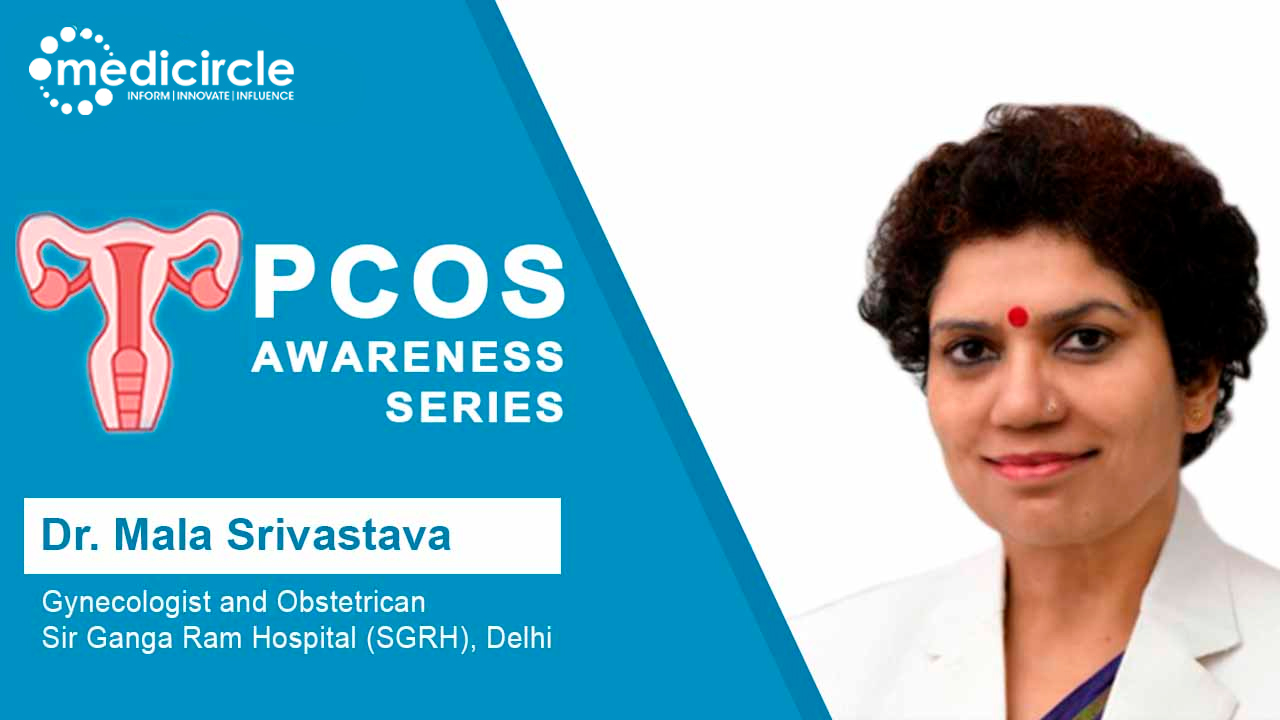
 Dr. Mala Srivastava informs that healthy lifestyle modification which can help deal with PCOS. She also explains that weight gain and PCOS is a vicious cycle and one needs to break them. So, this is a must-read for patients with PCOD.





We at Medicircle are constantly working on bringing to our audience all the trending health-related topics. It is our primary objective to Bring to your attention news and views you need to be aware of to lead a healthy disease-free life. To help us in this regard we’d be joined by eminent and expert top doctors from across the country. Today in Doctor’s Speak we are going to talk about the problem of PCOS and ways to help you deal with it.
Dr. Mala Srivastava is an OBG specialist in Sir Ganga Ram Hospital (SGRH) in New Delhi having 36 years of experience in this field. She has completed her DNB and DGO the same after her medical school. Dr. Mala Srivastava is a dedicated medical professional dealing with the care of women's reproductive parts, especially during the time of pregnancy and after. Her areas of specialties are high-risk pregnancies and endoscopic surgeries ensuring the well-being of the mother and child at all times.
PCOS and aging
Dr. Mala Srivastava informs, “PCOS is a spectrum of disease. It is not an on-point disease. It started getting worse if untreated. This is a lifestyle disease. The major symptoms are -
Irregular periods Increase weight gain Acne Unwanted hair
We should tackle in the right way with lifestyle changes. We cannot eliminate it completely. It can be genetic in some cases and lifestyle changes can help. PCOS can be treated with -
Lifestyle modifications Diet Exercise Medications.”
Organs affected in PCOS
Dr. Mala Srivastava says, “PCOS is a spectrum of disease. It involves many organs like the ovary with multiple cysts. One egg is formed every month and released from the ovaries normally. In PCOS, there is -
No formation of eggs Anovulatory cycles Weight gain Hormonal imbalance Hirsutism Craving and hunger Irregular periods Metabolic disease Nutritional Disorder Increased hunger
This is a metabolic syndrome with a vicious circle. Weight gain can cause PCOS and PCOS can further cause weight gain. Weight gain can further cause irregular periods and PCOD. Breaking the vicious cycle with lifestyle modifications and diet is a must.
PCOS and nervous system
Dr. Mala Srivastava states, “PCOS causes irregular periods with weight gain. there is defective sugar metabolism causing diabetes. They are more prone to diabetes. In India, the incidence of diabetes is too high. There is deranged sugar metabolism that affects the nervous system. This is a lifestyle disorder with fat gain which may cause secondary problems like-
Acne Irregular periods Fertility issues High-risk pregnancy Abnormal uterine bleeding Endometrial cancer Metabolic syndrome Nutritional Derangement Hormonal imbalance Mood swings affect the nervous system Short-tempered and cracky
PCOS affects the young girls, reproductive age, and elderly or perimenopausal age group. PCOS patients need lifelong diet modifications with exercise.
PCOS and Vitamin B 12 deficiency
Dr. Mala Srivastava says, “PCOS is a spectrum which is affected by faulty dietary habits with cravings for fatty and sugary foods. B12 is mainly found in green leafy vegetables and there is a lack of green leafy vegetables in their diet. We encourage them to have high salads and green leafy vegetables which can avoid weight gain.”
(Edited by Dr.Rati Parwani)




-23-300x250.png)

.jpeg)



.jpg)
.jpg)
.jpg)
.jpg)
.jpg)
.jpg)
.jpg)
.jpg)
.jpg)

