 Tuesday, October 27, 2026
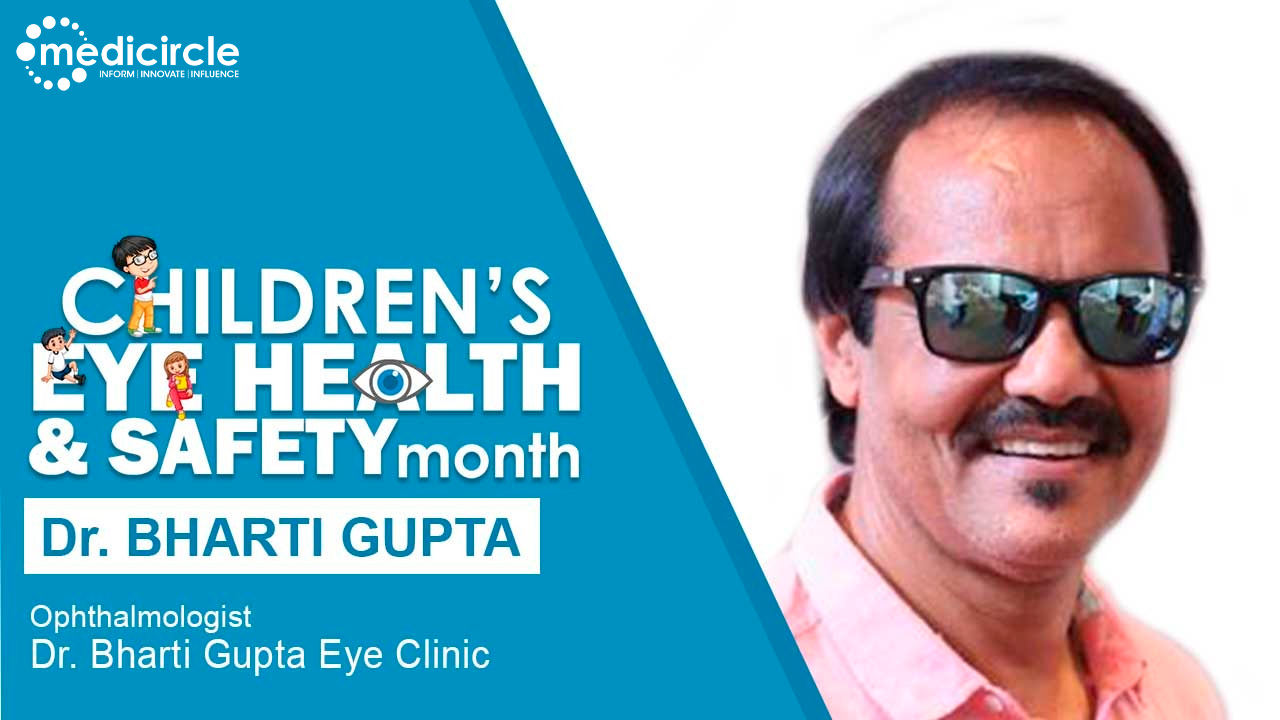
 Dr. Bharti Gupta, an Ophthalmologist sheds light on children’s eye health and safety measures. Dr. Bharti has also given tips for a good vision and busted some really important myths about eyeglasses





August is dedicated to preventing eye injuries and vision loss and saving children’s eyesight. One of 20 children ages 3 to 5 has a vision problem that could result in permanent vision if left untreated. Having a month dedicated to knowing about your child’s eye health and safety can make a big difference to your child’s health and life. According to India TV - only 46% of Indian kids get regular eye tests. Air pollution can cause excessive rubbing of the eyes resulting in weak vision. Hereditary is also a root cause for kids suffering from myopia which can affect their performance and development in the long run. On average, 23-30 percent of kids in India are affected with Myopia, especially kids residing in urban areas as they are seen spending less time outside under sunlight.” We, at Medicircle, are conducting a series on Children's Eye Health and Safety Awareness Month series, to help raise awareness about vision diseases and eye conditions in children, as well as how to prevent them.
Dr. Bharti Gupta is an experienced Ophthalmologist in Faridabad. He Did MBBS at Amritsar medical college in 1980 and MS from the same college in 1982. He has worked as head of department ophthalmology in Guru Nanak Mission Hospital, Jalandhar till 1986. Then he started private practice at Faridabad from 1987 onwards. Dr. Bharti Gupta has completed 35 years of private practice at Faridabad. He has done lots of operations on children having Squint. He has operated on many children having congenital cataracts. He is doing children's examinations for myopia and other diseases.
Myopia cases in children
Dr. Bharti says, "In the current situation of pandemic, with school closures and restricted movements, children are forced to remain inside the house with the fear of the virus. They are spending a lot of time watching smartphones, TV, or online classes. Due to this the average screen time has been increased which is causing strain to the eyes. They are spending less time outside under sunlight. Children have started complaining of different eye problems and thus they are on the rise as per the recent surveys. One of the common problems which children are facing is myopia which is increasing sharply day by day. Myopia is caused due to long hours of nearsightedness.”
20-20-20 Formula for eyes
Dr. Bharti expresses, "If you are working for too long in front of a screen, then you should follow 20-20-20 formula for eyes. After every 20 minutes, watch at 20 feet distance for 20 seconds. Our eye muscles get tired of working too long and looking at the screen. At this time, children are watching everything on mobile, online classes, games, cartoons, movies everything. This is the prime reason for increasing cases of myopia in urban kids. But I would advise kids to go out in the sunlight, in the fresh air, to the park's garden to play but with proper pandemic protocol.”
Eyeglasses are hereditary
Dr. Bharti mentions, "Glasses in children can be hereditary wherein parent's genes get transferred to their offspring. In most cases, it is genetic. So, it is the genes that decide whether the child will have glasses or not. There are chances that the number will increase of glasses by the age of 18 years. Myopia is caused due to the lengthening of the eyeball. As the body grows, eyes also grow. Myopia occurs when the eyes become too large. So, it is well understood that specs number can increase till the age of 18 no matter what you do and parents should not bother about that. Once myopia has occurred, it can't be stopped. There is no gene therapy yet found that can work on genes to stop this.”
Tips for a good vision
Talking about good vision, Dr. Bharti advises, "With the increasing screen time, we need to regularly wash our eyes with plain water, so that our eyes get relaxed and doesn't cause strain. You should at least wash your eye twice daily. This brings freshness to our eyes. Any dust particles, irritants can easily get washed off.
If your child is 5-6 years old, able to read and write then you must take them for an eye checkup even though he/she has a problem with the eyes or not. This will help in the early detection of any eye disorder if it is there.
A good diet is very much important for the eyes. Vitamin A-rich food is essential like carrot, papaya, mango, bottle gourd, eggs, milk, paneer, fish, and cereals. Your daily diet should include these. Children with deficiency of vitamin A should be given vitamin A tablets. This will fulfill the requirements of vitamin A.
Reality of eyeglasses
Dr. Bharti explains, “If a child is having an eye abnormality, consult the doctor and try to get the treatment as early as possible because, with time, the problem can get worsened and can result in vision loss too.
If your child has got glasses, then he must wear them. Glasses are not only for TV and studies; the child should wear them all the time. This will not make the problem worse. Parents need to take care of all these.”
(Edited by Renu Gupta)




-23-300x250.png)

.jpeg)






.jpg)
.jpg)
.jpg)
.jpg)
.jpg)
.jpg)
.jpg)
.jpg)
.jpg)

