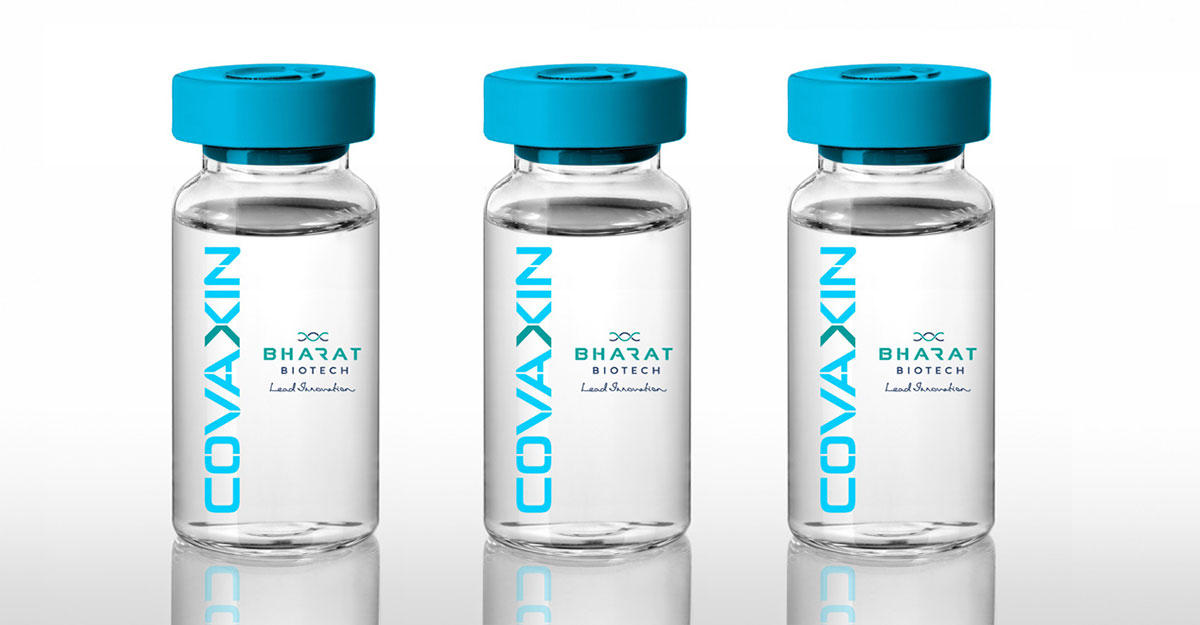
Covaxin gets EUA for children aged 2-18 years


Deprecated: strlen(): Passing null to parameter #1 ($string) of type string is deprecated in /home/medicircle/public_html/script_newsdetails.php on line 75
The Subject Expert Committee (SEC) has approved emergency use of Bharat Biotech's Covaxin for children in the 2-18 years age group


The Subject Expert Committee (SEC) has approved emergency use of Bharat Biotech's Covaxin for children in the 2-18 years age group.

Hyderabad-based Bharat Biotech had completed Phase-2 and Phase-3 trials of Covaxin on children below 18 years of age in September and submitted the data to Drugs Controller General of India (DCGI) at the start of this month. In the trials, Covaxin was administered to 525 children in the 2-18 age group. The indigenous vaccine will be administered in two doses, with a gap of 28 days between the first and second dose. This will provide a major boost to the country’s vaccination program. 

In the case of children as young as 2 years, the accuracy of the dose is crucial. Unlike the Covaxin for adults and other Covid-19 vaccines currently being administered that are available in multi-dose vials, the paediatric Covaxin will use a pre-filled syringe or PFS mechanism. Pre-filled syringes are known to have a high-level accuracy, which makes them safer to use for children.

Meanwhile, the WHO is yet to grant emergency use authorisation to Covaxin. Back in August, India had also granted emergency use approval to ZyCov-D's Covid-19 vaccine for children between the ages of 12 to 18. The vaccine is developed by pharmaceutical firm Zydus Cadila and is the first DNA vaccine to be approved in the world. It is a three-dose needle free vaccine. The vaccine, however, is yet to be made available to the market.


Tags : #Spotlight #Covaxin #Coronavirus #COVID19 #EUA #DCGI #Vaccineforkids #ZyCovD #Medicircle #SmitaKumar

Related Stories

Loading Please wait...

-Advertisements-


Trending Now

Why Preventive Healthcare for Children Is One of the Most Important Investments India Can MakeAugust 04, 2026
The Role of Pathology in Healthcare: From Diagnosis to Disease PreventionAugust 04, 2026
Pathophysiology of Psoriatic Arthritis: Clinical Presentation, Joint Damage Mitigation, and BiologicsAugust 04, 2026
Comprehensive Evaluation of Syncope: Cardiac vs. Neurological Origin WorkupsAugust 04, 2026
Common Medical Terms Explained: A Plain-Language Guide for Indian Patients and Healthcare SeekersAugust 03, 2026
Why Radiology Is the Backbone of Modern Medical Diagnosis and TreatmentAugust 03, 2026
Managing Urban Stress: Science-Backed Strategies for Mental Resilience in 2026 August 01, 2026
Managing Chronic Inflammation: The Role of Anti-Inflammatory Indian SuperfoodsAugust 01, 2026
Pathophysiology of Psoriatic Arthritis: Clinical Presentation, Joint Damage Mitigation, and BiologicsAugust 01, 2026
Early Markers of Glaucoma: Structural vs. Functional Ophthalmic Diagnostic ProtocolsAugust 01, 2026
Managing Complex Diabetic Foot Ulcers: Multidisciplinary Wound Care, Offloading, and RevascularizationAugust 01, 2026
The Future of Preventive Medicine: How India Is Moving From Cure to PreventionAugust 01, 2026
Why Young Indians Are Facing Heart Problems: Causes, Symptoms, and PreventionAugust 01, 2026
The Future of Preventive Screening: AI-Driven Early Cancer Detection in IndiaJuly 31, 2026
The Impact of Climate Change on Allergic Respiratory Diseases in Indian Cities July 31, 2026
Electronic Medical Records: What They Are, Why They Matter, and How India Is Embracing ThemJuly 31, 2026
Heatwave Health Risks in India: Symptoms, Treatment, and Prevention StrategiesJuly 31, 2026
Rare Chest Wall Reconstruction at SRM Global Hospital Saves Critically Injured Road Accident VictimJuly 30, 2026
52-Year-Old Male with just 10% Heart Function successfully revived at Fortis Greater Noida via High-Risk Emergency AngioplastyJuly 30, 2026
Yashoda Hospitals Hitec City Achieves Landmark Milestone of 400+ Renal Transplants in less than 4 YearsJuly 30, 2026