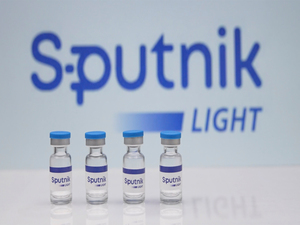
DCGI permits ‘Sputnik Light’ to conduct Phase III trials in India


Deprecated: strlen(): Passing null to parameter #1 ($string) of type string is deprecated in /home/medicircle/public_html/script_newsdetails.php on line 75
▴
The Drug Controller General of India has approved the single-dose COVID vaccine Sputnik Light to conduct phase 3 trials on the Indian population


The Drug Controller General of India has granted permission to the single-dose COVID-19 vaccine version of the Sputnik V vaccine 'Sputnik Light' to conduct trials on the Indian population. This is to check whether the vaccine gives a similar immune response in trials same as in the Russian population. Sputnik Light is a single dose COVID19 vaccine of the Russian vaccine Sputnik. Its phase-3 trials have so far been conducted in Russia, the UAE, and Ghana.

According to a study published in the medical journal The Lancet, Sputnik Light showed 78.6 to 83.7 percent efficacy against Covid-19, 28 days after administration, significantly higher than most two-shot vaccines. 

Sputnik V confirmed 83.1% efficacy against the Delta variant of Covid — higher than many other vaccines. The vaccine showed a six times reduction of infection risk. Sputnik V is also 94.4% effective against hospitalizations, with 18 times reduction in such risk. Sputnik V vaccine has been registered in 69 countries globally with a total population of over 3.7 billion people. Sputnik V is considered to be one of the safest and most effective vaccines against coronavirus.

The Russian Direct Investment Fund (RDIF) last year united with Dr. Reddy's Laboratories to conduct the phase III trials of the Sputnik V vaccine in India. In April, Sputnik V received an emergency use authorization in India. Reddy's administered the first dose of the vaccine in Hyderabad under a limited pilot on May 14.


Tags : #Spotlight #SputnikV #SputnikLight #COVID19 #DCGI #SingledoseCOVIDvaccine #RDIF #Medicircle #SmitaKumar

Related Stories

Loading Please wait...

-Advertisements-


Trending Now

Digital Identity Fraud in Healthcare: What India Must KnowNovember 18, 2026
Wearables in Clinical Care: When Should Doctors Trust the Data?November 18, 2026
Cybersecurity for Medical Startups: What Founders MissNovember 18, 2026
Remote Patient Monitoring: The Next Phase of Virtual CareNovember 18, 2026
Digital Health Wallets: Future of Medical Records in IndiaNovember 17, 2026
How Hospitals Can Prepare for a Transparent Healthcare MarketNovember 17, 2026
Childhood Nutrition: Understanding Micronutrient Gaps Beyond CaloriesNovember 16, 2026
Anaemia in Adolescent Girls: Connecting Prevention, Testing and Nutrition SupportNovember 16, 2026
Health Information Exchanges in India: Are Medical Records Finally Going Portable?November 16, 2026
Hospital Accreditation in 2026: What Is Changing Beyond the Checklist?November 16, 2026
Digital Insurance Platforms and India's Health Coverage FutureNovember 14, 2026
ABDM 2.0: India's Digital Health Ecosystem FutureNovember 14, 2026
Vaccine Cold-Chain Management: Protecting Immunisation Quality From Storage to DeliveryNovember 14, 2026
Foodborne Illness Surveillance: How Public Health Systems Track RisksNovember 14, 2026
Interoperability in Indian Healthcare: Why Patient Data Still StrugglesNovember 13, 2026
Tuberculosis Contact Screening: How Preventive Care Works Around ExposureNovember 13, 2026
COPD Care in India: Linking Diagnosis, Inhaler Education and Follow-UpNovember 13, 2026
Management of ANCA Glomerulonephritis: Induction & Maintenance ProtocolsNovember 12, 2026
Smart Hospital Command Centres Transforming IndiaNovember 12, 2026
Gamma Knife Surgery in India: What You Need to KnowNovember 12, 2026