 Thursday, October 08, 2026
 National capital get third plasma bank at Guru Tegh Bahadur Hospital




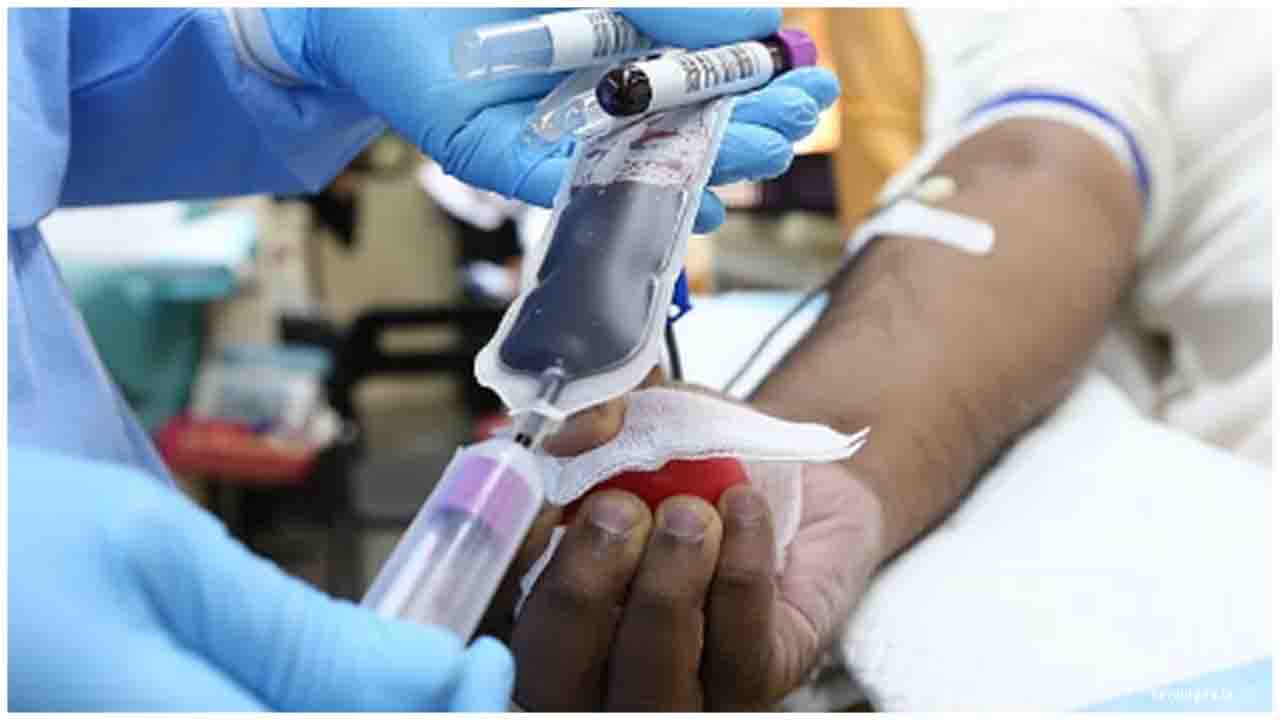
With the Delhi government backing plasma therapy to reduce the COVID-19 death rate, the state-run Guru Tegh Bahadur Hospital is soon going to launch a plasma bank which will be the third such facility in the national capital. Binay Bhushan, the nodal officer of GTB Hospital, said the largest medical facility in East Delhi has got the equipment, know-how and staff to start a plasma bank.
"The hospital has already got a blood bank which caters to the demand in the East Delhi region. This facility can be used to collect and store plasma," Bhushan said. Last week, the hospital said it has made all arrangements, including procuring an apheresis machine, to provide plasma therapy to COVID-19 patients who need it.
Bhushan said the competent authority has allowed the hospital to start collecting plasma from recovered patients. "We have prepared a list of COVID-19 patients who were treated at the hospital and have fully recovered. They have expressed willingness to donate plasma," he said.
On July 2, Chief Minister Arvind Kejriwal launched Delhi's first plasma bank at the city government-run Institute of Liver and Biliary Sciences. This week, he inaugurated the second plasma bank at Lok Nayak Jai Prakash Narayan Hospital. Kejriwal said plasma therapy is one of the reasons behind the reduced COVID-19 death rate in Delhi. "We cannot say it can save 100 percent of the lives...but the death rate has reduced in Delhi and plasma has a role in it." Covid-19 patients can donate their plasma 14 days after recovery.
They should age between 18 and 60 and weigh not less than 50 kg. Women who have been pregnant, people with diabetes, hypertension, cancer survivors, those with chronic heart, liver, lung and kidney diseases and high blood pressure cannot donate plasma. The GTB Hospital is also aiming at increasing the number of ICU beds to 500. At present, it has 100 ICU beds.
Recently national capital second got second convalescent plasma bank at the 2,000-bed Lok Nayak Jai Prakash Narayan Hospital (LNJP), the city’s biggest healthcare facility for coronavirus disease (Covid-19) patients.
Earlier on July 2, the Delhi government had opened its first convalescent plasma bank at the Institute of Liver and Biliary Sciences (ILBS) in south Delhi’s Vasant Kunj.
Convalescent plasma therapy uses the blood component plasma — rich in virus-fighting antibodies from patients who have recovered from the infection — to aid the immune system of Covid-19 patients.
It is still an experimental therapy that has been approved by the Union Ministry of Health & Family Welfare (MoH&FW) for use in Covid-19 patients, whose need for oxygen increases despite being on oxygen support and steroids.






.jpeg)








.jpg)
.jpg)
.jpg)
.jpg)
.jpg)
.jpg)


.jpg)
.jpg)
.jpg)