 Thursday, October 08, 2026
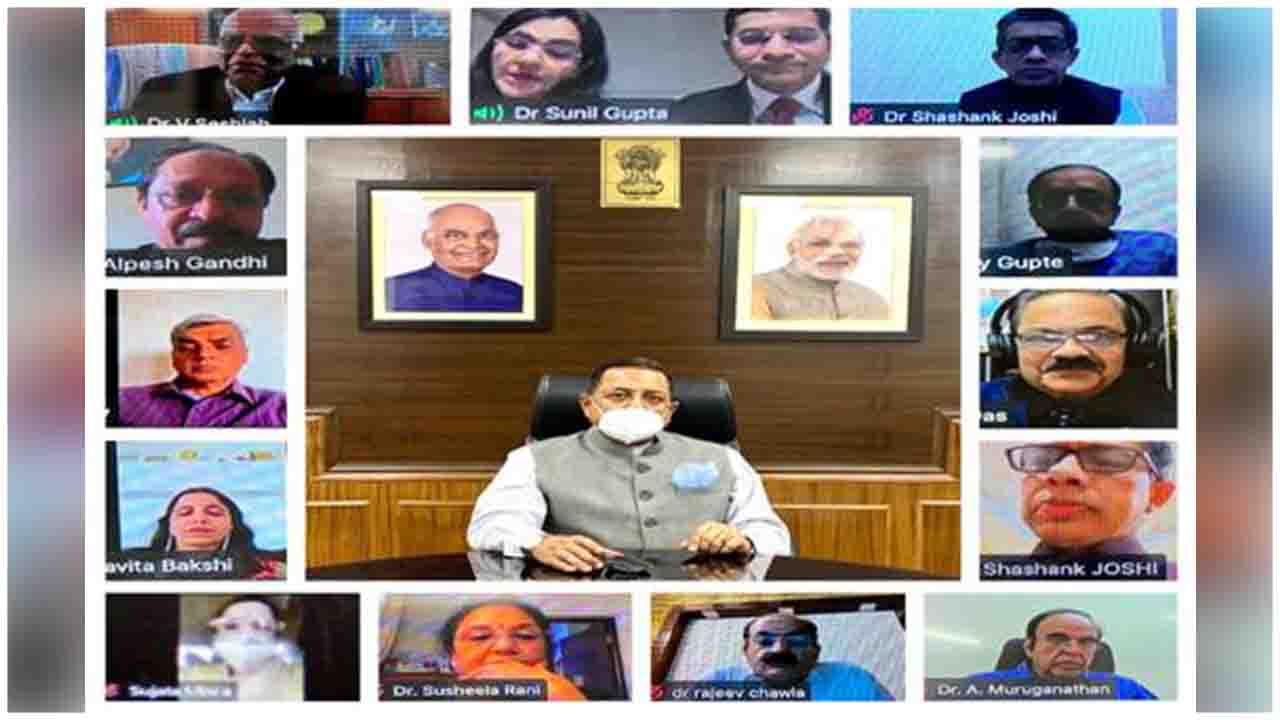
 Dr Jitendra Singh while addressing 2020 Webinar of Hello Diabetes Academia asks Diabetics to be extra careful




Union Minister of State (Independent Charge) Development of North Eastern Region (DoNER), MoS PMO, Personnel, Public Grievances, Pensions, Atomic Energy and Space, Dr. Jitendra Singh today said that Diabetics need strict sugar control during COVID Pandemic. Addressing a digital symposium of Hello Diabetes Academia 2020, he said that despite COVID, Show goes on in India and both Activity and Academia are at their best during the pandemic times. He said COVID has prompted us to discover new norms in adversity.
Dr. Jitendra Singh said, those suffering from diabetes have an immuno-comprised status, which tends to reduce their resistance and make them more vulnerable to Corona like infections as well as consequent complications. This, he said, leads to an even more vulnerable situation when a patient suffering from diabetes also has kidney involvement or diabetic-nephropathy, chronic kidney disease etc. In a situation like this, Dr. Singh noted that the diabetologists have a special responsibility towards their patients in keeping their blood sugar level strictly under control to avoid infection and at the same time educating them about precautions to be exercised.
He said, “Even though the COVID-related death rate in India has been low as compared to other countries, most of the deaths occurred here were among those Corona positive patients who were also suffering from comorbidities of chronic disorders like diabetes.”
Dr. Jitendra Singh noted even after the COVID pandemic is over, the discipline of social distancing and avoiding droplet infection will act as a safeguard against many other infections as well.
The Union Minister complimented Mentor Dr. V. Seshiah from Chennai, Dr.A.K Das from Puducherry, Dr. Shashank Joshi from Mumbai, Dr. Banshi Saboo from Ahmedabad and Dr. Sunil Gupta and Dr.Kavita Gupta from Nagpur and the entire team of organizers for having brought together the best of faculty to deliberate on this important topic.
Meanwhile, Government said, the actual caseload of COVID-19 cases in the country is only 3,42,756, as on date. More than 6.35 lakhs (63.33%) of the total cases have recovered.
India, being the second-most populous country in the world with 1.35 billion people, has 727.4 cases per million. On the global scale, cases/million population in India are 4 to 8 times less than some European countries.
The case fatality rate at 18.6 deaths/million of the country is one of the lowest in the world. The collaborative efforts of all States/UTs for house-to-house surveys, contact tracing, surveillance of containment and buffer zones, perimeter control activities, aggressive testing and timely diagnosis has resulted in early identification of the infected persons. This has helped in early treatment too.
India has followed a standard of care protocol for the differentiated categorization of COVID-19 patients- mild, moderate and severe as clearly formulated in the Clinical Management Protocol of Ministry of Health & Family Welfare (MoHFW). Effective clinical management strategies have shown to yield positive results. Almost 80% of the asymptomatic and mild cases have been advised home isolation under medical supervision. The moderate and severe patients are being treated in either the Dedicated COVID Hospitals or Dedicated COVID Health Centres. The strategy of home isolation for the mild and asymptomatic patients has ensured to keep the hospitals unburdened, where the focus has been on treatment of the severe cases and reduction of fatality. It is also notable that less than 1.94% of the cases are in ICUs, 0.35% cases are on ventilators and 2.81% cases are on Oxygen beds.
Medical infrastructure to ensure quality treatment of the admitted patients is being continuously augmented across the country. As a result of concerted efforts, the COVID-19 Hospital Infrastructure to treat COVID-19 is stronger today. It has 1383 Dedicated COVID Hospitals, 3107 Dedicated COVID Healthcare Centres, and 10,382 COVID Care Centres. Together they have a capacity of 46,673 ICU beds. 21,848 ventilators are deployed in the hospitals in all States/UTs. There is no shortage of N95 masks and PPE kits. The Centre has supplied 235.58 lakh N95 masks and 124.26 lakh PPE kits to State/UTs/Central institutions.






.jpeg)








.jpg)
.jpg)
.jpg)
.jpg)
.jpg)
.jpg)


.jpg)
.jpg)
.jpg)