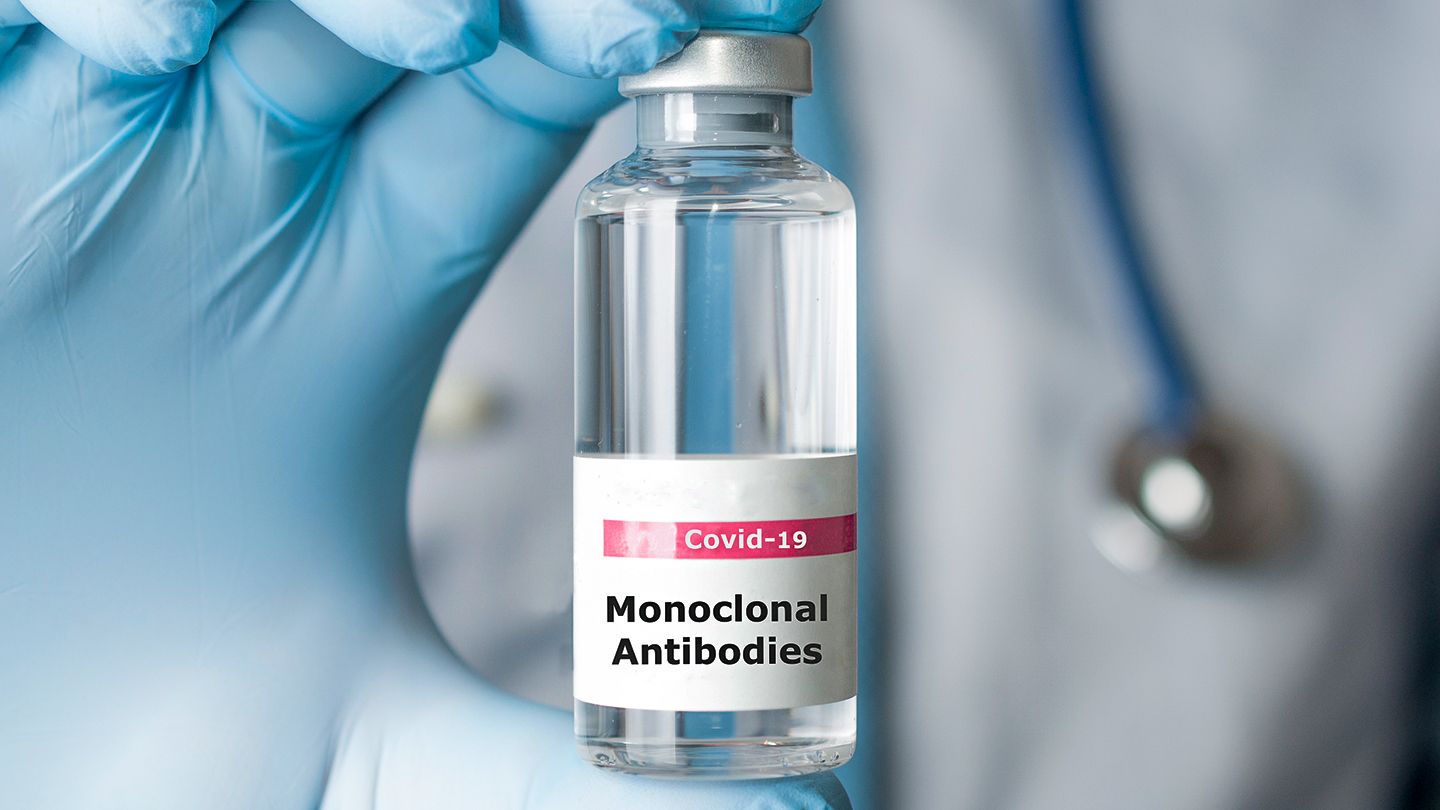
FDA authorizes monoclonal antibody therapy for emergency use in some patients 12 and older


Deprecated: strlen(): Passing null to parameter #1 ($string) of type string is deprecated in /home/medicircle/public_html/script_newsdetails.php on line 75
▴
The authorization is specifically for those with mild-to-moderate Covid-19, who are at risk of getting much sicker


The US Food and Drug Administration authorized the monoclonal antibody therapy sotrovimab Wednesday for the treatment of some Covid-19 patients ages 12 and older, who are at risk for severe disease or death.

The authorization is specifically for those with mild-to-moderate Covid-19, who are at risk of getting much sicker – not for those who are already hospitalized or on oxygen therapy. Monoclonal antibodies may worsen outcomes for hospitalized Covid-19 patients who require oxygen or mechanical ventilation, the FDA noted.

“This includes, for example, individuals who are 65 years of age and older or individuals who have certain medical conditions,” the FDA wrote in a statement Wednesday.

The FDA cited data from a clinical trial, in which 7% of patients who received a placebo were hospitalized or died, compared to 1% of participants who received sotrovimab – an 85% reduction.

Testing also showed that sotrovimab worked against virus variants first identified in the United Kingdom, South Africa, Brazil, California, New York and India.

“It is important to expand the arsenal of monoclonal antibody therapies that are expected to retain activity against the circulating variants of COVID-19 in the United States,” Dr. Patrizia Cavazzoni, director of the FDA’s Center for Drug Evaluation and Research, said in a statement.


The FDA authorized the treatment to be distributed intravenously by health care providers. Potential side effects include anaphylaxis, rash and diarrhea.


Tags : #FDA #FDANews #MonoclonalAntibodyCovid #Sotrovimab #FDAApprovalNews

About the Author


Team Medicircle

Related Stories

Loading Please wait...

-Advertisements-


Trending Now

Digital Identity Fraud in Healthcare: What India Must KnowNovember 18, 2026
Wearables in Clinical Care: When Should Doctors Trust the Data?November 18, 2026
Cybersecurity for Medical Startups: What Founders MissNovember 18, 2026
Remote Patient Monitoring: The Next Phase of Virtual CareNovember 18, 2026
Digital Health Wallets: Future of Medical Records in IndiaNovember 17, 2026
How Hospitals Can Prepare for a Transparent Healthcare MarketNovember 17, 2026
Childhood Nutrition: Understanding Micronutrient Gaps Beyond CaloriesNovember 16, 2026
Anaemia in Adolescent Girls: Connecting Prevention, Testing and Nutrition SupportNovember 16, 2026
Health Information Exchanges in India: Are Medical Records Finally Going Portable?November 16, 2026
Hospital Accreditation in 2026: What Is Changing Beyond the Checklist?November 16, 2026
Digital Insurance Platforms and India's Health Coverage FutureNovember 14, 2026
ABDM 2.0: India's Digital Health Ecosystem FutureNovember 14, 2026
Vaccine Cold-Chain Management: Protecting Immunisation Quality From Storage to DeliveryNovember 14, 2026
Foodborne Illness Surveillance: How Public Health Systems Track RisksNovember 14, 2026
Interoperability in Indian Healthcare: Why Patient Data Still StrugglesNovember 13, 2026
Tuberculosis Contact Screening: How Preventive Care Works Around ExposureNovember 13, 2026
COPD Care in India: Linking Diagnosis, Inhaler Education and Follow-UpNovember 13, 2026
Management of ANCA Glomerulonephritis: Induction & Maintenance ProtocolsNovember 12, 2026
Smart Hospital Command Centres Transforming IndiaNovember 12, 2026
Gamma Knife Surgery in India: What You Need to KnowNovember 12, 2026