 Wednesday, November 18, 2026
 Now ELISA bases Covid test from Zeus Scientific





ZEUS Scientific has been granted by the U.S. Food and Drug Administration (FDA) Emergency Use Authorization (EUA) for its in vitro ELISA diagnostic test for the qualitative detection of total antibodies to the SARS-CoV-2 virus in human serum and plasma. ZEUS has been producing and shipping the ELISA SARS-CoV-2 Total Antibody Test System since June 2020 and has steadily increased production capabilities to keep up with the growing demand. Achieving EUA approval was the next step in ZEUS’s commitment to deliver superior quality COVID-19 antibody detection devices. The ZEUS ELISA SARS-CoV-2 Total Antibody Test System joins our previously EUA-approved ZEUS ELISA SARS-CoV-2 IgG Test System.
The ZEUS ELISA SARS-CoV-2 Total Antibody Test System is intended for use as an aid in identifying individuals with an adaptive immune response to SARS-CoV-2, indicating recent or prior infection. The assay utilizes a dual antigen combination of recombinant S1 receptor binding domain (RBD) viral protein and recombinant nucleoprotein for optimal performance. By detecting a total antibody response to both the Nucleocapsid and Spike SARS-CoV-2 antigens the test is uniquely positioned as an ideal serological screening assay or first tier assay in an orthogonal testing algorithm as it can detect what others may miss.
Using FDA authorized RT-PCR assays as the reference method, the ELISA test demonstrated 96.0% positive agreement. A 98.9% negative agreement was demonstrated using a cohort comprised of RT-PCR negative specimens. Specificity of 100% was achieved using a cohort of pre-pandemic healthy donors. More details on the test system performance can be found on our website.
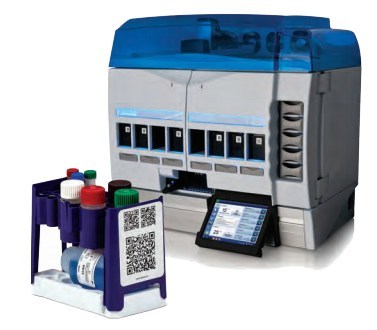
The SARS-CoV-2 Total Antibody Test System assay follows ZEUS’s universal ELISA assay protocol. This protocol offers a high degree of flexibility with incubation times (20-30 minutes for sample incubation and conjugate incubation, 10-15 minutes for TMB substrate incubation) allowing for simple, efficient, and flexible automation programming on open pipetting systems. ZEUS has received FDA authorization to run the ZEUS ELISA SARS-SoV-2 Total Antibody Test System manually or using the Dynex Agility, Dynex DSX or Dynex DS2 Automated ELISA Systems. The Agility offers a high throughput and takes advantage of the SmartKit Gold packaging, providing the ability to fully automate the procedure from sample to result in a throughput meeting all laboratory requirements. The new Test System also includes our proprietary SAVe Diluent, a unique component which changes color when serum is added ensuring no well is missed!
For over 40 years, laboratories have trusted ZEUS Scientific to provide high quality in vitro diagnostic immunoassays for numerous infectious diseases. With over 125 FDA cleared assays in our menu, our company has a proven skillset of developing, manufacturing distributing and delivering a family of products to aid in the diagnosis of complex infectious agents including a variety of known viral pathogens. We welcome you to explore our ELISA menu to see how ZEUS is capable of helping your lab today accommodate increased immunoassay testing demand.
We have concentrated our focus to the COVID-19 pandemic and the SARS-CoV-2 virus. Both ZEUS SARS-CoV-2 ELISA products are in stock and ready to ship today.





-23-300x250.png)





















