 Monday, October 12, 2026
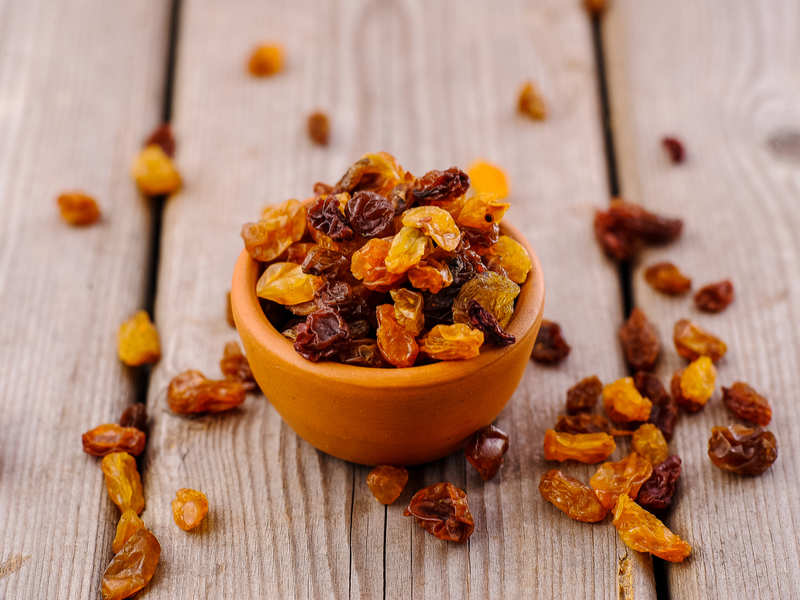
 “Raisin is dried grapes. These may be eaten raw or used in cooking, baking, etc. As these are rich in fiber, ready to eat anytime yet they have to be consumed in moderation because too much of fiber can cause GI upset”





Raisins or kishmish are also called dried grapes. Just like there are a variety of grapes, we have a variety of kishmish too green, purple, and red. Raisins are generally made from seedless green grapes called “Thompson seedless”. Raisin is prepared by three-step - pretreatments, drying, and post drying. Raisin is 72% sugar-like glucose. They are rich in fibers, antioxidants, potassium, and magnesium. These are low in sodium and do not contain any cholesterol.
Therapeutic importance of Raisin
Raisins contains fiber that swells in water. This makes it a good digestive aid to keep bowel movements regular.
Potassium and magnesium content in kishmish help to reduce acidity maintains the pH balance of the stomach.
It also neutralizes stomach acid which in turn reflects healthy skin.
Raisins are also full of Iron and B-complex – good for the production of blood and prevent anemia.
Raisins are good for skin
Pale skin is often the result of low blood count. A handful of kismis works more wonders to the skin than any of the beauty products.
Black kismis helps the liver in flushing out toxins. A clean body resembles clear skin.
The proteins and vitamins in kishmish help in renewing the skin cells. Cells that are damaged because of the sun are replaced by new cells.
Phytochemicals in kismis protect the skin from harmful rays of the sun. Thus, eating kishmish helps your skin look young.
The antioxidants in kismis help in skin repairing. Kishmish works efficiently by disappearing the wrinkles and fine lines.
Precautionary Steps
Raisins are generally coated with white powdery pesticide which doesn’t go even after several washing. Thus, pesticide residues limit the liver's ability to process toxins out of the body. Commercially grown kishmish are also treated with sulfite to enhance the color, this causes asthma, respiratory infection, and other allergies. Organic grapes are grown by using bio-fertilizers like manure and vermicompost. We can avoid pests by using natural predators and biopesticides like neem oil. Chemical-free grapes mean chemical-free kishmish. One can buy organic grapes to avoid pesticides.
Uses
Raisin can be enjoyed straight out of the box.
Raisin is used in salads, cakes, cookies, desserts.
Raisin is used as a garnishing in dishes like kheer, pulav, ice cream.
It can be used as a healthy breakfast with cereals like muesli, oats, corn flakes.
Sealed organic brand of kismis is best to use. If you are choosing kismis, choose the one which is plump and fleshy, dried out kismis are not good for eating. While buying, make sure that stock is not old and free from an insect pests.
The American College of Cardiology has recommended that eating resins three times a day lowers blood pressure significantly.





.jpeg)










.jpg)
.jpg)
.jpg)
.jpg)
.jpg)
.jpg)


.jpg)