Sunday, October 25, 2026
 By combining passion, knowledge, and a deep desire to help others, he is not just inventing path breaking solutions he is creating a better future for millions.




At just 14 years old, Siddharth Nandyala is redefining what young minds can achieve in the fields of artificial intelligence and healthcare. Originally from Anantapur, India, and now living in Frisco, Texas, Siddharth has earned global recognition for his groundbreaking contributions to medical technology. Holding prestigious AI certifications from Oracle and ARM, he is officially the youngest AI-certified professional in the world. But what truly sets him apart is his innovative approach to solving critical healthcare challenges using artificial intelligence.
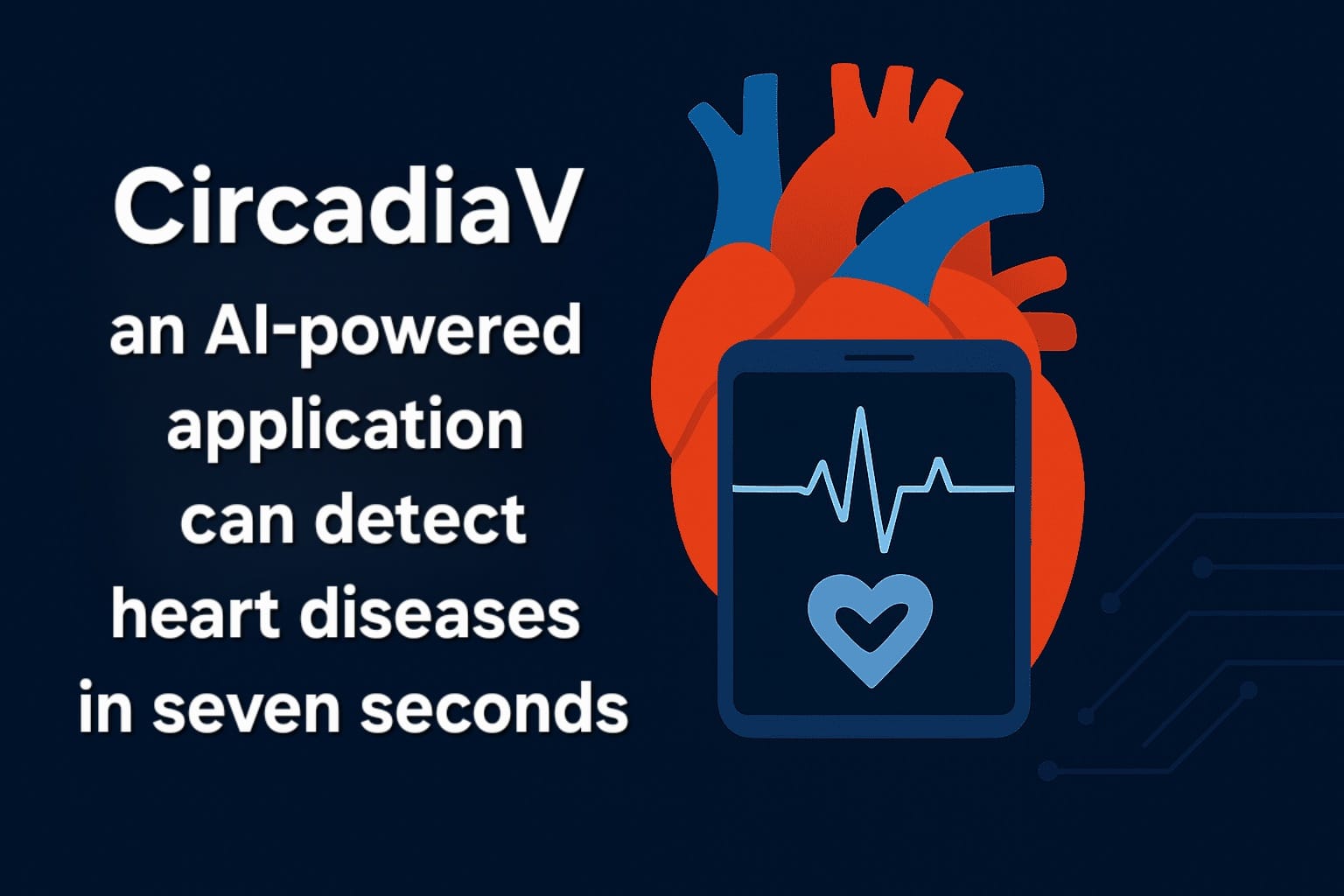
Siddharth’s most remarkable creation, CircadiaV, is an AI-powered application that can detect heart diseases in under seven seconds using a simple smartphone-based heart sound recording. With an impressive accuracy rate exceeding 96%, CircadiaV has already been tested on over 15,000 patients in the United States and 700 patients in India, including those at Guntur Government General Hospital (GGH).
For millions of people worldwide, access to early heart disease detection is a luxury they cannot afford. Rural areas and underdeveloped regions often lack specialized cardiologists and advanced medical equipment, leading to late diagnoses and increased mortality rates. Siddharth’s vision is to bridge this gap, ensuring that people, regardless of their geographical or financial limitations, can receive early and accurate heart health assessments.
His work has not gone unnoticed. Andhra Pradesh Chief Minister N. Chandrababu Naidu has publicly recognized Siddharth’s achievements, calling CircadiaV a medical breakthrough that has the potential to revolutionize heart disease detection.
“At such a young age, Siddharth is proving that technology can be a great equalizer. His work is an inspiration to us all, and I fully support his mission to bring AI-driven healthcare solutions to the world.” Chandrababu Naidu, Andhra Pradesh Chief Minister.
Siddharth’s impact is not limited to healthcare alone. He is the founder and CEO of STEM IT, a global initiative dedicated to promoting STEM (Science, Technology, Engineering, and Mathematics) education among young students. Through STEM IT, he introduces children and teenagers to coding, robotics, and artificial intelligence, equipping them with skills that will shape the future.
Siddharth firmly believes that every child should have access to STEM education, regardless of their socioeconomic background. He actively conducts workshops, mentoring sessions, and online programs, inspiring thousands of students worldwide to pursue careers in technology and innovation.
“Technology is not just for the privileged. Every child should have the opportunity to learn, create, and innovate.” – Siddharth Nandyala
While most teenagers are busy with school assignments and video games, Siddharth is developing a prosthetic arm that could change the lives of amputees forever. Unlike traditional prosthetic arms, which can cost over $400,000, Siddharth’s EEG-powered bionic arm aims to bring the cost down to just $300.
His prosthetic design Is powered by electroencephalography (EEG) technology, allowing amputees to control their artificial limbs using brain signals. This innovation has the potential to provide mobility and independence to thousands of people who cannot afford expensive prosthetic solutions. For growing children who outgrow prosthetic limbs quickly, an affordable alternative is a game-changer.
This development has earned Siddharth further recognition from leaders across industries, including Deputy Chief Minister Pawan Kalyan, who praised his efforts in using AI for the betterment of humankind.
Despite his age, Siddharth’s contributions have placed him among the most influential young minds in the AI and healthcare space. His work has been celebrated not only by political leaders but also by top AI professionals, healthcare experts, and technology giants.
What makes Siddharth’s journey even more inspiring is his commitment to using technology for social good. While many innovators in artificial intelligence focus on commercial ventures, Siddharth is driven by the desire to make life-saving medical solutions accessible and affordable.
With an already impressive list of achievements, Siddharth has no plans of slowing down. His future goals include:
Expanding CircadiaV’s reach to more hospitals and rural healthcare centers globally.
Further developing AI-driven diagnostic tools to detect diseases beyond cardiovascular conditions.
Scaling STEM IT to train and mentor thousands more students in AI, robotics, and coding.
Bringing his affordable prosthetic arm to market, ensuring it reaches those who need it most.
Siddharth Nandyala is proof that age is not a barrier to innovation. His work in artificial intelligence, healthcare, and STEM education is setting a new standard for young minds across the world. By combining passion, knowledge, and a deep desire to help others, he is not just inventing pathbreaking solutions he is creating a better future for millions.




-23-300x250.png)

.jpeg)


.jpg)
.jpg)
.jpg)
.jpg)
.jpg)
.jpg)
.jpg)
.jpg)
.jpg)