 Saturday, November 21, 2026
 The use of digital technologies and artificial intelligence to improve the quality of life for city residents aligns with the objectives of the national program "Digital Economy of the Russian Federation" and the capital's regional project "Digital Public Administration."





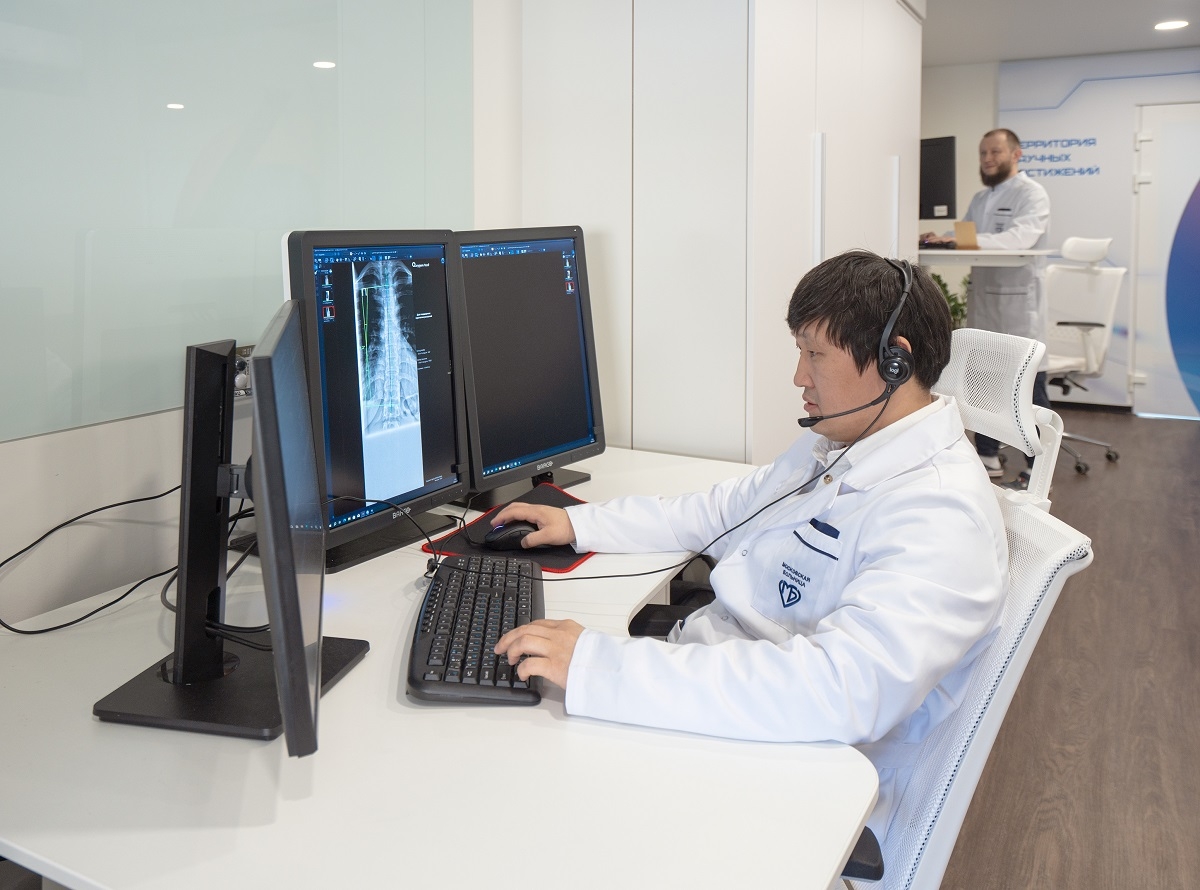
The use of artificial intelligence (AI) has significantly improved the processing of medical imaging results in Moscow, with radiologists having analyzed over 13 million examinations since 2020. According to Anastasia Rakova, Deputy Mayor of Moscow for Social Development, the integration of AI technology has transformed the the process of identifying diseases.
"Today, the diagnosis of diseases, including diagnostic radiology, relies heavily on the use of artificial intelligence," Rakova explained. "The services introduced in 2020 have played a? important role in analyzing medical images, and since 2023, they have been integrated into the CME rate for mammography as a second opinion. Additionally, AI has been working in experimental mode to autonomously determine norms in fluorography and chest X-ray studies since May 2024." To date, AI has helped doctors analyze over 13 million radiation studies, improving the accuracy of diagnostics and making it more accessible to citizens.
The AI-powered services have not only accelerated the processing of large amounts of data but also improved the accuracy of diagnostics, particularly in the early stages of diseases, making it more accessible to citizens. AI-based diagnostic tools can identify signs of 38 different diseases, including lung and breast cancer, pneumonia, osteoporosis of the spine, and herniated discs. Moreover, comprehensive AI services can detect up to 12 pathologies on a single medical image.
"Integrated solutions based on artificial intelligence are highly beneficial to radiologists," said Yuri Vasilev, Senior Consultant for Radiology of the Moscow Healthcare Department and CEO of the Center for Diagnostics and Telemedicine of the Moscow Healthcare Department . "These services enable radiologists to identify signs of multiple pathologies simultaneously on a single imaging study, allowing for early disease detection and timely patient monitoring."
The development of AI services in Moscow is part of an ongoing experiment on the introduction of computer vision technologies in medicine, launched by the Moscow Department of Social Development in collaboration with the Centre for Diagnostics and Telemedicine and supported by the city's Department of Information Technology.
The use of digital technologies and artificial intelligence to improve the quality of life for city residents aligns with the objectives of the national program "Digital Economy of the Russian Federation" and the capital's regional project "Digital Public Administration."





-23-300x250.png)




















