 Thursday, October 08, 2026
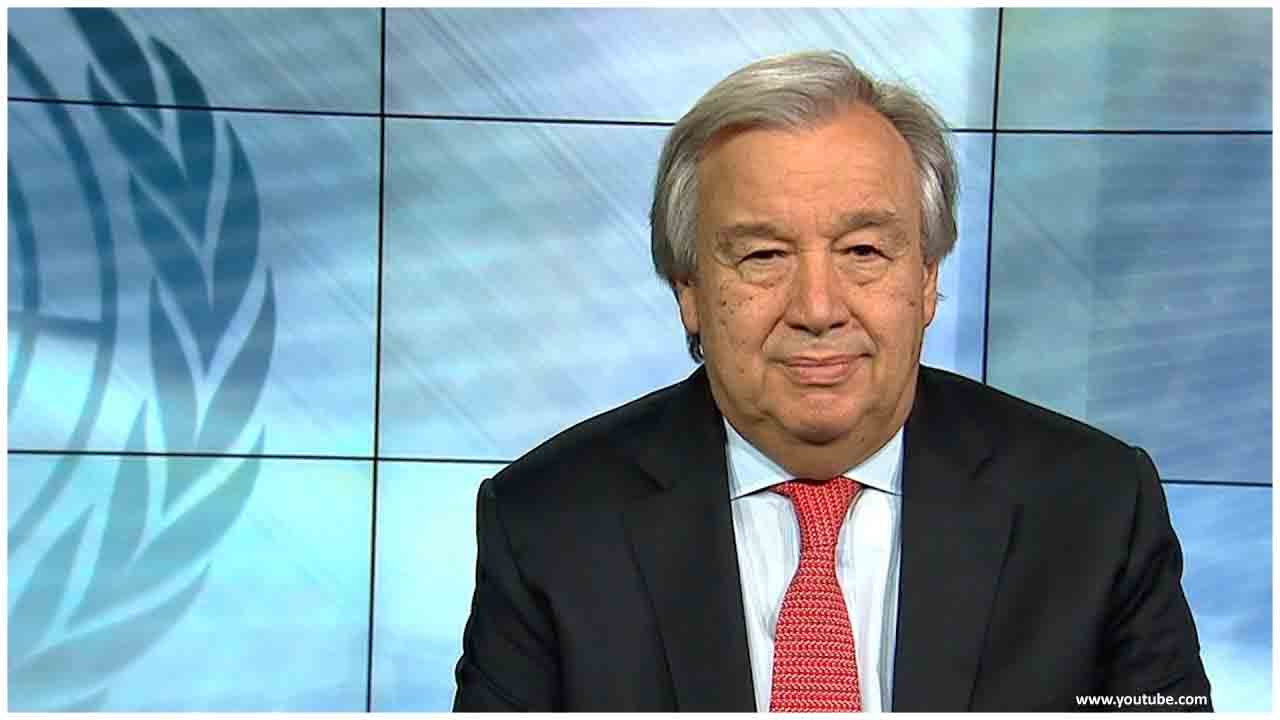
 "We cannot go back to the way it was and simply recreate the systems that have aggravated the crisis," UN Secretary-General Antonio Guterres




Seven days after India propelled the bartering procedure for coal hinders for business mining, UN Secretary-General Antonio Guterres has said there is no purpose behind any nation to remember coal for their COVID-19 recuperation plans and ventures ought to rather be made in non-dirtying vitality sources.
Guterres on Thursday introduced the United Nations Response on COVID-19 that records not just the activity taken by the world body in the course of the most recent three months of the pandemic, yet additionally offers a guide toward recouping better.
"We can't return to the manner in which it was and essentially reproduce the frameworks that have exasperated the emergency. We have to work back better with progressively manageable, comprehensive, sexual orientation equivalent social orders and economies," Guterres said in comments during a virtual question and answer session.
"There is no rhyme or reason, for instance, for any nation to remember coal for their COVID-19 recuperation plans. This is an ideal opportunity to put resources into vitality sources that don't dirty, don't cause emanations, create not too bad employments, and set aside cash," the UN Chief stated, including that the United Nations is unequivocally dedicated to driving the recharging.
While Guterres didn't name any nation, sources in the UN said the comment was regarding the choice by India to dispatch the bartering procedure for coal obstructs for business mining.
India's choice raises worry as different nations could likewise utilize coal to meet vitality necessities as economies come out a COVID-19 lockdown, they said.
Head administrator Narendra Modi had a week ago propelled the sale procedure for 41 coal obstructs for business mining, a move that opens India's' coal part for private players, and named it a significant advance toward India accomplishing independence.
Propelling the closeout of mines for business mining, that is required to accumulate Rs 33,000 crore of a capital interest in the nation over next five to seven years, the PM had said India will win the coronavirus war and transform the emergency into a chance, and that the pandemic will make India independent.
By and by, regardless of being the world's fourth-biggest maker, India is the second-biggest shipper of the dry-fuel, Modi had said.
"Permitting private division in business coal mining is opening assets of a country with the world's' fourth-biggest stores," he had called attention to.
He had said that the dispatch of the closeout procedure not just denoted the start of opening of the nation's' coal segment from the lockdown of decades, however, planned for making India the biggest exporter of coal.
The beginning of the closeout procedure of these squares is a piece of the arrangement of declarations made under ''Atmanirbhar Bharat Abhiyan'' or confident India Mission to restore the Indian economy affected by the COVID-19 pandemic.
In Bangkok last November, Guterres had worried about the need to stop the formation of new force plants dependent on coal later on, including that there are as yet a few new coal power plants for power creation predicted later on in East Asia, in Southeast Asia, and in South Asia.
"There is a dependence on coal that we have to defeat since it stays a significant danger corresponding to environmental change," he had said.





.jpeg)










.jpg)
.jpg)
.jpg)
.jpg)
.jpg)
.jpg)


.jpg)