Tuesday, October 27, 2026
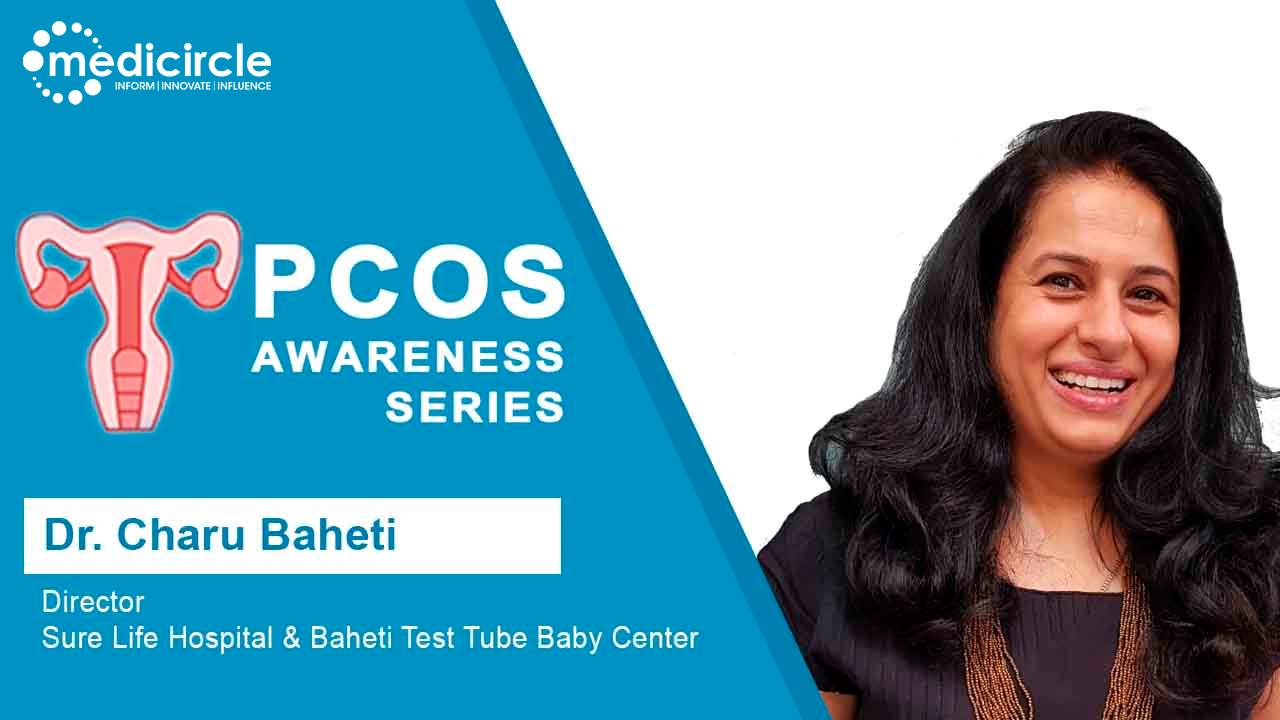
 One in 5 women have PCOS. It is not a disease but a metabolic endocrine disorder. Lifestyle modification can treat this disorder very well. Know more about PCOS, its symptoms, complications from renowned Dr. Charu Baheti.





Dr. Charu Baheti is a Consultant Gynaecologist and Infertility Specialist. She is renowned in the field of Obstetrics, Gynaecology & Infertility with vast experience of more than 15 years. Her expertise lay in the field of Advanced Infertility Management & In Vitro fertilization Techniques. She is currently the Director of Sure Life Hospital & Baheti Test Tube Baby Center.
Symptoms of PCOS
Dr. Charu says, “PCOD is a part of PCOS. It is not a disease; it is a metabolic endocrine disorder. Some of its symptoms include
1. Irregular menstrual cycle
2. Acne
3. Hirsutism
4. Hairs around the breast and navel
5. Black spots around the neck
Dr. Charu adds, “Sonography can also be done. In sonography findings, the size and volume of ovaries should be more than 10 and small follicles should be more than 20. We don't recommend laboratory tests at this period.
Anovulation – Ovulation begins to happen when the hypothalamus secretes gonadotropin-releasing hormone (GnRH), which then causes the pituitary gland to release follicle-stimulating hormone (FSH) and luteinizing hormone (LH). FSH stimulates the woman's eggs (follicles) that then make the hormone estrogen, which builds the uterine lining. LH serves to release the egg from the ovary and into the fallopian tube.
Anovulation is the lack or absence of ovulation (release of eggs). This is because of the imbalance of the hormone that causes a woman to ovulate.
The exact reason for PCOS is not yet known.”
Counseling is very important for PCOS girls
Dr. Charu strongly feels that counseling is very much helpful for girls suffering from PCOS
1. First, we have to listen to their problems carefully. Hirsutism is because of raised androgen hormones, obesity, and insulin hormone.
2. We have to encourage them to support their lifestyle modification. Girls can take the low-calorie meal in divided doses. They need a lot of motivation.
3. Some medications can be given to help them to reduce their weight. But Lifestyle modification and weight reduction can solve the maximum problem without medications.
4. Irregular menstruation is not the only sign of PCOS. For example, if a 16 years old girl is getting her menstrual cycle every 27th day, it doesn’t mean she has PCOS. So, here we only counsel the girl and no medications are prescribed.
Complications associated with PCOS
Dr. Charu expresses, “Complications of PCOS are age-dependent.
1. In the teenage period, anovulation, menstrual irregularities with other symptoms are seen.
2. In the reproductive age group, they require few medicines to conceive because of improper ovulation.
3. In pregnancy, they are more likely to develop Pregnancy Induced Hypertension (PIH) and gestational diabetes. PIH comes and goes on its own. Gestational diabetes can lead to cesarean delivery.
4. Long-term complications – Coronary heart disease, chances of developing type 2 diabetes.
5. Sleep disorder – sleep apnea, snoring
6. Mental disturbance - Depression
PCOS patients have to have regular ultrasounds even after their reproductive age group. Irregular menstrual causes endometrium to thicken. So, women should go for a specific endometrial ultrasound to diagnose any further complications.
Important Tips for Parents
Dr. Charu advises, “When a girl misses her periods, many parents jump to the conclusion of pregnancy. I would like to advise them to trust their girls. Also, visit a doctor when such a situation arises.
As a parent, be friendly with your child. Accompany them to visit a gynecologist. When you visit with them you will realize that this is a metabolic endocrine disorder.”
Dr. Charu stresses, “I would like to reiterate that this is only a metabolic endocrine disorder and not a disease. Encourage them to make lifestyle changes. Don't encourage them to starve. Motivate them to adopt a healthy lifestyle, healthy eating (low-calorie foods), and walking. They can have cheat days in between healthy eating and can walk while talking on the phone. A simple walk can make a huge difference. So 'walk and talk' is my mantra."
5 to 10% of weight loss will solve 50% of her problem without going to the doctor. Motivate your child and love your child unconditionally. This would have a successful result.”
Treatment Plan for PCOS
Dr. Charu explains, “PCOS treatment is based on age, symptoms, and diagnosis. For teenage girls, oral contraceptive pills provide the best solution. We educate the parents that it is unrelated to pregnancy and is used to regulate the periods and control the metabolic problem.
When the patient wants to conceive, we check the serum insulin level. If this is high, we prescribe an anti-diabetic drug, like metformin. Many of the patients get confused with this. So, first, we educate the patient why the drug is given and for how long it will be administered.”
Dr. Charu concludes, “Lifestyle modification is the mainstay – Exercise (gym, yoga, walk), sleeping on time, reduced screen time, and weight reduction therapy. Sometimes we also give Vitamin D3 medicines."
Girls usually gain weight after marriage. Here, we do counsel the girls that once you are married, don't delay your pregnancies. Make it your priority."
(Edited by Renu Gupta)




-23-300x250.png)

.jpeg)




.jpg)
.jpg)
.jpg)
.jpg)
.jpg)
.jpg)
.jpg)
.jpg)
.jpg)