 Thursday, October 08, 2026
 “With these 100 million additional doses, the United States will be able to protect more individuals and hopefully end this devastating pandemic more quickly,” said Albert Bourla, Chairman and Chief Executive Officer, Pfizer.




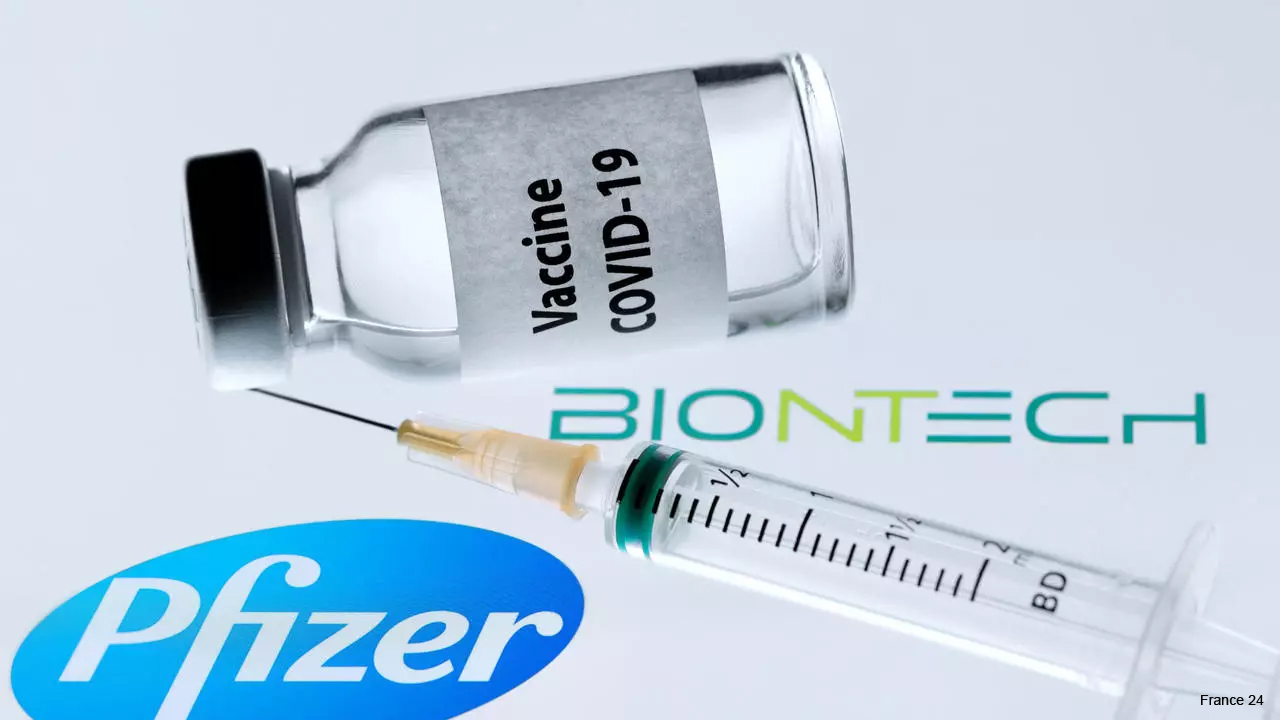
Pfizer and BionTech SE today announced a second agreement with the U.S. government to supply an additional 100 million doses of the companies’ COVID-19 Vaccine from production facilities in the U.S. This agreement brings the total number of doses to be delivered to the U.S. to 200 million. The companies expect to deliver the full 200 million doses to Operation Warp Speed (OWS) by July 31, 2021. Consistent with the original agreement announced in July 2020, the U.S. government will pay $1.95 billion for the additional 100 million doses.
“With these 100 million additional doses, the United States will be able to protect more individuals and hopefully end this devastating pandemic more quickly,” said Albert Bourla, Chairman and Chief Executive Officer, Pfizer. “We look forward to continuing our work with the U.S. government and healthcare providers around the country.”
“Securing more doses from Pfizer and BioNTech for delivery in the second quarter of 2021 further expands our supply of doses across the Operation Warp Speed portfolio,” said HHS Secretary Alex Azar. “This new federal purchase can give Americans even more confidence that we will have enough supply to vaccinate every American who wants it by June 2021.”
“We regard the U.S. government’s order of additional doses from their vaccine contingent as a clear sign of confidence and trust in our vaccine and our ability to deliver. Our goal remains to bring a safe and effective COVID-19 vaccine to as many people as we can all around the world,” said Ugur Sahin, M.D., CEO and Co-founder of BioNTech.
Under the terms of the second agreement, the companies will deliver at least 70 million of the additional doses by June 30, 2021, with the remaining 30 million doses to be delivered no later than July 31, 2021. The government also has the option to acquire up to an additional 400 million doses of the Pfizer-BioNTech Vaccine.
Eligible U.S. residents will continue to receive the vaccine for free, consistent with the U.S. government’s commitment to providing free access for COVID-19 vaccines and according to the U.S. Centers for Disease Control and Prevention’s (CDC) Advisory Committee on Immunization Practices (ACIP) recommendations for the vaccine’s phased rollout.
The Pfizer-BioNTech COVID-19 Vaccine has not been approved or licensed by the U.S. Food and Drug Administration (FDA), but has been authorized for emergency use by FDA under an Emergency Use Authorization (EUA) to prevent Coronavirus Disease 2019 (COVID-19) for use in individuals 16 years of age and older. The emergency use of this product is only authorized for the duration of the declaration that circumstances exist justifying the authorization of emergency use of the medical product under Section 564 (b) (1) of the FD&C Act unless the declaration is terminated or authorization revoked sooner. Please see Emergency Use Authorization (EUA) Fact Sheet for Healthcare Providers Administering Vaccine (Vaccination Providers) including Full EUA Prescribing Information available at www.cvdvaccine.com.





.jpeg)










.jpg)
.jpg)
.jpg)
.jpg)
.jpg)
.jpg)


.jpg)