 Thursday, October 08, 2026
 Delhi, Uttar Pradesh, Andhra Pradesh, Telangana and Madhya Pradesh gets help from Railways to fight pandemic




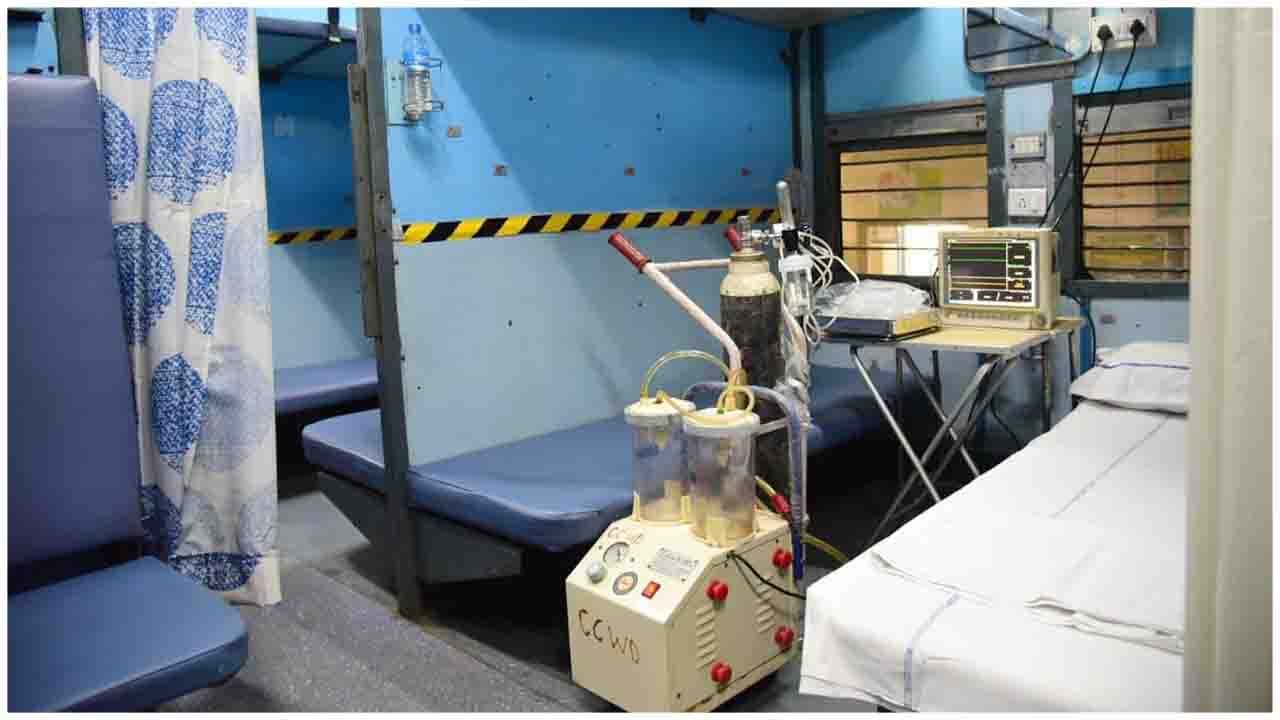
Railways have deployed 960 COVID Care Coaches in five States. These states are Delhi, Uttar Pradesh, Andhra Pradesh, Telangana and Madhya Pradesh.
Railway Ministry said, out of total 960 COVID Care coaches, 503 COVID Care coaches have been deployed in Delhi, 372 in Uttar Pradesh, 60 in Telangana, 20 in Andhra Pradesh and five in Madhya Pradesh. The Ministry said, these State Governments have sent the requisition to Railways and Railways have allocated these coaches to the State and Union territories.
The Ministry said, sustaining the fight against Covid-19, Railways is making an all-out effort to supplement the health care efforts of State Governments. Railways have geared up to provide its five thousand 231 COVID Care Coaches to the States. Zonal Railways have converted these coaches as COVID Care Centres to be used for very mild and mild cases.
The Ministry said, Railways is working as a Service Provider of Coaches as COVID Care Centres as its contribution to the national cause. Doctors and paramedics are to be provided by State Governments.
Railways will deploy two liaison officers for each location of coaches to assist State Government officials. These coaches can be used in areas where the State has exhausted the facilities and needs to augment capacities for isolation of both suspects and confirmed COVID cases.
Meanwhile, the Union Health Ministry has said that it has increased the number of COVID-19 testing labs to 924 in the country. Of the total labs, the number of government labs has been increased to 674 and private labs to 250 that are capable of Real-Time (RT) PCR, TrueNat and CBNAAT based testing.
The RT-PCR based testing labs are 535 that include 347 government and 188 private labs. The number of TrueNat based testing labs is 316, including 302 government and 14 private labs. However, the number of CBNAAT based testing labs is 73, comprising 25 government and 48 private labs.
The report of a high-level Expert Committee headed by Dr. VK Paul on rates to be charged by testing laboratories has been received in the Health Ministry and has been sent to Delhi Government for further necessary action. The Committee has fixed the rate per test at 2,400 rupees.
The Health Ministry said a total of 1,63,187 COVID-19 samples were tested in the last 24 hours, and the total number of samples tested so far is 60 lakh 84 thousand 256.
In the last 24 hours, the Ministry said a total of 6,922 COVID-19 patients were cured. With this, the number of cured patients rose to 1,86,934, indicating that the recovery rate rose to 52.80 percent.
For the ninth consecutive day, the number of recoveries remained higher than the active ones. Currently, 1,55,227 active cases are under medical supervision.
According to the Ministry, 10,974 fresh cases were reported in the last 24 hours taking the total to 3,54,065.
A total of 11,903 people have succumbed to the deadly disease since the first case was reported on January 30.






.jpeg)










.jpg)
.jpg)
.jpg)
.jpg)
.jpg)
.jpg)


.jpg)