 Wednesday, November 18, 2026
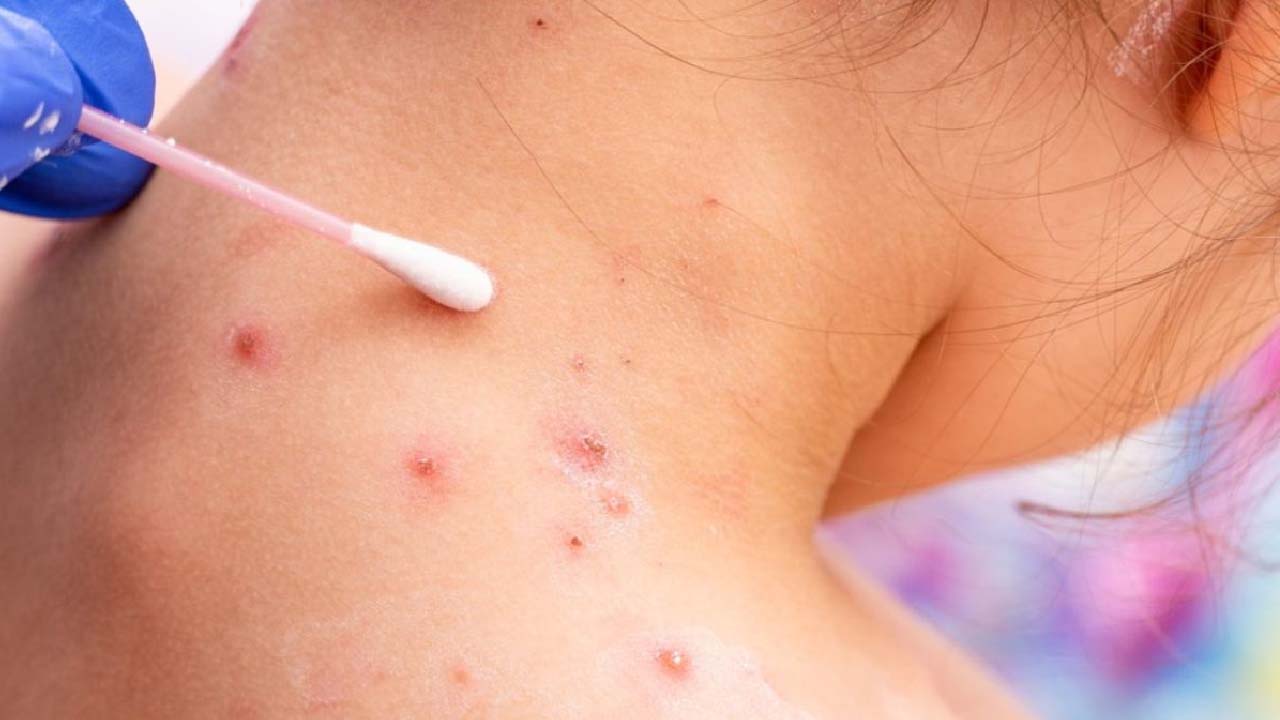
 Medical experts say raising awareness of risk factors and measures they can take to reduce exposure to the virus. Let us check who is at higher risk of getting monkeypox





No case of monkeypox has been reported in India so far, but India has already come into an alert mode regarding this and many preparations have been started in this regard. On Monday, the Brihanmumbai Municipal Corporation (BMC) of Mumbai prepared a 28-bed isolation ward for patients suspected of monkeypox at Kasturba Hospital.
An alert has been issued to the National Center for Disease Control (NCDC) - National Center for Disease Control and the Indian Council of Medical Research (ICMR) - Indian council of medical research in view of the rapidly spreading infection across the world. The Health Ministry has directed the officials of airports and seaports to immediately isolate any sick travelers who have returned after traveling to monkeypox-affected countries and send them to the National Institute of Virology (NIV) - National Institute of Virology (NIV), Pune for sample testing. Send to Pune.
Let us inform you that after Belgium on Monday, Britain has also made a 21-day quarantine period compulsory for monkeypox patients.
According to media reports, a biologist at the top government institute said that "the major problem is that the polymerase chain reaction (PCR) test required to diagnose the disease is not widely available in India, and most physicians can identify the specific symptoms of the disease." and may not be aware of the disease".
Who is at risk of getting monkeypox?
Cases of monkeypox are generally most common in central and western Africa, in people who have recently traveled to those areas, and in people who have had contact with imported animals. But recently there have been cases of monkeypox outside Africa in people who have not traveled. Therefore, nothing can be said accurately about who is more at risk for this.
Is Monkey Pox Airborne?
Unlike COVID-19, which is mainly spread through air transmission and droplet passing, monkeypox is contracted through close physical contact.
Is monkeypox fatal?
You can understand how deadly monkeypox is from the fact that it has knocked out 19 countries in a very short time. Due to this serious disease, the patient has to face many problems, including skin-related problems which can last for a lifetime. According to the World Health Organization, one in every 10 patients with monkeypox is at risk of death. At present, there is no news of the loss of life of any patient from the cases that have come to the fore.
The estimated transmission rate is 3.3% to 30%, but the recent outbreak in Congo had an estimated transmission rate of 73%.
How is monkeypox different from smallpox or chickenpox?
Chickenpox or smallpox is not much different from monkeypox. The symptoms and problems of both are quite similar. But swollen lymph nodes are the biggest hallmark of monkeypox. In chickenpox, blisters are formed in the body, which is also seen in monkeypox as well as other symptoms, but there is no swelling in the lymph nodes. There is a lot of swelling in the lymph nodes when monkeypox occurs, which is its hallmark.




-23-300x250.png)





















