 Saturday, November 21, 2026
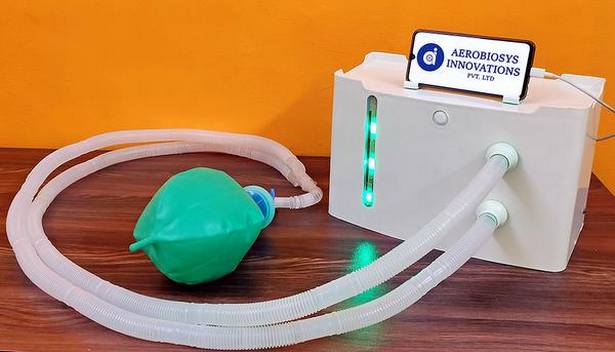
 During the deadly second wave of the pandemic, many Covid-19 patients were facing a severe shortage of oxygen. One player rose to tackle this challenge. It was Aerobiosys Innovations.





During the deadly second wave of the pandemic, many Covid-19 patients were facing a severe shortage of oxygen. India had at one point faced a shortage of 60,000 ventilators. The prime reason behind this was the supply of ventilators from abroad dwindling. As countries started hoarding ventilators for themselves, India faced the brunt of this decision.
One player rose to tackle this challenge. It was Aerobiosys Innovations. Founded in 2019 by co-founders Rajesh Thangavel and Cyril Antony, it is a venture that makes low-cost ventilators. Aerobiosys was the incubated startup for Healthcare Entrepreneurship of the Indian Institute of Technology, Hyderabad. It was here that the duo came up with the vision of creating JEEVAN Lite.
JEEVAN Lite is an IoT-enabled ventilator that is portable, light-weight and cost-effective. It can be used as both an invasive and non-invasive ventilator. The ventilator can be used by a range of patients from geriatric to paediatric. While the competitors charged more than Rs 5 lakhs, JEEVAN Lite costed only Rs 1 Lakh. The ventilators can also function on batteries for 4 to 5 hours.
Another USP of the product is that it can be set up and used at a patients’ house while the doctor can monitor this using a mobile app. This is beneficial as it didn’t assert more burden on the existing hospital infrastructure. Another advantage is that the healthcare providers can monitor from distance and not expose themselves to infection.
Their product was in compliance with the guidelines set by the Defence Research and Development Organisation (DRDO) and the Indian Council of Medical Research (ICMR). In March 2020, Aerobiosys gained the support of the Department of Science and Technology and Biotechnology Industry Research Assistance Council (BIRAC). They invested ₹11.5 million in this venture.
It is high time now that India starts manufacturing and meeting its own medical demands. There is no shortage of innovative and novel ideas. With enough encouragement and capital, the Indian MedTech sector too can achieve success just like Indian pharmaceutical companies have. Are such ‘Make in India’ startups like Aerobiosys Innovations the future of the Indian healthcare sector?




-23-300x250.png)




















