 Tuesday, October 27, 2026
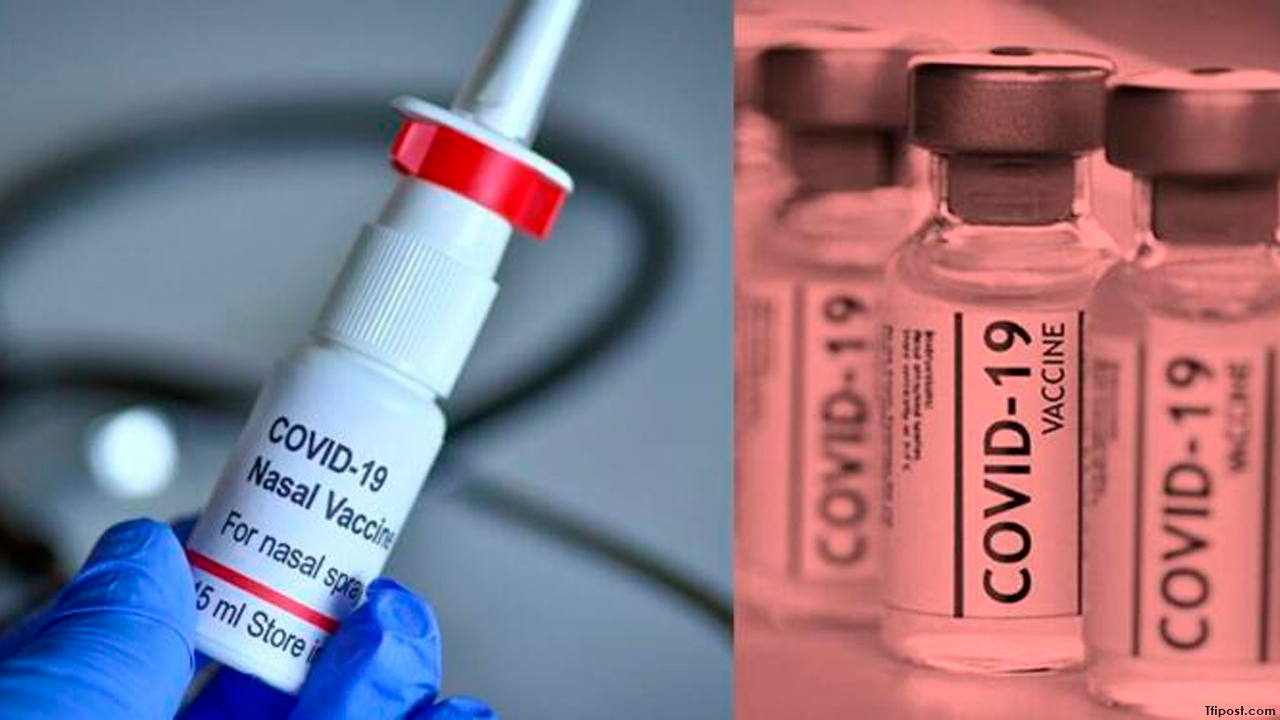
 iNCOVACC is a novel adenovirus vectored, intranasal vaccine for COVID-19. It has various advantages over injectable vaccines. Here are a few of them.





The two-drop nasal vaccine, iNCOVACC is manufactured by Bharat Biotech, India. It is a novel adenovirus vectored, intranasal vaccine for COVID-19 that can stimulate a broad immune response – neutralizing IgG, mucosal IgA, and T cell responses.
How does it work?
The nasal vaccine is delivered through the nose or mouth. It is expected to work on the mucosal lining. Thus, the nasal vaccine prompts an immune response at the entry points of the virus which is mostly the nose and the mouth. This prevents infection at the entry point itself thereby protecting against disease, infection, and transmission. It is referred to as sterilizing immunity. Many studies have found that nasal delivery of vaccines is capable of creating a strong immune response.
Mice, Hamsters and macaques were immunized with a single dose of ChAd-SARS-CoV-2-S conferred superior protection against the SARS-CoV-2 challenge. Post-challenge with SARS-CoV-2, viral clearance was observed in both lower and upper airways in all these animal models.
Nasal vaccines v/s Injectable vaccines
Nasal vaccines have a proven benefit over injectable vaccines. In the third phase of the clinical trial which was done on 3,000 participants, iNCOVACC showed good immunity with 2 doses given 4 weeks apart.
Advantages of the nasal vaccine
-
An immune response at the site of infection is essential for blocking both infection and transmission of COVID-19.
- Non-invasive, Needle-free
- Ease of administration – does not require trained healthcare workers
- Elimination of needle-associated risks (injuries and infections)
-
High compliance
Nasal vaccine composition
0.5 ml of this nasal vaccine contains NLT 5X10 particles per mL ChAd36-SARS-CoV-S COVID-19 virus (recombinant) including excipients such as Tris (pH 7.4), Sodium Chloride, Magnesium Chloride, Glycerol, Polysorbate- 80.
Those who have taken Covishield and Covaxin can take the nasal vaccine as a heterologous booster dose. In heterologous boosting, a person administered a different vaccine from the one that was used for the primary dose series.
The nasal vaccine as a booster dose and not the fourth dose after the booster shot
The nasal vaccine is recommended as a first booster and cannot be administered after one has taken the booster or the precautionary dose. This is because by repeatedly immunizing with a particular type of antigen, the body stops responding or responds poorly. Therefore, taking the nasal vaccine as the fourth dose after taking the booster dose is of no value.




-23-300x250.png)

.jpeg)








.jpg)
.jpg)
.jpg)
.jpg)
.jpg)
.jpg)
.jpg)
.jpg)
.jpg)

