 Thursday, October 08, 2026
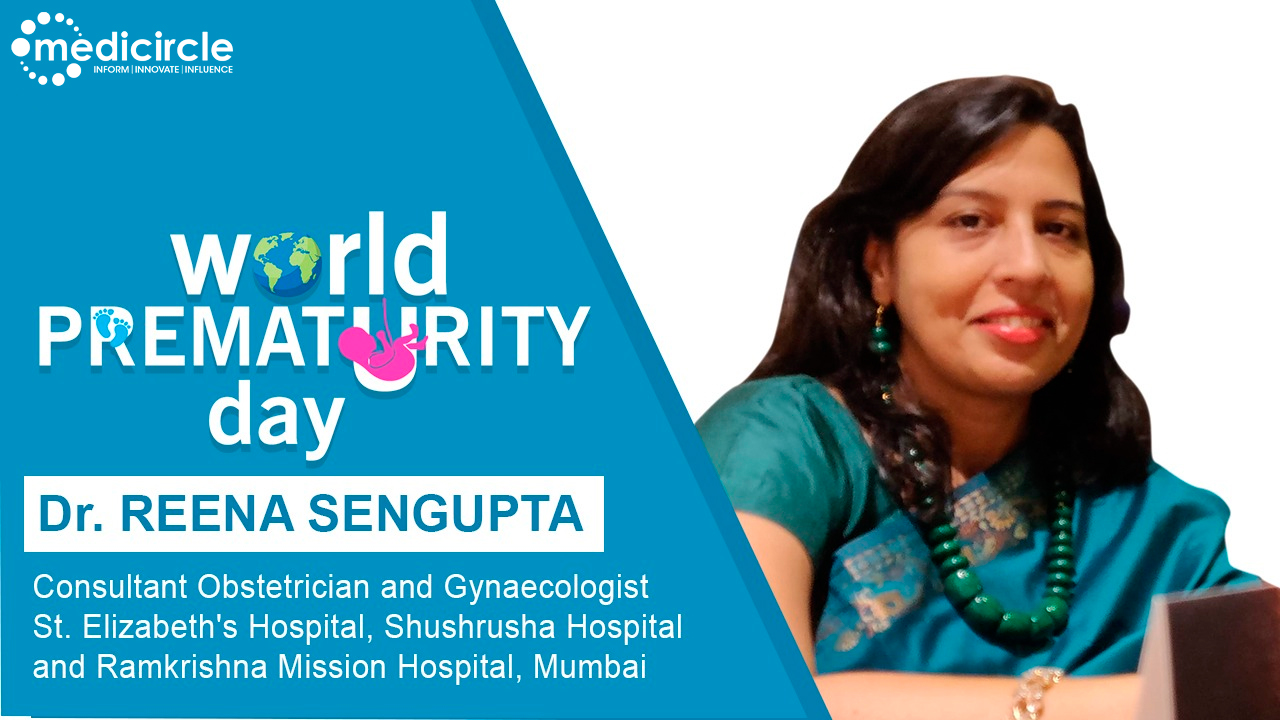
 Dr Reena Sengupta shares her special expertise on treating premature babies with care. She also explains proper counseling and care is a must for the parents of newborn premature care. She also informs that NICU care for premature babies is a must from a team of dedicated and professional doctors from the hospital.





World Prematurity Day is celebrated on November 17th, to raise awareness of the challenges and burden of preterm birth globally. The day was initiated by EFCNI and partnering European parent organizations in 2008. Preterm birth (premature birth) is a significant public health problem across the world because of associated neonatal (first 28 days of life) mortality.
According to WHO, every year about 15 million babies are born prematurely around the world and that is more than one in 10 of all babies born globally. Of the 15 million babies born preterm globally, 1/5th are born in India. In India, out of 27 million babies born every year, 3.5 million babies born are premature.
On the occasion of World Prematurity Day, we at Medicircle are conducting an exclusive awareness series wherein we will be featuring experts in this field to understand and create more awareness about premature birth.
Dr. Reena Sengupta is a consultant gynecologist in St Elizabeth's hospital and Ramkrishna Mission Hospital Mumbai. She has experience of more than 10 years in this field. She is a member of IMA and FOGSI
She is trained in both laparoscopic and conventional surgeries, hysterectomy, D&C, hysteroscopy, Pregnancy care, delivery ( LSCS, Vaginal delivery), and also painless delivery.
All you need to know about prematurity
Dr. Reena Sengupta says, “Prematurity is the term applied to delivery before 37 weeks of pregnancy. These babies are called premature babies which are defined into various categories-
Baby born at 26 weeks - Early Preterm birth Baby born from 28 to 32 weeks- Late Preterm birth Baby born from 32 to 37 weeks- Moderate Preterm birth near to normal baby.”
Causes for preterm birth
Dr. Sengupta informs,” There is so specific cause behind preterm birth. There are many high-risk factors which are as follows-
Diabetes Blood pressure Heart disease Anemia Multiple pregnancies Lack of nutrition Incompetent cervix Problems in uterus Age factor Infections during pregnancy
These are important reasons for preterm delivery.”
Incidence of Premature babies
Dr. Sengupta informs,” The preterm delivery is on the high rise these days. It is important to assess the risk factors accordingly. India contributed to one fifth of the world’s premature babies cases. Premature babies are one of the leading causes of death in the first five years of life. It is important to take care of the high-risk factors to reduce the incidence of premature birth. The incidence of preterm birth is 8 - 15 %. The causes of preterm delivery are stress and an unhealthy lifestyle.”
Premature birth precautions
Dr. Sengupta states,” The precautions for premature delivery are -
Control sugar levels Control Blood pressure Nutrition levels Control Haemoglobin levels Hormonal therapy can help Regular ultrasound Check for cervix competence Correct anomalies of the uterus Avoid and treat infections that can be life-threatening Medical help through injections in cases on nonavailability of NICU Increasing the pregnancy time for better delivery and healthy baby.”
Care for a premature baby
Dr. Sengupata informs,” The doctor, which includes the neonatologist and the gynecologist along with parents can help the premature baby by following ways-
Training the parents for special care of premature baby NICU care Maintaining body temperature of the baby Bathing and sponging the baby Avoiding SIDS(Sudden Intense Death Syndrome) Maintain a healthy sleep pattern Breastfeeding training for a premature baby Avoid public exposure of premature baby Encourage skin to skin contact Kangaroo care Development care of baby Hospital care.”
Prematurity and fatality
Dr. Sengupata informs, “Prematurity can be fatal as the baby is underdeveloped. As their blood vessels and brain are underdeveloped, a proper check-up is required during regular intervals. Proper care and medications are required in such cases. It is fatal but care is required and can be prevented."
(Edited by Dr.Rati Parwani)





.jpeg)










.jpg)
.jpg)
.jpg)
.jpg)
.jpg)
.jpg)


.jpg)